Steam Pipe Insulation
For regular round steam lines, steam pipe insulation usually starts with preformed rock wool pipe sections. Larger diameters, surfaces that do not suit standard pipe sections, and complex industrial areas may instead call for rock wool blankets or wire mesh rock wool blankets. Straight runs, elbows, valves and connections do not all require the same insulation form.
Insulvora supplies Rock Wool Pipe / Pipe Section, Rock Wool Blanket and Wire Mesh Rock Wool Blanket for industrial steam piping insulation. Final selection depends on continuous and maximum or design temperature, actual pipe outside diameter (OD), heat-loss or outer-surface-temperature requirements, installation conditions and protective jacketing. Product grade, size and thickness are confirmed for the project.
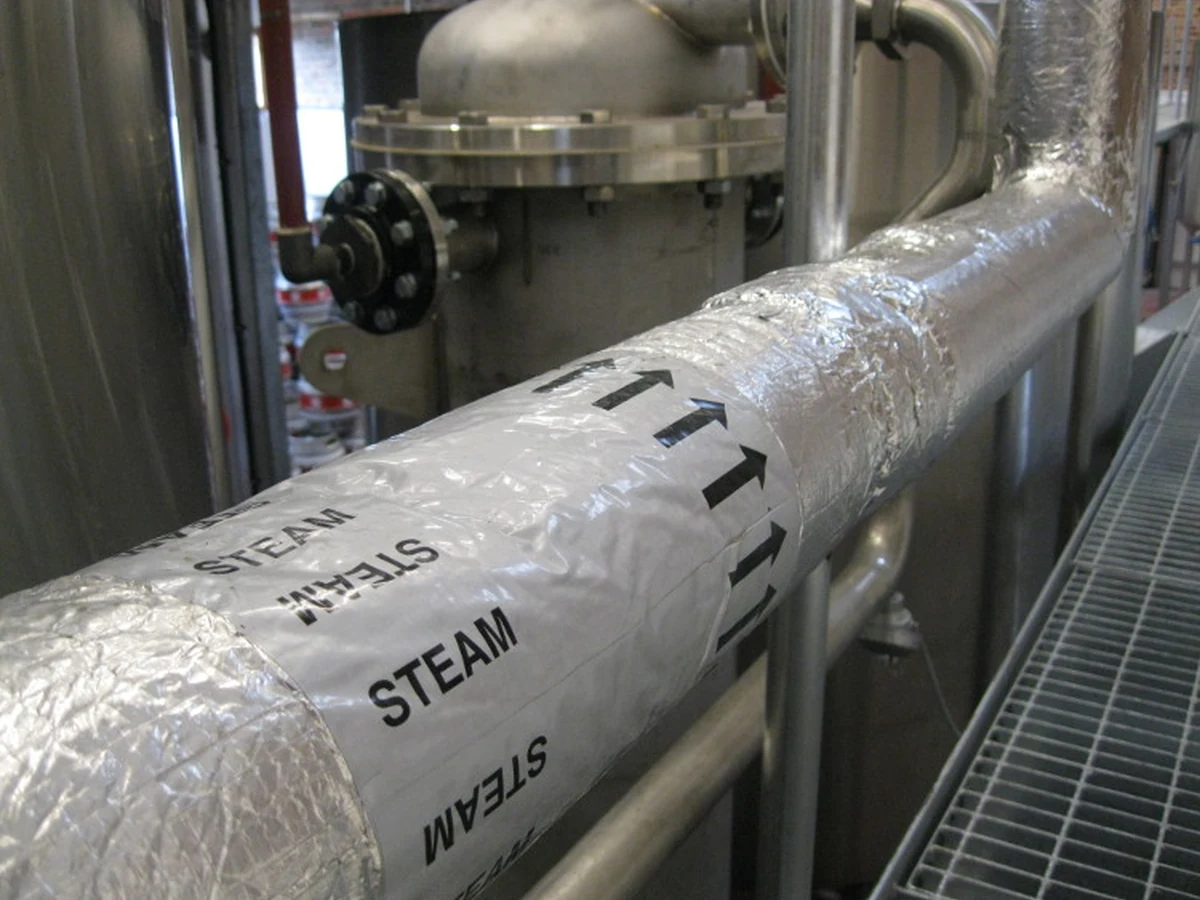
Operating Temperature, Pipe Size, and Thermal Requirements
The starting point for steam piping insulation is the actual service condition. Continuous operating temperature sets the long-term requirement; maximum or design temperature must also be considered when selecting a product grade. Both values matter when checking whether a stated product temperature rating covers the project.
Preformed steam pipe insulation is selected by insulation inside diameter (ID), which must correspond to the actual outside diameter of the pipe. If plans specify only DN, NPS or another nominal designation, confirm the applicable pipe standard and actual OD before selecting a pipe section. Nominal sizes should not be treated as measured outside diameters.
For steam pipe insulation, required thickness follows the thermal objective. Steam distribution lines commonly prioritize heat-loss control; accessible hot piping may also need to meet an allowable outer-surface temperature or personnel-protection requirement. For steam piping insulation, these objectives, together with temperature and pipe dimensions, establish the basis for confirming an appropriate grade and thickness.
Product Forms for Different Piping Conditions
The table provides an initial steam pipe insulation product direction by geometry and service condition. The individual product ranges below are used to check dimensions, temperature grade and the practical installation form.
| Steam piping condition | Main consideration | Product direction |
|---|---|---|
| Regular round straight pipe | Actual OD, operating temperature, required thickness | Rock Wool Pipe / Pipe Section |
| Larger diameter or surface unsuitable for preformed sections | Coverage dimensions, flexibility, thickness | Rock Wool Blanket |
| Large-diameter or complex industrial section | Changing geometry, flexible coverage, structural retention | Wire Mesh Rock Wool Blanket |
| Elbows, tees, valves and flanges | Geometry, insulation continuity, inspection and maintenance access | Fabricated fitting pieces or an appropriate flexible insulation form |
| Outdoor steam line | Thermal duty, moisture exposure, mechanical protection | Suitable rock wool insulation with project-specified protective jacketing |
| Higher-temperature service | Continuous and maximum/design temperature, product grade | Verify grade; see High Temperature Pipe Insulation |
Regular Round Pipe: Rock Wool Pipe / Pipe Section
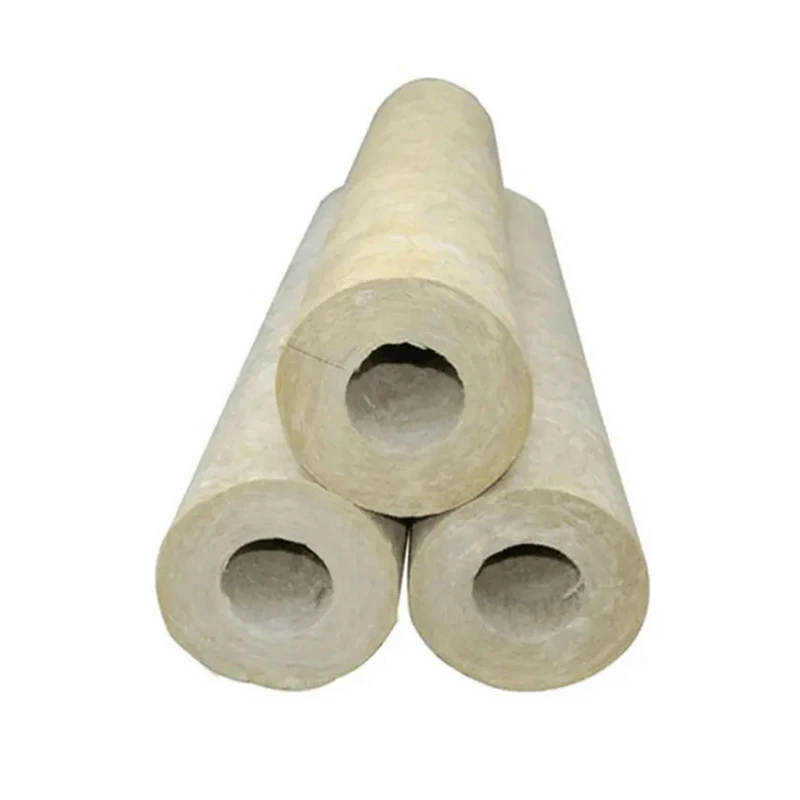
For regular straight runs, preformed Rock Wool Pipe / Pipe Section matches the round pipe profile and provides a direct way to select the required insulation thickness. Insulvora supplies sections with 22–910 mm inside diameter and 20–150 mm thickness. The listed maximum operating temperature is 600°C.
A steam pipe insulation specification should match the available section ID to the actual pipe OD and verify the required thickness against the thermal objective. Temperature suitability is checked against the selected product grade, not the pipe diameter alone.
Larger Diameters or Wrapped Surfaces: Rock Wool Blanket
Rock Wool Blanket provides a flexible form for larger diameters and surfaces that are not well suited to standard preformed sections. Available products cover 25–200 mm thickness and 0.6–1.2 m width. Standard and high-temperature grades have listed maximum operating temperatures of 600°C and 750°C, respectively.
For steam piping insulation using blankets, check the coverage dimensions, chosen temperature grade, required thickness and intended installation method. Even when steam pipe insulation calls for a higher-temperature blanket, the listed rating does not replace confirmation of the actual product configuration for the project.
Large-Diameter and Complex Sections: Wire Mesh Rock Wool Blanket
Wire Mesh Rock Wool Blanket uses galvanized wire-mesh reinforcement to help hold flexible insulation in position on large-diameter piping, curved surfaces and complex industrial sections. Available thicknesses are 30–100 mm, with widths of 0.4 m, 0.6 m or 1.2 m. Current product data lists a maximum operating temperature of 750°C.
For steam pipe insulation at these locations, confirm the geometry, required retention and selected product configuration. The reinforcing mesh supports the insulation layer but does not replace protective jacketing where weather exposure or mechanical protection requires it.
Elbows, Valves, Flanges, and Supports
A steam pipe insulation system also needs appropriate treatment at elbows, tees, valves, flanges, supports and equipment connections. These locations introduce changes in shape or access requirements that differ from continuous straight pipe.
Insulvora Rock Wool Pipe / Pipe Section can be supplied with fabricated fitting pieces for elbows, tees, valves and flanges according to project requirements. Where preformed pieces are not practical, Rock Wool Blanket or Wire Mesh Rock Wool Blanket can provide a flexible covering form.
Valves and flanges require steam piping insulation details that maintain coverage without obstructing necessary inspection, removal or maintenance. Supports, penetrations and transitions between forms should also be coordinated so that local points do not create avoidable heat-loss or physical-protection weaknesses.
Indoor and Outdoor Protection
Indoor steam piping insulation needs to account for thermal duty, personnel exposure, mechanical damage and maintenance access. Outdoor steam piping insulation must also account for rain and weather exposure, making the specified outer protection system central to the installation.
Where metal or other protective jacketing is required, seams, terminations, penetrations and changes in geometry need particular attention to reduce the risk of water entering the insulation. These details are especially relevant at fittings and transitions. Jacketing type and material are confirmed to project requirements; selection of rock wool alone does not determine the complete protective system.
Thermal Movement in Operation
Steam pipework expands as it heats up and contracts as temperatures fall. Steam pipe insulation and its outer protection must accommodate movement already allowed for in the piping design. Connections and terminations along long straight runs, equipment connections, valves and flanges should not restrict that movement.
Anchors, guides, pipe-stress calculations and expansion calculations remain within the piping engineering scope. The steam piping insulation and jacketing arrangement needs to be coordinated with those established conditions rather than used to determine or replace the pipe movement design.
Project Confirmation and Quotation
For a steam pipe insulation enquiry, provide the continuous and maximum/design temperatures, actual pipe OD (or DN/NPS and applicable pipe standard), thermal objective or required thickness, and the locations of straight runs and fittings. Please also identify indoor or outdoor installation and any outer-jacketing requirements. Insulvora can review appropriate rock wool product forms, available dimensions and grades, and the specifications to confirm for a project or bulk-supply quotation.