
Roof Thermal Insulation for Building Envelopes
Roof thermal insulation should first follow the roof construction. Metal and framed roofs often start with flexible glass wool where broad coverage and full installed thickness can be maintained. Roofs designed for a supported board layer can move toward glass wool or roof rock wool board, while foil-faced products are selected only when the facing has a defined role in the assembly.
The roof type, insulation position, available depth, thermal target, indoor humidity, fire or acoustic requirement and installation method determine the final route. This page provides the first building roof insulation decision before product-level specifications are confirmed.
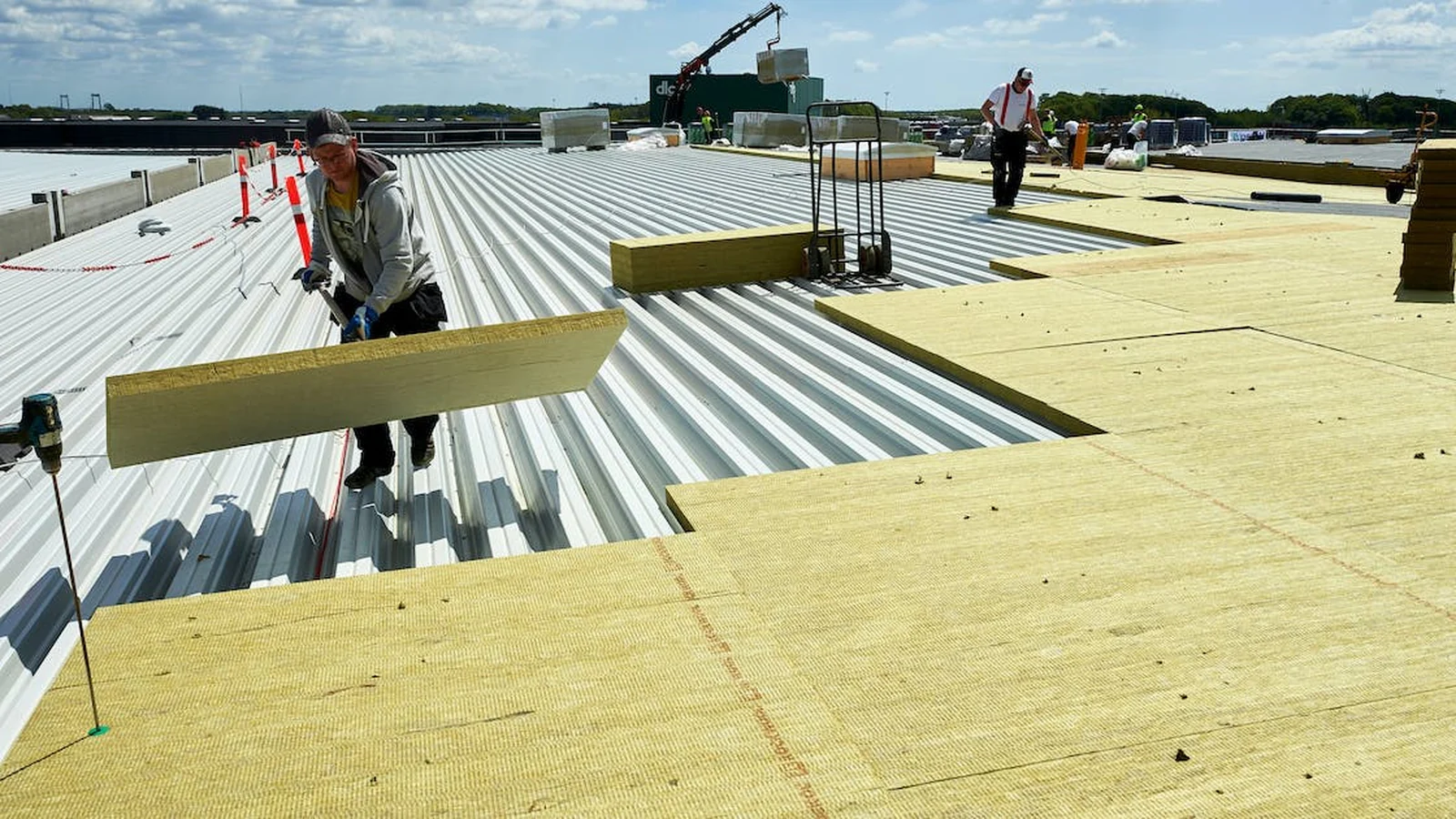
Match the Product Form to the Roof Condition
The first roof thermal insulation decision is not simply roll versus board. It is where the insulation sits, how it is supported and which condition controls the specification. Use the following routes to narrow the project before comparing individual products.
| Roof Condition | First Route | Confirm Next |
|---|---|---|
| Metal or framed roof with repetitive bays | Glass Wool Roll or faced glass wool where specified | Purlin spacing, support, installed thickness and condensation strategy |
| Supported board layer | Glass Wool Board or Roof Rock Wool Board | Roof build-up, fixing, loading or compressive requirement and fire criteria |
| Industrial or higher-demand facility | Product-specific mineral-wool or other documented route | Normal and peak temperature, fire requirement, equipment and mechanical exposure |
| Reflective or defined foil-facing requirement | Foil-faced glass wool or foil roof insulation roll selected according to the required core | Facing function, adjacent air space, vapor-control role and joint treatment |
| Thermal boundary at ceiling or attic floor | Move to the ceiling or attic application | Do not select a roof-level product before locating the actual thermal boundary |
Commercial membrane roof thermal insulation and other specialist systems require compatibility with the complete build-up; a product used below metal cladding is not automatically suitable beneath a membrane or trafficable layer. Continue to the corresponding application page where that roof condition controls the decision.
Conditions That Can Change the Initial Route
Once the first roof thermal insulation form is identified, available depth and the specified R-value or U-value determine the required build-up. Compression at supports reduces effective thickness, while gaps and roof junctions interrupt the layer. Roof thermal insulation therefore needs to be checked in its installed condition rather than from nominal product thickness alone.
High indoor humidity or condensation risk can change the facing, joint details and air- or vapor-control arrangement, even when the bulk insulation material does not change. Fire requirements affect acceptable product grades and supporting evidence; acoustic performance depends on the combined roof and ceiling construction rather than one insulation layer.
Reflective foil contributes radiant-heat control only where the installation, including an adjacent air space, supports that function. It does not replace bulk roof heat insulation when the project specifies thermal resistance. See Low Thermal Conductivity Insulation when conductivity comparison is the remaining technical question.
Roof Thermal Insulation Product Forms
Insulvora supplies roof thermal insulation in flexible rolls, boards and faced forms. The specifications below show available supply routes; the roof assembly still decides which one is relevant.
Glass Wool Roll is available in 25–100 mm thicknesses and a 1.2 m width for broad framed or metal-roof areas where flexible coverage is suitable. Foil Faced Glass Wool Roll shares those dimensions, with plain or reinforced aluminum-facing options when the building roof insulation design requires a defined facing.
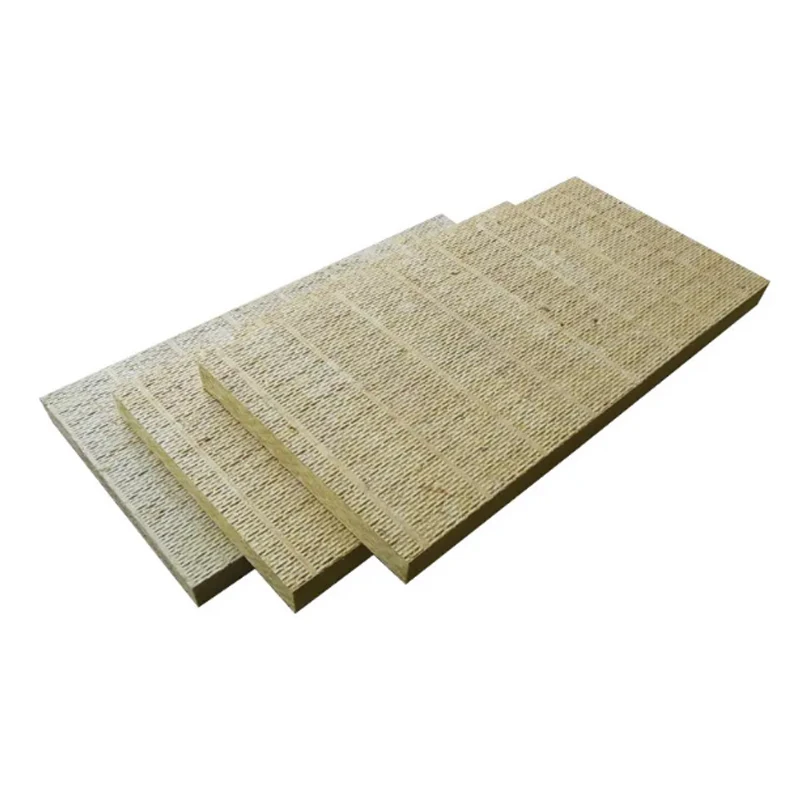
Roof Rock Wool Board is available in 30–150 mm thicknesses, with standard dimensions of 1.2 × 0.6 m. It is a stable mineral-wool panel route where the roof system can support the board and the project requires its documented mechanical, thermal or fire-related properties. Glass Wool Board is a separate panel form where glass wool is specified; board density alone does not establish roof suitability.
Foil Roof Insulation Roll uses an NBR/PVC closed-cell elastomeric foam core with aluminum facing and is available in 5, 10, 20, 30 and 50 mm thicknesses. It is not the same construction as foil-faced glass wool: the core, temperature range, moisture behavior and available thickness differ, so the two products are not interchangeable simply because both have an aluminum surface.
Thermal Continuity and Roof Details
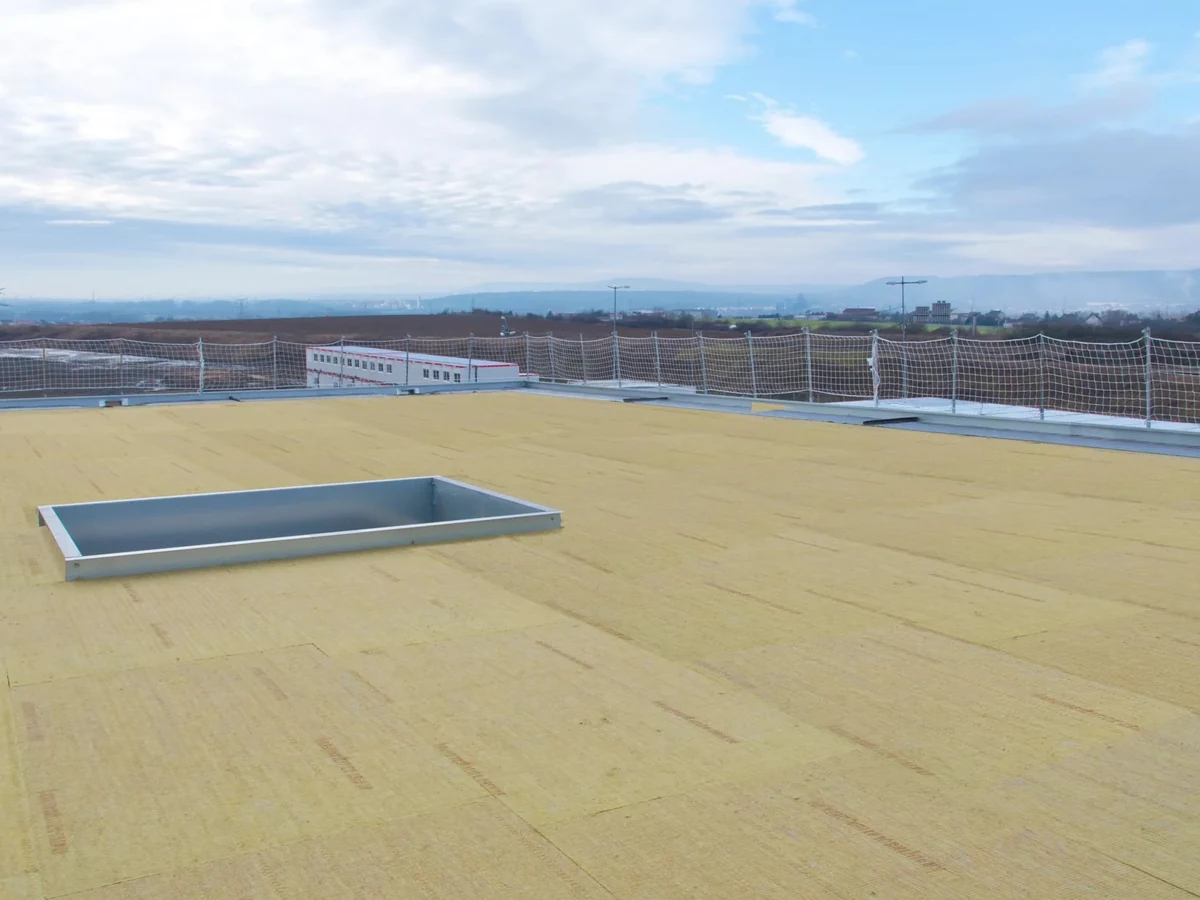
Roof thermal insulation must remain continuous at purlins, roof edges, parapets, skylights, roof curbs, penetrations, eaves and roof-to-wall transitions. Compression, unsupported material, missing insulation or poorly coordinated connections can undermine an otherwise suitable product across a large roof area.
In building roof insulation, where a facing provides a vapor-control function, its joints and penetrations need coordination with the designed air- and vapor-control layers. Waterproofing, drainage and weather protection remain functions of the complete roof assembly rather than the insulation alone. Building Envelope Insulation continues the continuity decision at walls and other junctions.
Continue by Roof Type or Material Route
Continue to Fiberglass Insulation for Roof Systems once glass wool is already the selected material. Metal Roof Insulation focuses on purlins, liner position and condensation; Commercial Roof Insulation on roof-system compatibility and large-project procurement; Industrial Roof Insulation on operating temperature, process and fire conditions; and Warehouse Roof Insulation on large bays, support and building use.
For building roof insulation with a specified aluminum-facing function, Foil Roof Insulation separates reflective, vapor-related and combined product roles. Once the roof heat insulation route is confirmed, move to the corresponding product page for full specifications rather than repeating the complete datasheet here.
Discuss Your Roof Project
Planning a roof thermal insulation project? Tell us what you already know about the roof and required performance. The specification does not need to be complete—Insulvora can help you narrow the product direction and discuss the next step.