
Commercial Roof Insulation for Large Building Projects
Commercial roof insulation is selected according to the roof assembly, not thermal performance alone. Supported metal roofs and framed cavities can accommodate flexible glass wool rolls, while systems designed for board insulation may use roof rock wool board when the selected grade meets the assembly requirements.
Insulvora supplies glass wool rolls and foil-faced options for commercial metal roof insulation, alongside roof rock wool boards for suitable board-based systems. The appropriate form depends on insulation position, thermal targets, moisture control and construction details. Low-slope membrane roofs and retrofits need separate checks before a material is selected.
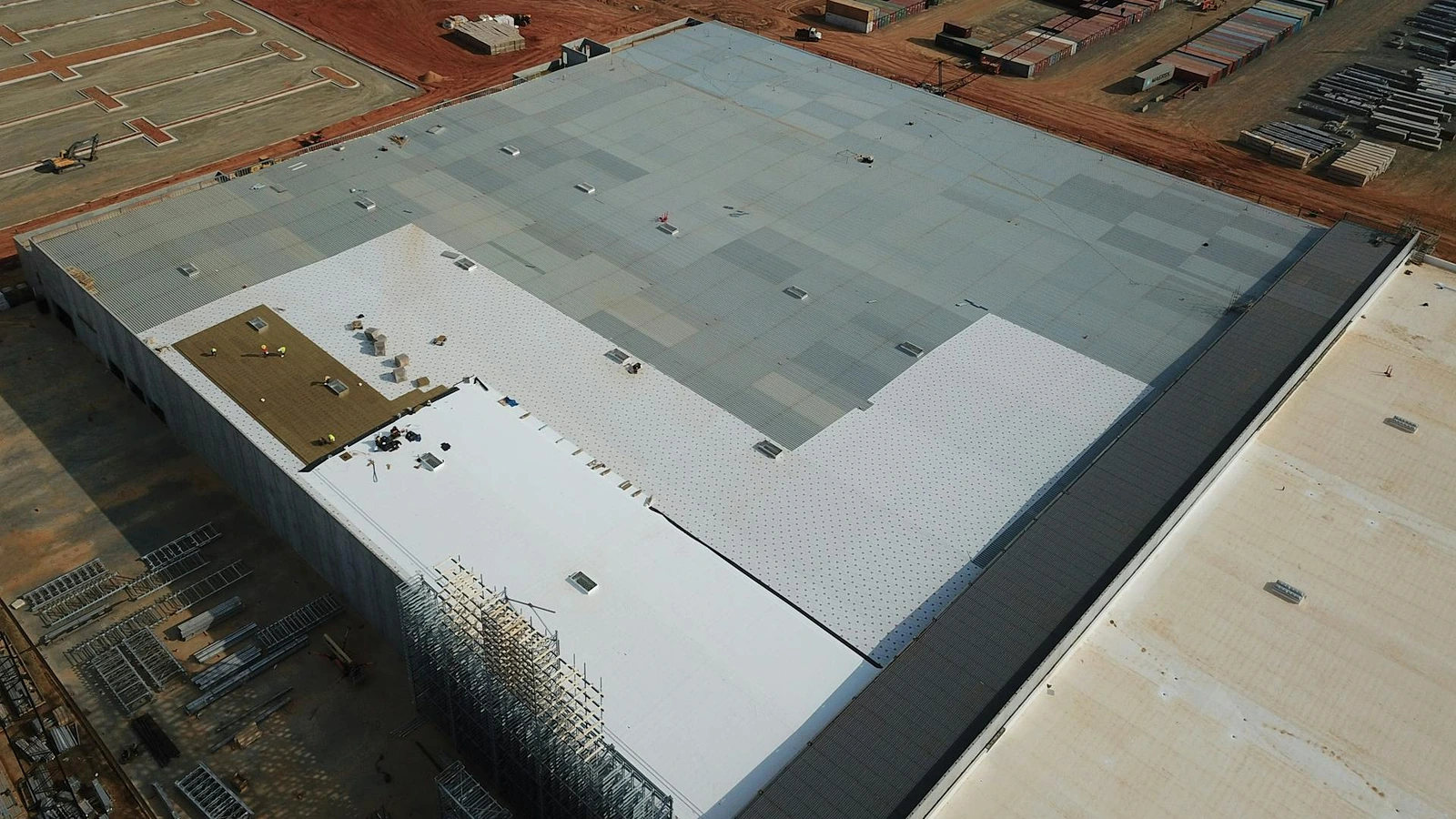
Roof Construction and Insulation Products
| Roof application | Insulvora product and supply range |
|---|---|
| Supported metal roofs and framed roof cavities | Glass Wool Roll: 25–100 mm thick; standard width 1.2 m. Flexible rolls suit supported cavities in commercial metal roof insulation assemblies where suitable retention prevents sagging or compression and continuous coverage can be maintained. |
| Flexible roof insulation requiring foil facing | Foil Faced Glass Wool Roll: 25–100 mm thick, with single-sided, double-sided and reinforced foil options. Facing selection follows the roof's vapor-control arrangement, including the position and continuity of joints. |
| Roof assemblies requiring board insulation | Roof Rock Wool Board: 30–150 mm thick; standard size 1200 × 600 mm. For commercial roof insulation installed as a board layer, suitability depends on the specified grade and protective construction meeting the roof's mechanical requirements. |
On low-slope membrane roofs, insulation boards must be evaluated within the complete roofing system. Rock wool board is a candidate only when its specified compressive performance, fixing arrangement, cover boards and membrane compatibility meet project requirements. Flexible cavity rolls are not interchangeable with boards used beneath membrane roofing.
For retrofits, the existing deck, retained insulation and waterproofing determine where new insulation can be installed and which product form is appropriate.
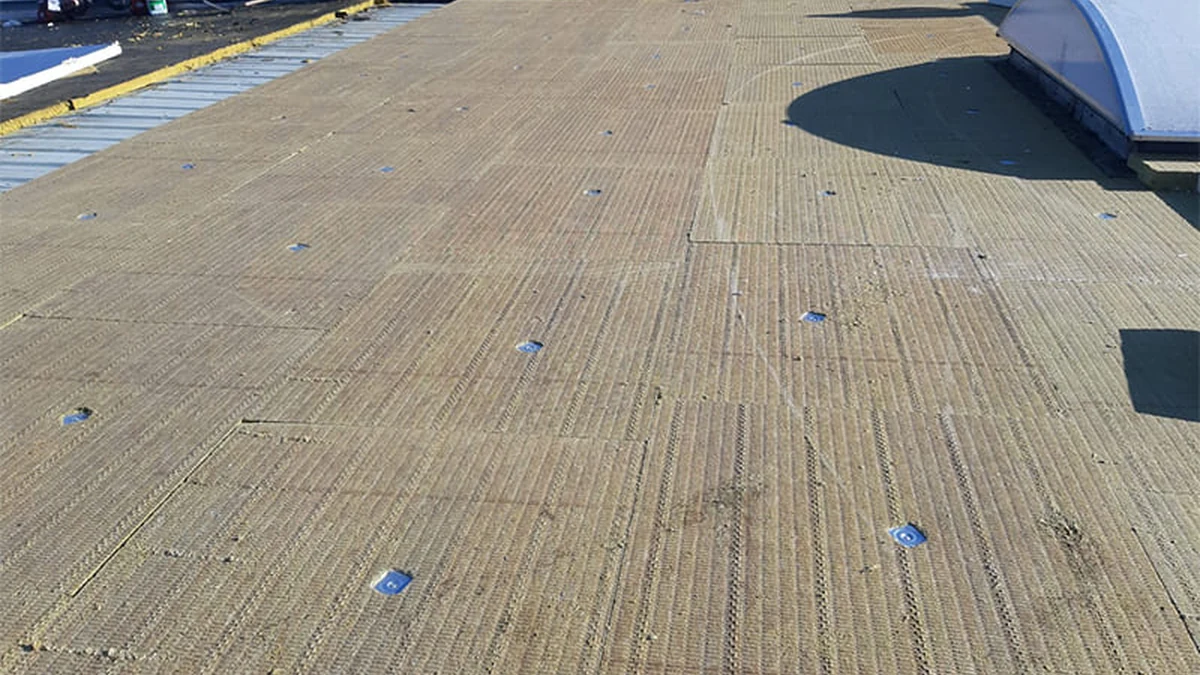
Roof-System Performance and Material Suitability
Commercial roof insulation must provide the specified insulation-layer R-value or installed thickness while the complete roof assembly meets its target U-value. Compression, thermal bridges and interruptions in insulation coverage can reduce installed performance. Material thermal conductivity alone does not establish the result for the whole assembly. See Low Thermal Conductivity Insulation for material comparisons.
Moisture control depends on indoor humidity, the positions of air and vapor-control layers, waterproofing and facing placement. Foil-faced insulation must be coordinated with the intended control layer. Where vapor-control continuity is required, discontinuous joints and unsealed penetrations can compromise its function.
Board-based roofs must account for maintenance traffic, equipment loads and localized compression. The insulation grade and protective layers must suit those conditions. A material's fire classification cannot replace the fire-performance requirements of the complete roof assembly.
For commercial metal roof insulation, check compression at purlins, liner arrangements, facing position and condensation control. See Metal Roof Insulation for the roof-specific considerations.
Roof Details and Project Supply
Parapets, skylights, equipment curbs, penetrations and wall-to-roof junctions can interrupt insulation continuity or require changes in layout and support. Poorly coordinated transitions may create thermal weak points and moisture-sensitive details.
These locations affect cutting and quantities beyond the main roof area. In commercial metal roof insulation projects, roll supply is planned around laying direction, available width and facing configuration. For board-based roofs, supply follows board dimensions, thickness, layout and cutting requirements.
For phased commercial roof insulation work, material quantities, packaging, storage and deliveries are coordinated with the installation sequence, including waterproofing and protective-layer work.
For a commercial roof insulation quotation, provide roof drawings or specifications, roof construction, required thickness or thermal target, project area and the intended insulation arrangement. Identify any facing, mechanical requirements and installation conditions. Product dimensions, quantities and delivery phases help define the supply scope. Insulvora reviews these details against its available glass wool and rock wool products and confirms the configurations to be quoted.
Any required performance documentation is reviewed against the selected product and the applicable roof-system specification.
Commercial Roof Insulation Enquiries
Send your project requirements to discuss glass wool rolls, foil-faced options or roof rock wool boards. Insulvora can confirm available specifications and provide a quotation for the agreed supply scope.