
HVAC Insulation Solutions | Match Materials to Conditions
HVAC insulation cannot be treated as one material for every part of a system. Refrigerant copper lines, chilled-water piping, supply and return ducts, hot-water lines, and other mechanical services operate under different temperatures, humidity levels, condensation risks, dimensions, and installation conditions. When selecting an air conditioning insulation material, the first step is to identify the service condition, then narrow the choice to the appropriate product form and specification.
Insulvora supplies closed-cell NBR/PVC rubber foam tubes and sheets, glass wool rolls and pipe sections, and rock wool pipe sections and blankets. Different AC insulation materials suit different HVAC duties, so the material route should follow the actual system rather than forcing all piping and ductwork into one product category.
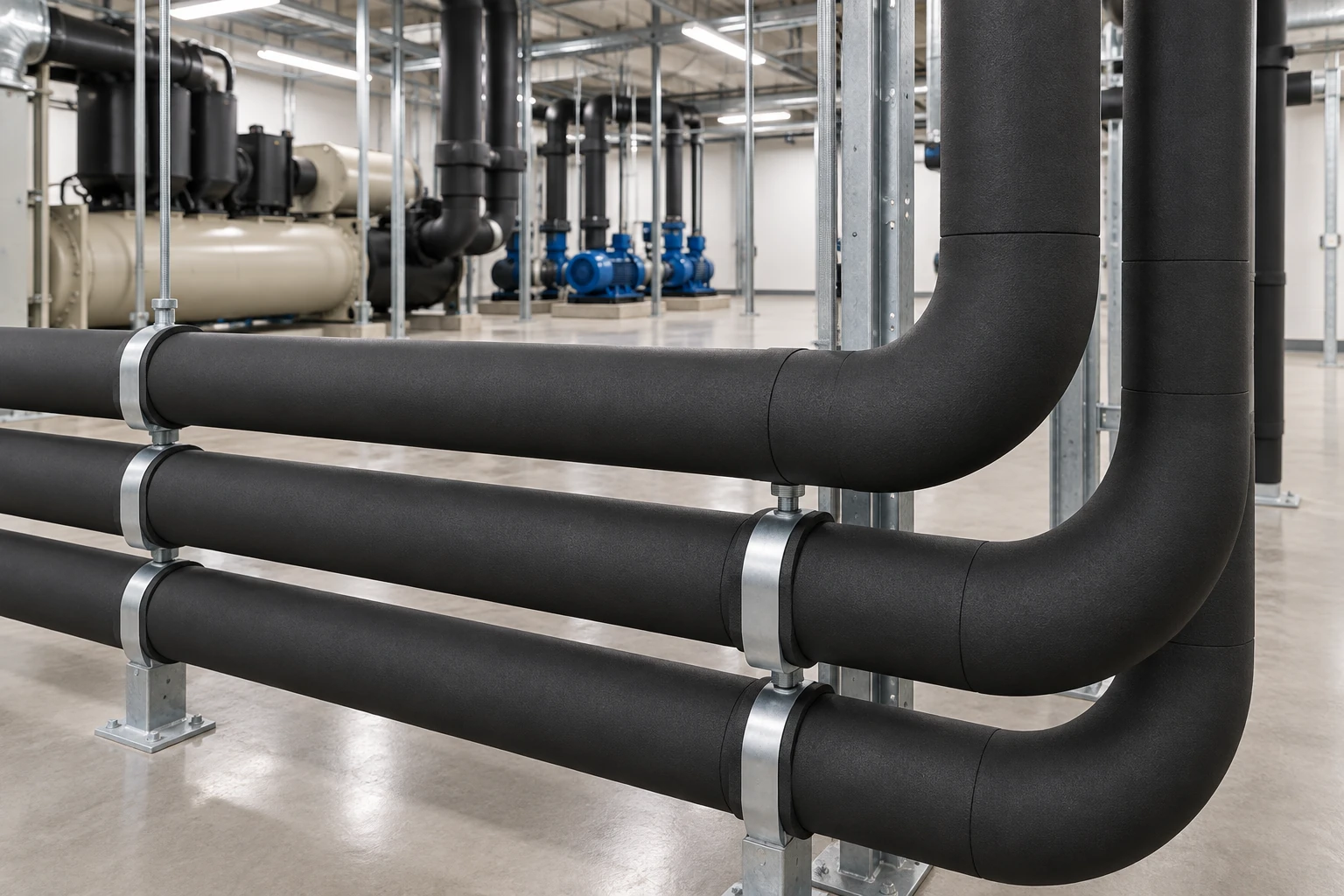
Start with the HVAC Duty
| HVAC Application | First Product Route | Key Information to Confirm |
|---|---|---|
| Refrigerant and AC copper lines | Closed-cell NBR/PVC rubber foam tube | Copper OD, operating temperature, ambient humidity, insulation thickness |
| Chilled-water piping | Rubber foam tube or sheet | Pipe size, water temperature, condensation conditions, valves and supports |
| Supply, return, and other ductwork | Glass wool roll/board or rubber foam sheet | Duct size, thermal duty, acoustic requirement, condensation and facing |
| Hot-water and higher-temperature mechanical piping | Glass wool or rock wool pipe section | Continuous temperature, pipe size, thickness, external protection |
Refrigerant lines and other cold AC piping operate below ambient temperature, so the air conditioning insulation material must limit heat gain, condensation, and moisture ingress. For regular copper lines and smaller pipe sizes, closed-cell rubber foam tubes are normally the first form to consider.
Chilled-water systems are also continuous cold-service applications, but larger pipe sizes, valves, and supports make continuity more demanding. The air conditioning insulation material may remain within the rubber foam route, with tube or sheet selected according to pipe size and project details.
Ductwork follows a different route. Thermal performance may be combined with acoustic or condensation-control requirements, so fiberglass HVAC insulation and rubber foam sheet enter different projects for different reasons. For hot-water and higher-temperature mechanical services, the focus moves to operating temperature and verified product capability, and the air conditioning insulation material route may move toward suitable glass wool or rock wool pipe insulation.
What Changes the Final Specification
The system type gives the first material direction. The final air conditioning insulation material still has to match actual operating conditions.
Service temperature determines the basic material range. Ambient temperature and humidity influence condensation risk on cold pipes and ducts. Pipe diameter, duct dimensions, and geometry determine whether the project needs tubes, pipe sections, sheet, roll, or blanket products. Indoor or outdoor installation can also change protection requirements.
If the project specifies insulation thickness, thermal conductivity, fire performance, facing, or acoustic requirements, include them at the product-selection stage. AC insulation materials must ultimately be narrowed to an actual product form, size, and configuration.
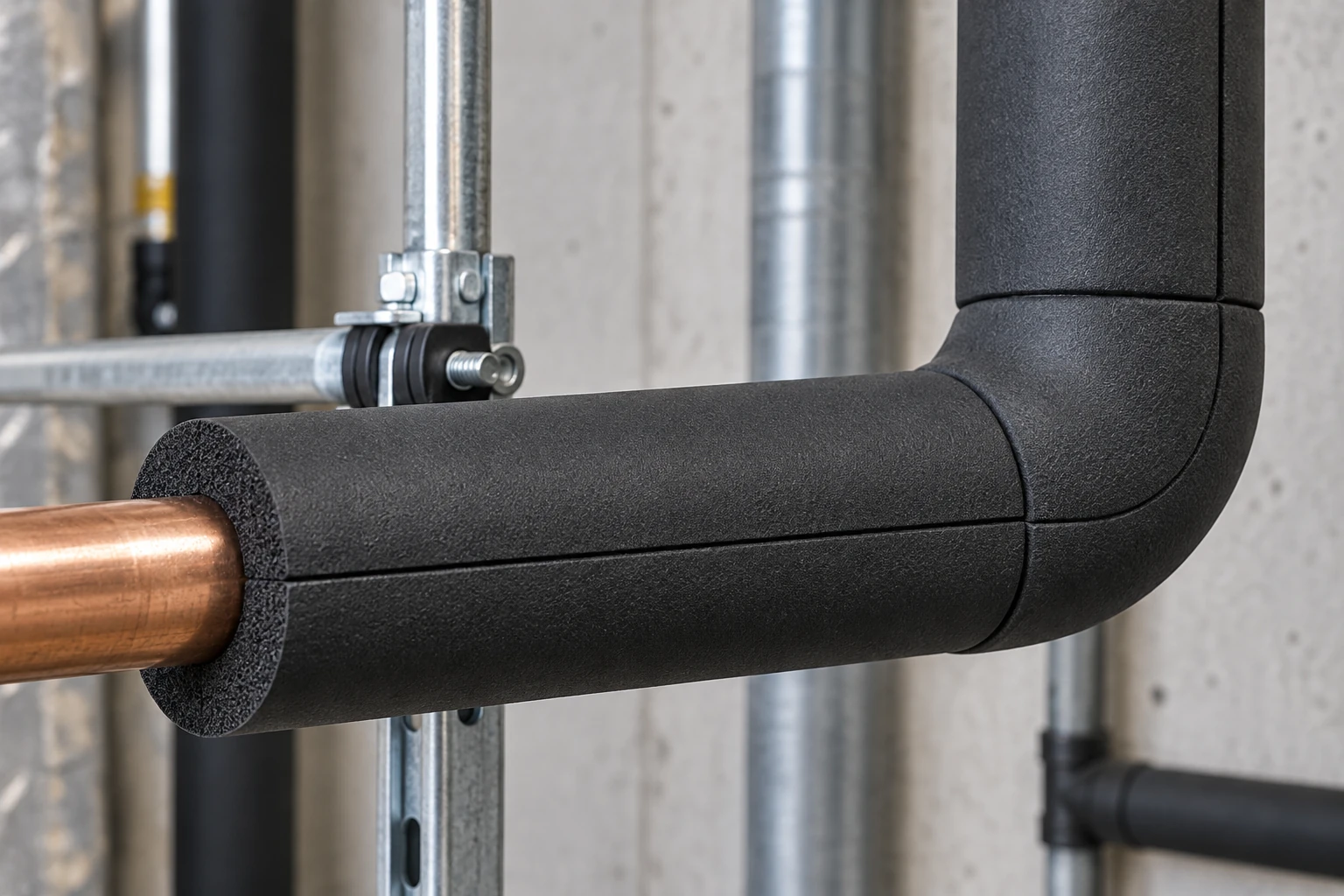
For cold systems, elbows, tees, valves, flanges, supports, and wall penetrations also matter. The air conditioning insulation material may be correct, but breaks in the insulation or vapor-control layer can still create condensation or moisture-entry points.
Insulvora HVAC Product Routes
Closed-Cell Rubber Foam
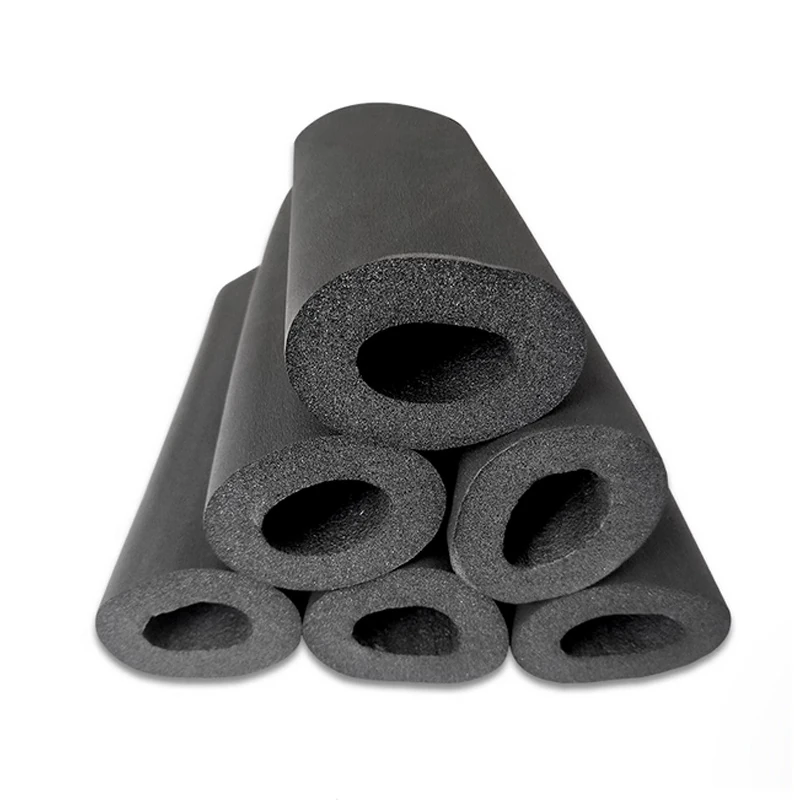
Closed-cell NBR/PVC rubber foam mainly covers refrigerant lines, AC copper piping, chilled-water piping, and larger cold surfaces. Available forms include preformed tubes, sheet, self-adhesive sheet, and faced configurations.
For many cold HVAC systems, this is the first air conditioning insulation material route to evaluate. Published data for certain Insulvora NBR/PVC rubber foam products covers service temperatures from -40°C to +105°C. The applicable range must still be checked against the selected product series, facing, and actual product data.
Small-diameter AC copper sleeves and broader rubber foam tube ranges cover different pipe sizes, while sheet products serve locations where a preformed tube is impractical.
Glass Wool
Glass wool rolls and boards mainly serve thermal and acoustic insulation on HVAC ductwork, while glass wool pipe sections serve suitable round-pipe applications. In duct systems, fiberglass HVAC insulation should be considered together with facing, joint treatment, and condensation conditions.
Insulvora supplies glass wool in roll, board, and pipe-section forms. Current glass wool pipe-section ranges cover approximately 22–720 mm internal diameter and 25–100 mm thickness, with final selection based on pipe size, operating temperature, and required configuration.
Rock Wool / Mineral Wool
Rock wool mainly serves higher-temperature mechanical piping. Available formats include pipe sections, boards, blankets, and wired blankets.
Preformed rock wool pipe sections suit regular round piping, with current ranges covering approximately 22–910 mm internal diameter and 20–150 mm thickness. Larger or more complex surfaces can move toward blanket-type products where appropriate.
These three routes represent the main AC insulation materials currently supplied by Insulvora. The final air conditioning insulation material still depends on the HVAC duty, but available product forms and size ranges show whether the project fits an existing supply route. This helps confirm whether the required air conditioning insulation material can be matched before quotation.
Keep the Insulation System Continuous
On cold piping, straight-run insulation alone is not enough. Elbows, tees, valves, flanges, supports, and wall penetrations can become weak points if the insulation or vapor-control layer is interrupted. Joints and penetrations should remain continuous with the main system.
Ductwork requires the same attention at corners, flanges, and hanger locations. When fiberglass HVAC insulation is used, facing and joints are part of the complete duct insulation system. Rubber foam sheet systems also depend on continuous seams and properly treated details.
For hot-water and higher-temperature piping, product temperature capability, thickness, support details, and required cladding should be confirmed together.
Outdoor systems add weather and mechanical protection. These details do not change the basic classification of the air conditioning insulation material, but they can directly affect completed system performance.
Continue to the Relevant HVAC Application
Once the system type is clear, move to the relevant application page. These pages narrow the air conditioning insulation material to a specific HVAC duty, while product pages carry detailed dimensions, thicknesses, densities, facings, and product-level data.
Air Conditioning Pipe Insulation
For conventional cold AC piping where pipe size, operating conditions, and rubber foam product form need to be confirmed.
Refrigerant Line Insulation
For refrigerant piping where low operating temperature, ambient humidity, elbows, and joints drive condensation-control requirements.
Mini Split Line Insulation
For split-system copper lines and indoor/outdoor connections where copper size, insulation thickness, and outdoor protection need confirmation.
Chilled Water Pipe Insulation
For continuous chilled-water systems with larger pipe sizes, longer runs, valves, and support details.
Air Duct Insulation
For supply, return, and other ductwork where thermal, acoustic, condensation, and facing requirements determine the route among available AC insulation materials.
Mechanical Pipe Insulation
For hot-water and other mechanical services where operating temperature determines the next step toward suitable glass wool or rock wool products.
Send Your HVAC Project Requirements
Find insulation products for HVAC piping, ductwork and mechanical services. Contact Insulvora to discuss suitable product options and request a project or bulk-supply quotation.