
Air Duct Insulation for Thermal, Condensation & Acoustic Control
Air duct insulation should be selected according to duct air temperature, surrounding temperature and humidity, and the system’s thermal or acoustic duties. Cold supply ducts may need both heat-transfer control and protection against surface condensation. Other supply, return and ventilation ducts may place greater emphasis on thermal performance or noise reduction. Duct shape, installation space and exposure also influence the suitable insulation form.
Insulvora supplies foil-faced glass wool rolls and closed-cell NBR/PVC rubber foam boards for external duct insulation. Glass wool boards may also be evaluated where a stable panel form is appropriate. These are different system routes: fiberglass duct insulation depends on the selected facing and joint construction for vapor control, while closed-cell elastomeric insulation provides a different moisture-control approach. The first step is to match the material route to the duct condition—not to choose thickness in isolation.
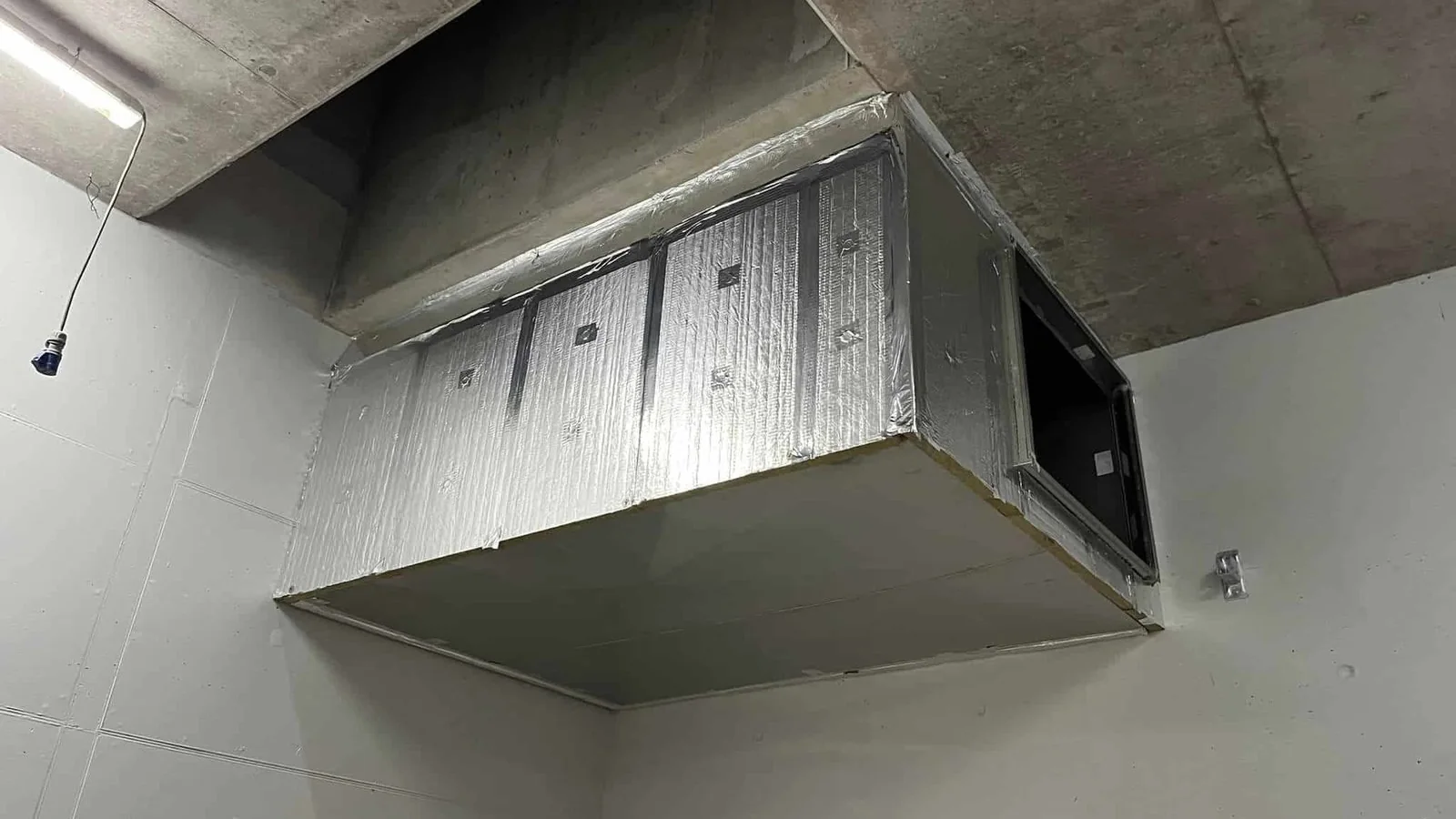
Match Duct Conditions to the First Insulation Route
Different parts of one HVAC system may require different air duct insulation constructions. Use the conditions below to identify an initial route; final suitability depends on the actual product and project requirements.
| Duct condition | First material direction | Conditions to confirm |
|---|---|---|
| Cold supply duct in a warm, humid area | Closed-cell elastomeric insulation, or an external fiberglass system with continuous vapor control | Supply-air temperature, ambient temperature/relative humidity (RH), thickness and vapor continuity |
| External HVAC duct needing thermal performance with some acoustic benefit | Foil-faced glass wool wrap or a suitable board form | Duct dimensions, required thermal resistance, facing and available space |
| External duct where moisture control and flexible coverage are priorities | Closed-cell elastomeric sheet or board | Service temperature, thickness, surface configuration and space |
| Internal acoustic treatment | A product specifically confirmed for internal duct-liner service | Air-stream suitability, acoustic and fire requirements |
| Temperature or exposure beyond normal HVAC service | Industrial duct or higher-temperature insulation route | Service temperature, exposure and protection |
For cold ducts, condensation risk cannot be addressed by nominal thickness alone. Moist air must be prevented from reaching the cold duct surface through joints, terminations or discontinuities in the insulation system. This distinction matters when comparing closed-cell elastomeric products with faced fiberglass duct insulation.
Glass Wool and Closed-Cell Elastomeric Product Routes
Insulvora's air duct insulation options differ in material structure, available form and how the full installed system handles moisture. The product forms below are starting points for specification, not interchangeable grades of the same insulation.
Foil-Faced Glass Wool Roll
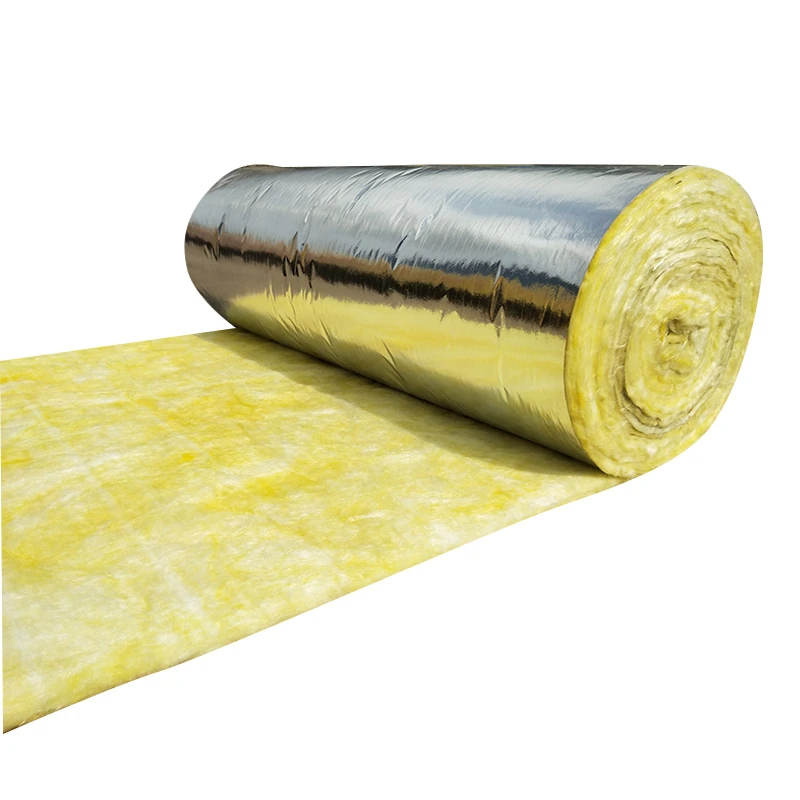
Foil-faced glass wool roll is used as external fiberglass duct wrap where thermal insulation and fibrous acoustic performance are relevant. Available roll thicknesses are 25–100 mm, with a standard width of 1.2 m. The current product range includes single-sided or double-sided aluminium foil and reinforced facing options. These choices support different duct sizes, thickness needs and facing specifications.
On cold ducts, the facing and its joints must form part of a continuous vapor-control construction; glass wool alone is not a substitute for that system. This should be confirmed when specifying fiberglass duct wrap insulation for humid conditions.
Glass Wool Board
Glass wool board offers a stable panel form for flat duct surfaces and constructions where shape retention is useful. Suitability must be checked against the particular board, the installation location and the required performance; the board should not be assumed equivalent to flexible wrap.
A standard glass wool board is not automatically a purpose-made fiberglass duct board for every HVAC application, nor should it be described as fiberglass duct liner without confirmation. Products used inside the air stream require specific suitability for internal duct-liner service. This distinction is particularly important when assessing fiberglass insulation for ductwork.
Closed-Cell Elastomeric Rubber Foam
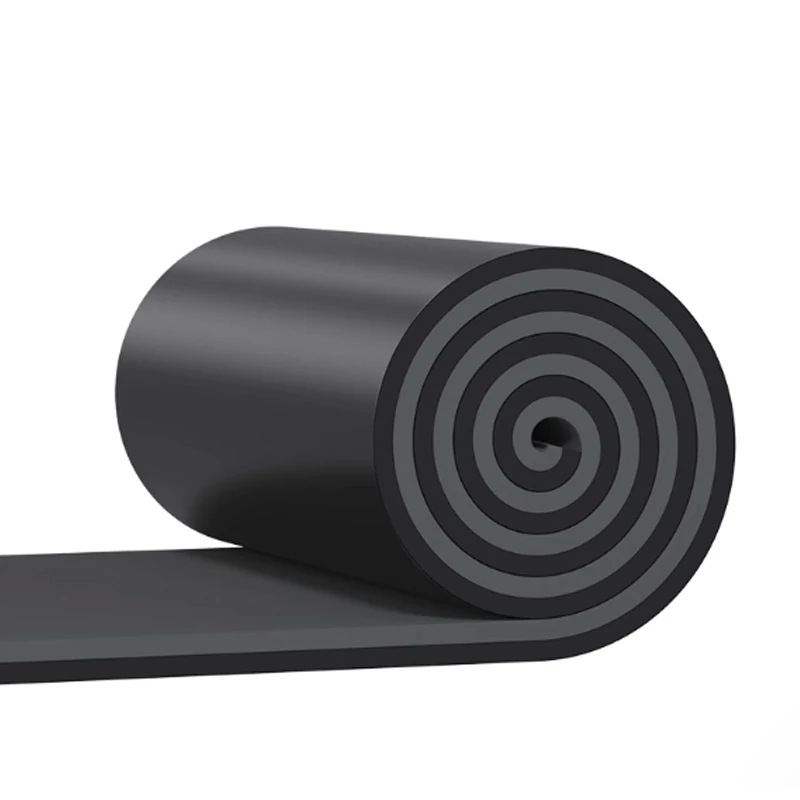
Closed-cell NBR/PVC rubber foam board is an option for air conditioning duct insulation when thermal control and moisture resistance are priorities, especially around cold ducts in humid environments. Flexible sheet or board forms can accommodate broad duct surfaces, corners and transitions.
Current Insulvora board configurations include 5, 10, 20, 30 and 50 mm thicknesses. Self-adhesive backing and aluminium-faced options are available within the relevant product range. Select the final option against service temperature, humidity, space and protection requirements.
Related product: Foil Faced Rubber Foam Board.
Final Air Duct Insulation Specification and System Continuity
Once an initial material route is selected, the final air duct insulation specification must address both the required performance and the details that affect it after installation.
Temperature and humidity. Confirm supply- or return-air temperature, ambient temperature and relative humidity. For cold ductwork, these conditions determine whether condensation control is needed and how the insulation and vapor-control system must work together.
Thermal resistance and thickness. Confirm the specified R-value or thickness, then check it against the available air duct insulation product ranges. Projects requiring additional evaluation can use the duct insulation R-value guidance before a product configuration is confirmed.
Duct size, geometry and installation space. Round ducts, rectangular ducts, elbows and transitions can require different roll, board and sheet layouts. Available clearance and access influence the practicality of each form.
Exposure, acoustics and fire requirements. Check the requirements for surface protection, acoustic performance and fire-related suitability. Outdoor exposure may call for protection against rain, sunlight and mechanical damage. Internal acoustic treatment remains a separate service condition that requires a suitable air-stream product.
Continuity at Joints, Supports and Penetrations
Air duct insulation performance also depends on the installed details. Seams, corners, stiffeners, flanges, hangers, access doors and penetrations can interrupt coverage or vapor-control continuity. On cold ducts, these locations need particular attention so humid air does not reach the cold metal surface.
Fibrous insulation should not be excessively compressed at supports or other local details, since reduced installed thickness affects thermal performance. Where foil facing or a separate vapor-control layer is used, joints and terminations must remain continuous. For material-specific wrapping, jointing and local details, refer to the duct insulation installation guidance.
Continue by Duct Condition
The following pages examine specific design and service questions beyond this general air duct insulation overview.
Metal Duct Insulation
Review metal surfaces, seams, flanges, supports and access points that may affect external insulation details.
Round and Rectangular Duct Insulation
Compare how duct geometry changes wrapping, board fitting, corners and joint arrangements.
Return Air Duct Insulation
Determine whether return-air temperature, duct location and ambient conditions create a thermal or condensation requirement.
Industrial Duct Insulation
Assess routes for process temperatures, service conditions or exposure beyond normal HVAC duct operation.
Duct Sound Insulation
Separate external fibrous insulation from internal acoustic treatment and other approaches when noise control is the main concern.
Confirm Your Air Duct Insulation Project
Send the duct dimensions and geometry, operating air temperature, ambient conditions and required thermal, acoustic or surface performance. Insulvora will review the application and confirm a suitable material route, available product form and configuration for quotation. Where applicable, include the required R-value or thickness, facing preference and installation exposure.