
Industrial Duct Insulation
Industrial duct insulation starts with the actual service: general ventilation, utility air, heated process air, exhaust, or higher-temperature process ductwork. Operating temperature sets the first material boundary; duct geometry, moisture, exposure, and maintenance access determine how the insulation is configured.
Insulvora supplies rock wool blankets and boards, glass wool rolls, and closed-cell elastomeric sheets and boards for applicable duct conditions. Duct dimensions, service temperatures, thickness, facing, and external-protection requirements are used to confirm the suitable product configuration.

Industrial Duct Insulation Routes by Service Condition
Use the duct service to identify an initial material route, not to assign a final product grade. The verified temperature limit of the exact product—and of its complete faced construction where applicable—must govern the specification.
| Industrial duct condition | First material direction | Confirm next |
|---|---|---|
| General industrial ventilation / utility air | Glass wool roll or board within the applicable product range | Temperature, thermal target, acoustic requirement, facing |
| Lower-temperature air-handling service requiring moisture or vapor control | Closed-cell elastomeric sheet or board within the applicable range | Temperature, thickness, surface condition, joint continuity |
| Heated process air / higher-temperature exhaust | Rock wool board or blanket | Maximum temperature, grade, thickness, geometry and fixing |
| Higher-temperature process duct | Verified high-temperature rock wool or mineral wool product | Exact grade and confirmed service-temperature limit |
| Outdoor or mechanically exposed duct | Selected insulation plus a separate external-protection system | Weather, washdown, impact, cladding and access requirements |
Conventional HVAC supply, return, or exhaust ductwork focused primarily on heat transfer, condensation, and standard acoustic requirements is better addressed on the Air Duct Insulation page. Where temperature is the governing constraint, see High Temperature Insulation Materials and confirm the limit of the exact grade.
Material and Product Forms for Industrial Duct Insulation
Rock Wool Board and Blanket
For industrial duct insulation on heated process-air and higher-temperature exhaust systems, Rock Wool Blanket offers adaptable coverage over large surfaces and less regular sections. Insulvora's current product data lists 25–200 mm thicknesses, with maximum operating temperatures of 600°C for the standard grade and 750°C for the high-temperature grade. These values apply to the listed grades, not to every rock wool product.
For flat, stable duct surfaces, Rock Wool Board is an alternative. Current specifications cover 30–150 mm thicknesses, with a listed maximum operating temperature of 600°C. The board-or-blanket choice depends on the duct shape, installation and fixing method, operating temperature, and access requirements.
Glass Wool Rolls and Faced Constructions
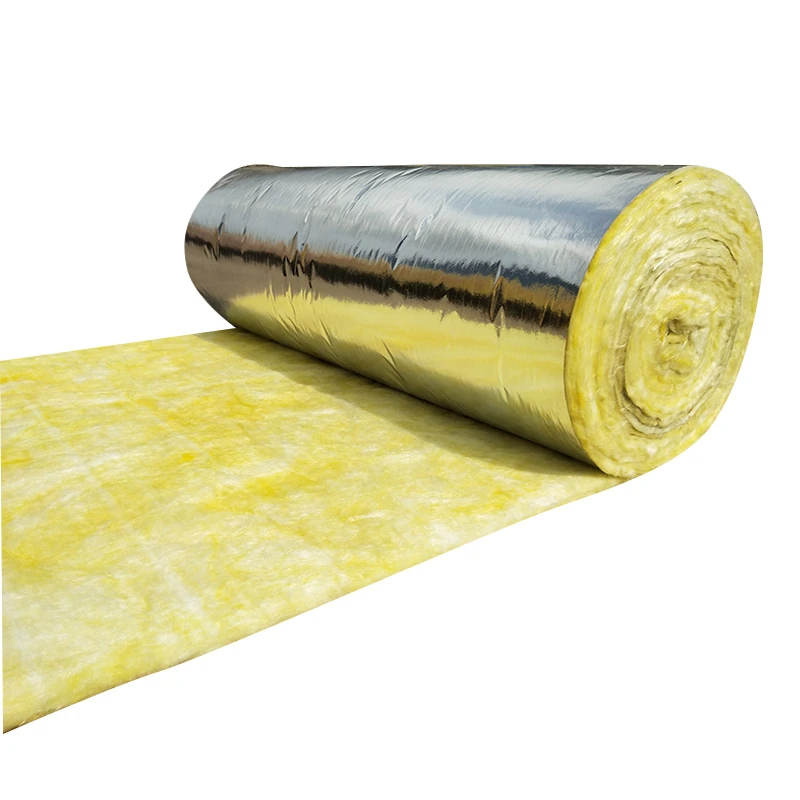
Glass wool provides a thermal and acoustic route for general industrial ventilation and utility-air ducts within the applicable product limits. Insulvora's Foil Faced Glass Wool Roll comes in 25–100 mm thicknesses. Listed facing options include single- or double-sided aluminum foil, FRK, and glass-scrim-reinforced constructions.
The base glass wool and a finished faced product have different temperature limits. Current data lists 350°C for the base glass wool, while a faced product using standard laminating adhesive has a continuous service temperature of 100°C. Industrial duct insulation using such a product must follow the limit of the complete construction, including its facing and adhesive, rather than the fiber rating alone.
Closed-Cell Elastomeric Sheet and Board
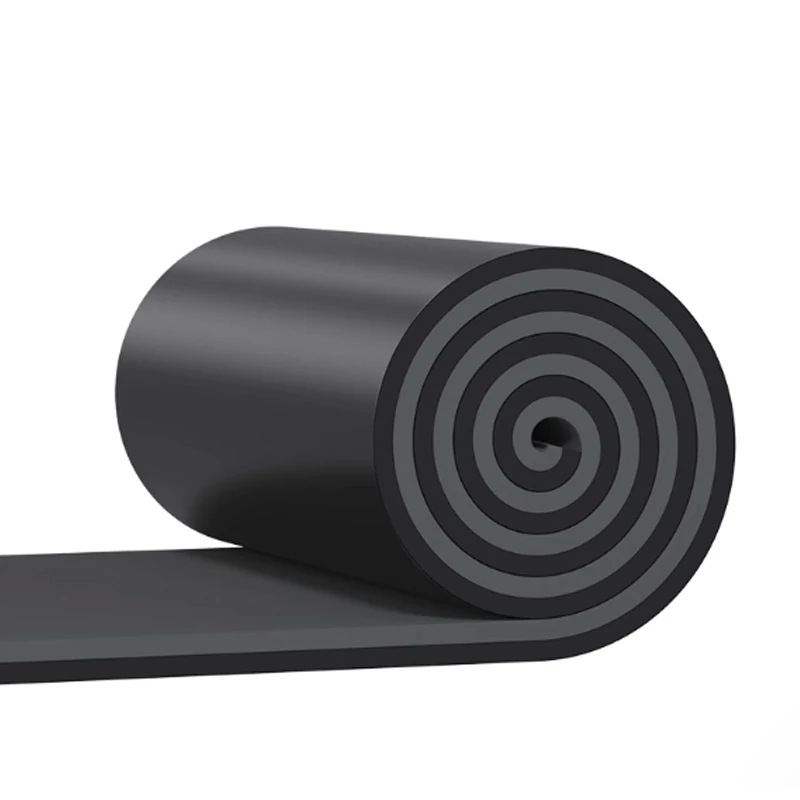
For lower-temperature industrial air-handling service where closed-cell construction and vapor control matter, NBR/PVC elastomeric sheet or board may be suitable within its applicable range. Current Foil Faced Rubber Foam Board data lists a base-material service range of −40°C to +105°C and thickness options of 5, 10, 20, 30, and 50 mm. Aluminum-faced and self-adhesive configurations are available. Confirm the selected facing, adhesive, and joint treatment for the intended service; this route is not intended for higher-temperature process ducts.
Conditions That Change the Final Specification
Operating temperature and construction. Confirm normal and maximum temperatures for the intended industrial duct insulation system. The grade, facing, adhesive, and other construction components must be suitable for the actual service, not just for a general material family.
Geometry and installation. Duct dimensions, flat or irregular surfaces, and the proposed fixing method affect whether board, blanket, or flexible sheet is practical.
Exposure and surface-temperature requirements. Outdoor exposure, moisture, washdown, and mechanical contact influence protective construction. Personnel-access areas and maximum allowable surface temperatures may change the insulation thickness; a material's temperature rating alone does not establish the thermal design.
Acoustic and fire requirements. Confirm the project criteria using the exact selected product. Density, thickness, facing, and available test documentation should be checked for that product rather than assumed from its material family.
Insulation Continuity, Access and External Protection
Industrial duct insulation must account for stiffeners, flanges, supports, expansion joints, dampers, instruments, and inspection doors. Coverage should remain continuous across transitions and reinforced sections without blocking operation, inspection, or maintenance. Where thermal expansion or equipment movement is expected, the insulation and its protective construction must accommodate the mechanical condition.
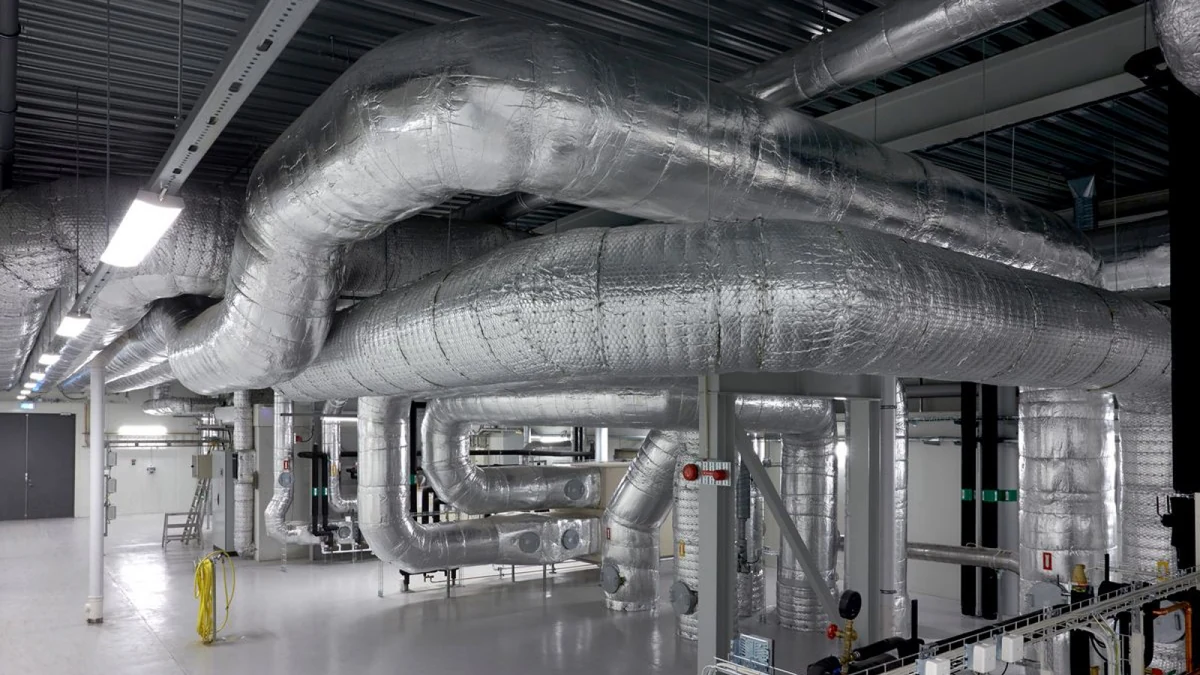
Outdoor or impact-prone ductwork needs separate protection. Metal cladding, a suitable facing, or another appropriately selected outer-protection system addresses weather and mechanical exposure, while the insulation layer provides its intended thermal, acoustic, or temperature-control function. External protection should be selected for the actual exposure rather than assumed from the insulation material alone.
Confirm Your Industrial Duct Insulation Requirement
Send the duct service, normal and maximum operating temperatures, dimensions, and required insulation configuration. Include facing, external-protection, acoustic, fire, or surface-temperature requirements where relevant. Insulvora will confirm the applicable material, product form, and quotation basis against the supplied project conditions.