
Cold Storage Insulation Materials for Glass Wool & Pipework
Cold storage insulation materials must be selected as part of a complete insulated and vapor-controlled system. Walls, ceilings, roofs, floors, doors and service penetrations have different construction requirements, while chilled-water and refrigeration lines require a separate cold insulation approach.
Within this defined scope, Insulvora supplies cold storage insulation materials as glass wool rolls, boards and faced products for assemblies designed to use protected fibrous insulation, plus preformed closed-cell elastomeric sleeves and cold insulation foam for compatible low-temperature pipework.
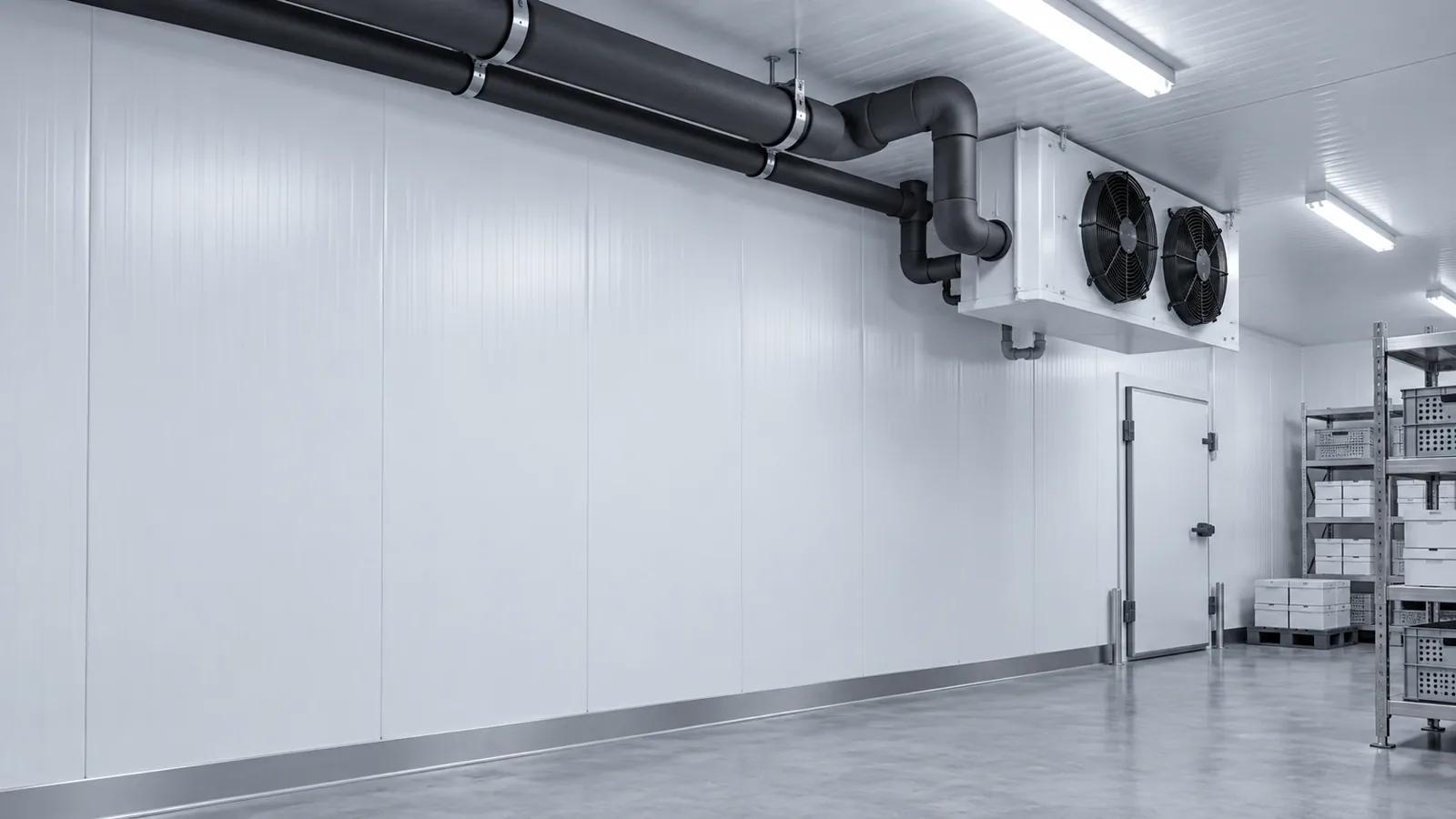
Cold Storage Insulation Materials Within Our Supply Scope
Among Insulvora’s cold storage insulation materials, Cold Storage Glass Wool Insulation can form a thermal layer within wall, ceiling or roof assemblies specifically designed for protected fibrous insulation. Flexible rolls suit continuous or irregular framed cavities, while boards provide defined dimensions for regular bays. The surrounding construction must provide suitable support, air control, vapor control and protection from moisture and damage.
These fibrous cold storage insulation materials include Glass Wool Roll in 25–100 mm thicknesses and Glass Wool Board in 20–130 mm. Foil Faced Glass Wool Roll offers single-sided, double-sided and reinforced aluminum-foil facings. These product-range specifications still require project-specific thickness, density and facing confirmation.
For compatible low-temperature pipework, the available cold storage insulation materials include NBR/PVC closed-cell cold insulation foam as preformed sections, including Slit Rubber Foam Pipe and Foil Faced Rubber Foam Pipe. Available thicknesses include 15, 20, 25, 30, 40 and 50 mm, with multiple inside diameters. Slit sections allow lengthwise installation around existing pipework, while foil-faced versions provide an alternative outer finish where specified. Selection still depends on pipe OD, operating temperature, condensation conditions and compatibility with the pipe and service.
These cold storage insulation materials cover defined glass-wool assemblies and compatible pipework, not a complete cold-room enclosure. Glass wool rolls and boards are not substitutes for complete sandwich-panel systems, insulated floors, cold-room doors, panel-joint systems or underfloor frost-heave protection. Elastomeric pipe sections insulate compatible pipework only and must remain within the selected product series' documented service-temperature range.
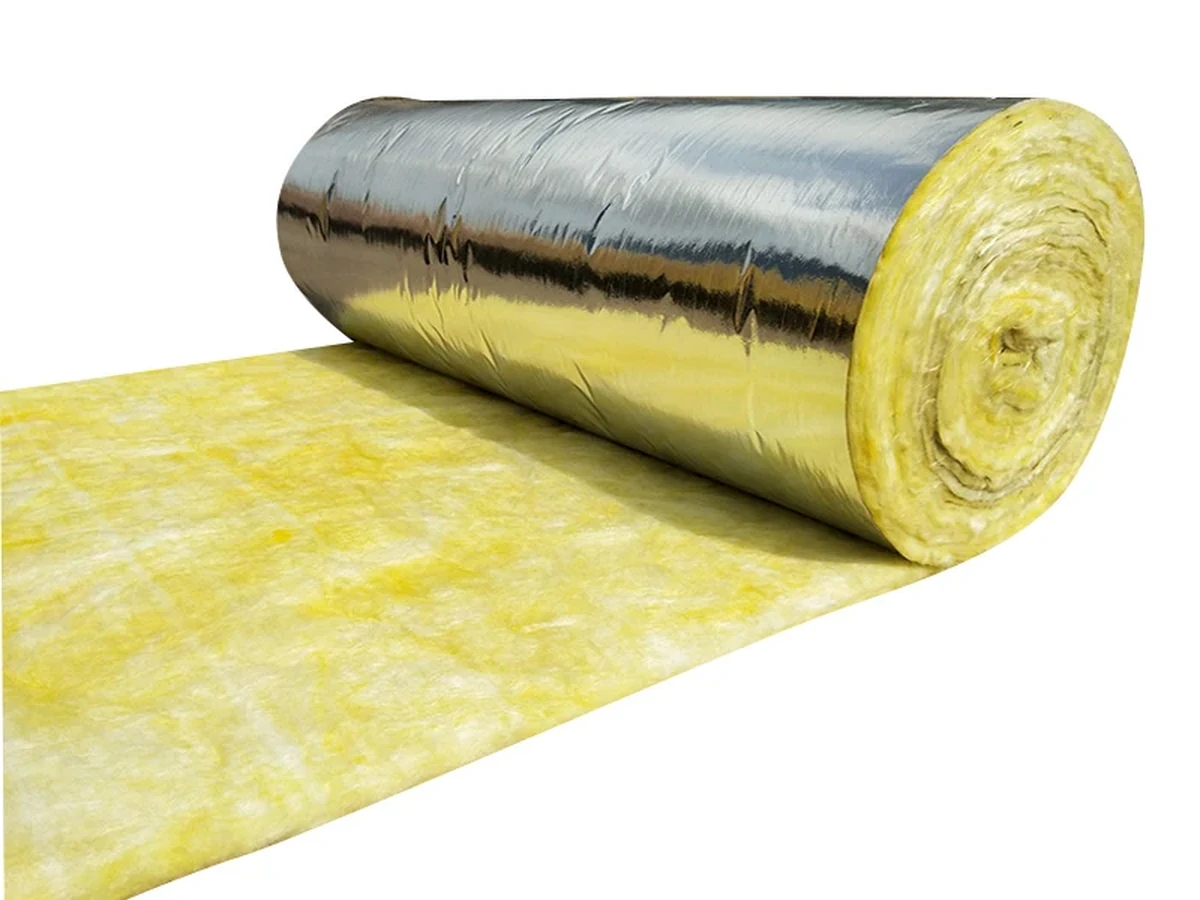
Select Cold Storage Insulation Materials by Component
Cold storage insulation materials should be selected only after identifying the component being insulated: a framed wall, ceiling or roof cavity designed for glass wool, or a chilled-water or refrigeration pipe requiring a preformed sleeve.
For glass wool installed in a defined cold-room assembly, the storage temperature, surrounding temperature, ambient humidity and required thermal performance affect thickness and vapor-control demands. The wall, ceiling or roof construction determines how the insulation is installed and supported. Available cavity depth, framing and fixing arrangements influence the practical use of rolls or boards.
For cold storage insulation materials used on chilled-water services, preformed elastomeric sleeves provide a cold insulation route when the operating temperature falls within the selected material range. Refrigerant lines may operate at lower temperatures, so the choice of cold insulation foam sleeves must account for pipe OD, actual service temperature and condensation conditions. Cold insulation installed outdoors may require additional facing or cladding protection; a foil surface alone does not establish complete weather protection.
Chilled Water Pipe Insulation and Refrigerant Line Insulation cover their respective service conditions. Further technical information is available in the Pipe Insulation Thickness Chart and Low Thermal Conductivity Insulation.
Vapor Control and Insulation Continuity
Cold storage insulation materials in a glass-wool envelope depend on continuous insulation, air control and vapor control across joints, corners and service penetrations. Connections to doors, floors and adjoining panel or framed sections belong to the complete enclosure design. Air leakage and moisture ingress can wet local insulation and reduce long-term thermal performance.
Glass wool assemblies require continuous vapor control, sealed joints and protective construction. A faced product's vapor performance depends on its facing, connections and overall assembly; aluminum foil alone does not establish an effective vapor barrier.
For cold insulation on pipes, longitudinal seams, section joints, elbows, valves, supports and penetrations also matter. Unsealed seams or exposed metal can cause condensation even when straight runs have sufficient insulation thickness. Additional thickness cannot replace proper sealing.
For dew-point and joint details, see Pipe Condensation Insulation and Pipe Insulation Vapor Barrier.
Project Confirmation and Quotation
For cold storage insulation materials in a defined wall, ceiling or roof assembly already designed to use protected glass wool, Insulvora can match the available space and stated thermal requirements against its rolls, boards and facing options. For low-temperature pipework, the sleeve must fit the actual pipe outside diameter, remain within the documented service-temperature range and suit the condensation and compatibility conditions; these factors determine which preformed sizes and configurations can be quoted.
To quote cold storage insulation materials within this supply scope, send the required component, storage or fluid temperature, ambient conditions, dimensions, quantity and applicable project specification. Insulvora confirms available product forms, dimensions, facings and quantities.
Discuss Your Cold Storage Insulation Project
Insulvora supplies cold storage insulation materials as glass wool for suitable protected cold-room assemblies and closed-cell elastomeric sections for compatible low-temperature pipework. Tell us which component you need, together with temperatures, dimensions, quantity and project requirements, so we can confirm whether it falls within our supply scope.