
Refrigerant Line Insulation
For refrigerant piping that operates below ambient temperature, refrigerant line insulation commonly begins with closed-cell elastomeric tubing. Cold suction lines often need particular attention to heat gain and condensation risk, while other lines in the same air-conditioning or refrigeration circuit may operate under different conditions. The line's actual duty and normal operating temperature—not copper construction alone—determine where insulation is needed and what it must control.
For AC refrigerant line insulation, copper-tube outside diameter (OD) determines the required sleeve bore, but it does not determine insulation thickness. Temperature, ambient humidity, installation route and any existing project specification also affect the final configuration. Indoor-to-outdoor runs need both an appropriate insulation build-up and protection where the system is exposed.
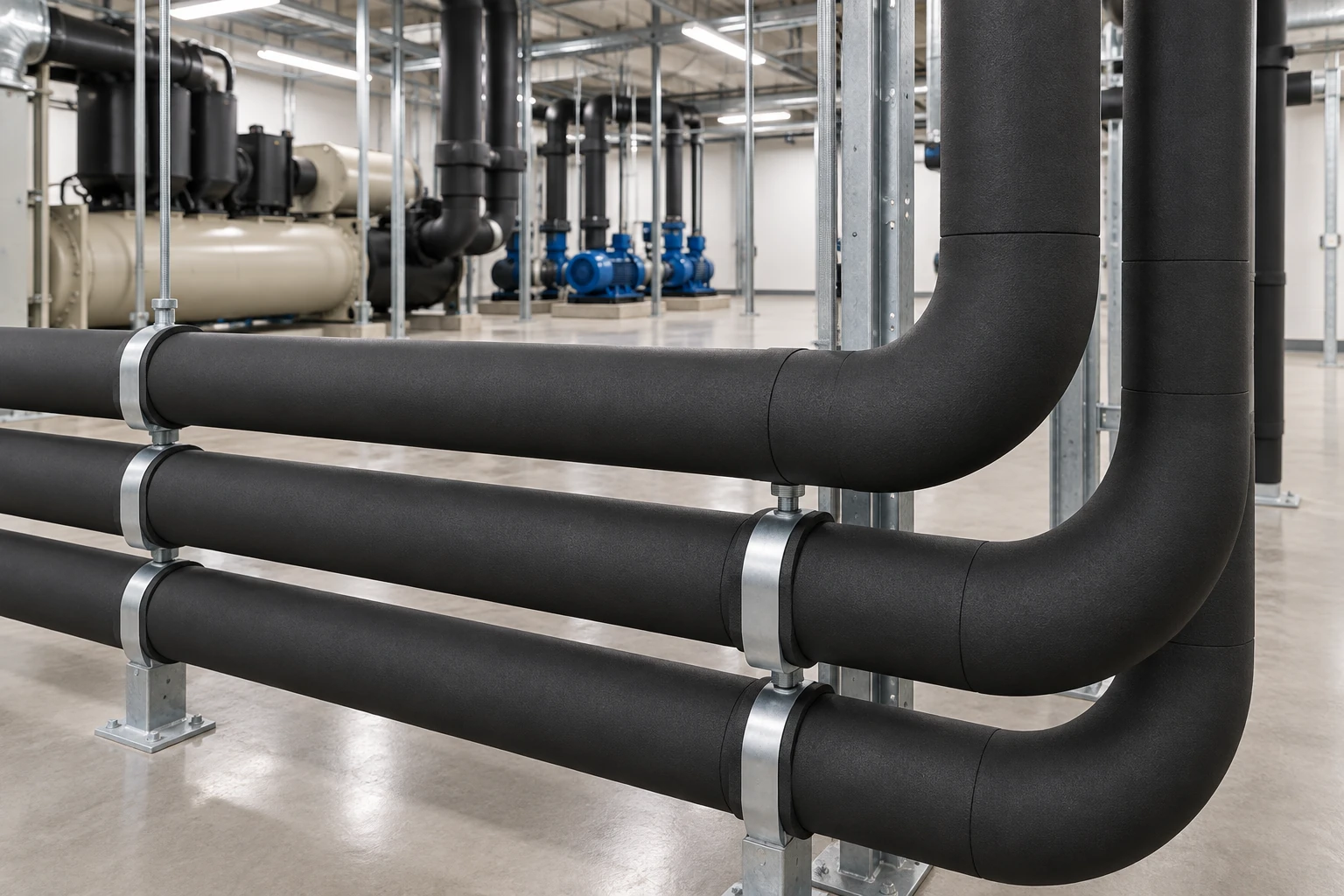
Operating Conditions That Affect Insulation Selection
The same copper pipe size can call for different refrigerant line insulation details depending on its operating environment. Confirm the line duty first, then use the following conditions to assess thickness, installation detailing and external protection.
| Project condition | What it changes |
|---|---|
| Lower operating temperature | A greater temperature difference increases heat gain and condensation exposure. Match insulation thickness and configuration to the actual line duty. |
| Higher ambient temperature and humidity | Moisture risk becomes more critical, especially at seams, elbows, supports and other breaks in continuity. |
| Restricted or enclosed spaces | Access may affect sleeve closure, treatment of fittings and continuous coverage through penetrations. |
| Outdoor refrigerant lines | The assembly needs suitable protection against sunlight, rain and physical exposure as well as thermal insulation. |
| Consultant or project specification | Follow specified material, thickness, facing and performance requirements when checking the proposed product. |
Product Forms for Refrigerant Copper Piping
Closed-Cell Elastomeric Tube Insulation
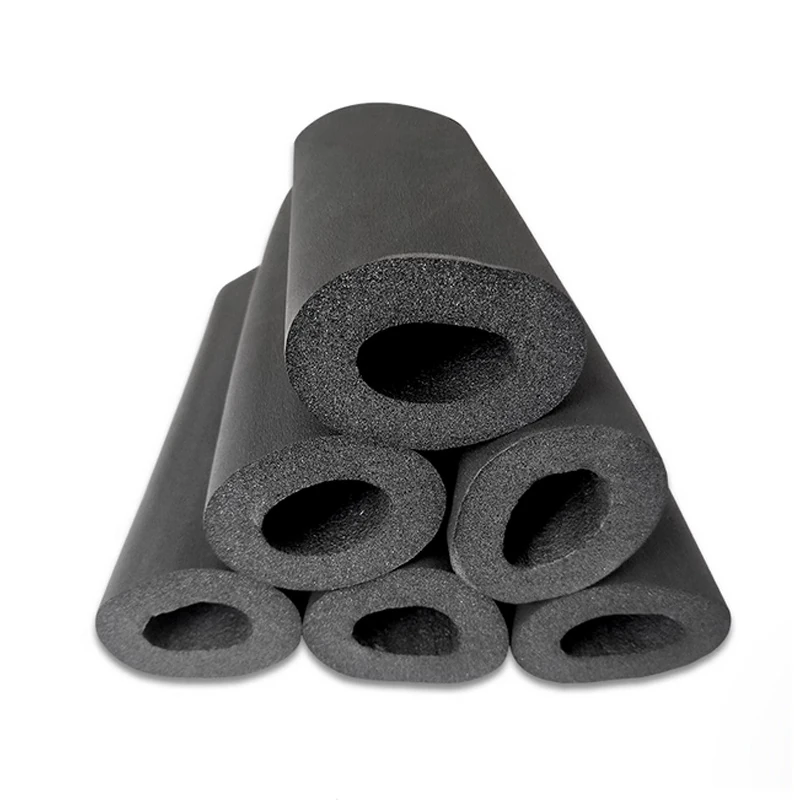
For below-ambient copper lines, Insulvora's main product route is closed-cell NBR/PVC elastomeric tube insulation. This tubular form of refrigerant line insulation uses preformed sleeves matched to the copper-tube OD, with wall thickness checked against the project's operating and environmental requirements.
The material route should not be confused with the final product specification. A correctly sized sleeve can fit the pipe without meeting the required insulation build-up. For this reason, refrigeration pipe insulation orders should identify both sleeve inside diameter and insulation thickness.
Available Sleeve Sizes and Alternative Configurations
The current AC Copper Pipe Insulation Sleeve range lists the following dimensions for air-conditioning and refrigeration copper piping:
| Specification | Listed range |
|---|---|
| Sleeve inside diameters | 6, 10, 13, 16, 19, 20, 25 and 32 mm |
| Insulation wall thicknesses | 8 or 15 mm |
| Section lengths | 1.8 or 2 m |
Confirm the required size-and-thickness combination for each pipe before ordering. If the project falls outside this small-bore sleeve range, requires a different thickness, or calls for another installation form, Rubber Foam Pipe Insulation configurations can be checked against the requirement.
For mini-split systems, Mini Split Line Insulation covers line-set size combinations and indoor-to-outdoor routing in more detail. For cold lines where surface condensation is the main concern, see Pipe Condensation Insulation.
Maintain Insulation Continuity at Critical Details
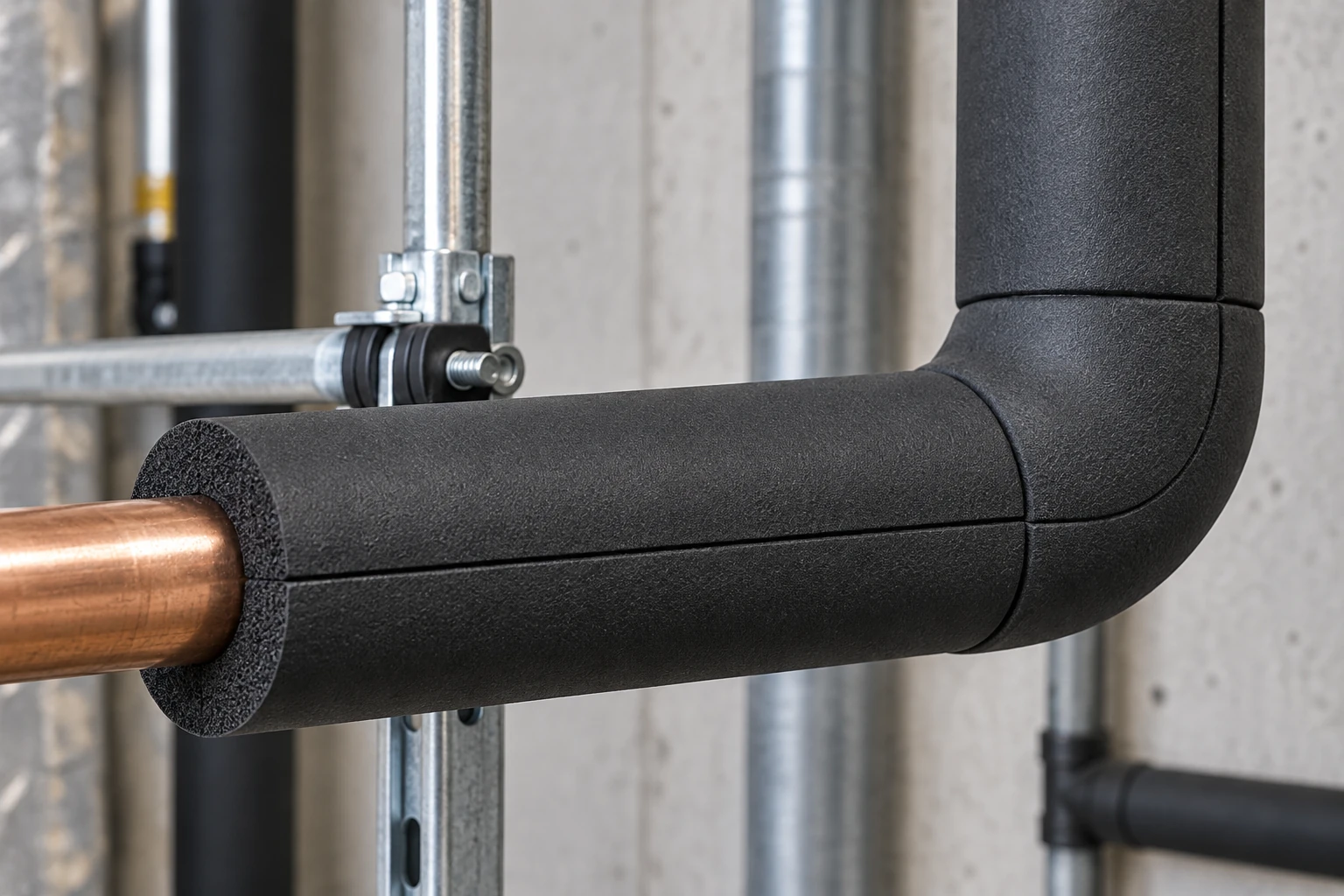
Even when the straight pipe runs have the correct refrigerant line insulation, weak points can remain at elbows, brazed joints, valves, supports, wall penetrations and transitions between indoor and outdoor areas. Open seams, reduced thickness, compressed insulation or exposed metal can interrupt an otherwise continuous system.
On a low-temperature line, an unsealed joint or a support that compresses the material can leave a local path for heat and moisture. Insulation should continue around fittings and through penetrations so that isolated cold metal is not exposed to humid air. This detailing is particularly important for air conditioning line insulation in humid enclosed areas.
Outdoor sections also need continuity between the insulation and the project-specified protective finish. Protection against sunlight, rain and mechanical exposure does not compensate for gaps in the underlying refrigerant pipe insulation. Further detail is available in Pipe Insulation Vapor Barrier and Pipe Insulation Installation.
Project Information for Product Confirmation
To match refrigerant line insulation to your project, provide the system or line type, actual copper-tube OD, normal operating temperature and required insulation thickness if already specified. Include indoor or outdoor routing, required lengths or quantities for each size, and any facing, external protection or mandatory performance requirements.
Insulvora can then review the available tubular product forms, check the proposed sleeve diameter and wall thickness, and prepare a quotation for the confirmed refrigerant pipe insulation configuration. For projects with different line duties or exposure conditions, identify those sections separately so they can be assessed against the corresponding requirements.
Send Your Project Requirements
Send your pipe sizes, operating conditions and required quantities to discuss suitable refrigerant line insulation products and request a project or bulk-supply quotation.