
Rubber Foam Pipe Insulation for HVAC and Piping Systems
Preformed closed-cell NBR/PVC foam tubes are used on HVAC, refrigeration, and suitable hot- and cold-water piping. When correctly selected and installed, rubber foam pipe insulation helps reduce heat transfer and manage condensation on chilled lines.
Insulvora offers slit, high-density, and foil-faced tube configurations. Start with the pipe’s actual outside diameter, the required insulation thickness, and the operating conditions. Then select the installation method, density range, or surface finish appropriate to the project. Available combinations should be confirmed before ordering.
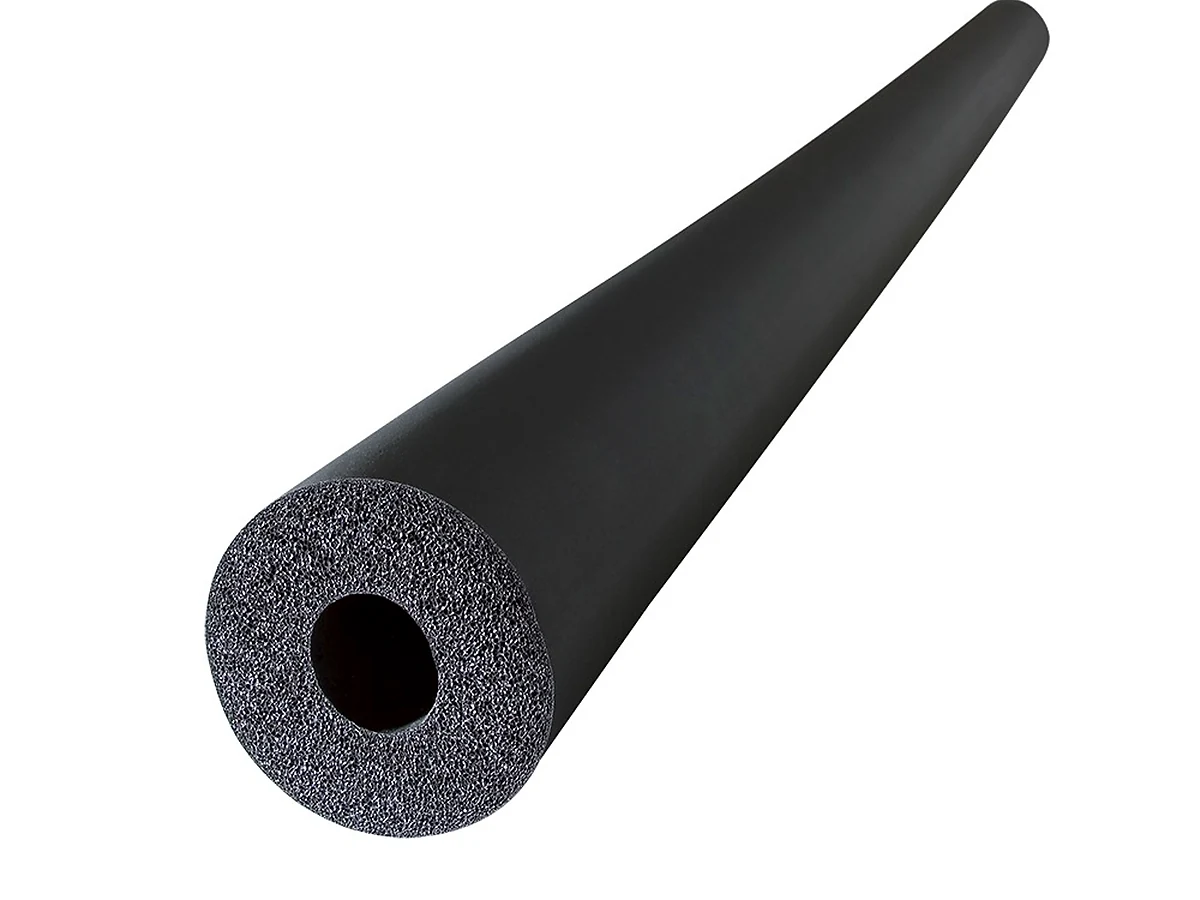
Rubber Foam Pipe Insulation Forms and Supply Options
Preformed tubes are primarily used on straight pipe runs. Slitting describes how a tube is fitted, density identifies a material specification, and facing describes the outer surface. These are distinct selection factors, and not every configuration is available in every combination.
| Product Form | Applications and Available Supply |
|---|---|
| Slit Rubber Foam Pipe | A longitudinal slit allows fitting around existing pipework where the tube cannot be slid on from an open end, or on new installations requiring side access. The closed-cell NBR/PVC slit range lists a density of 65–85 kg/m³. After installation, the slit must be closed and sealed continuously. |
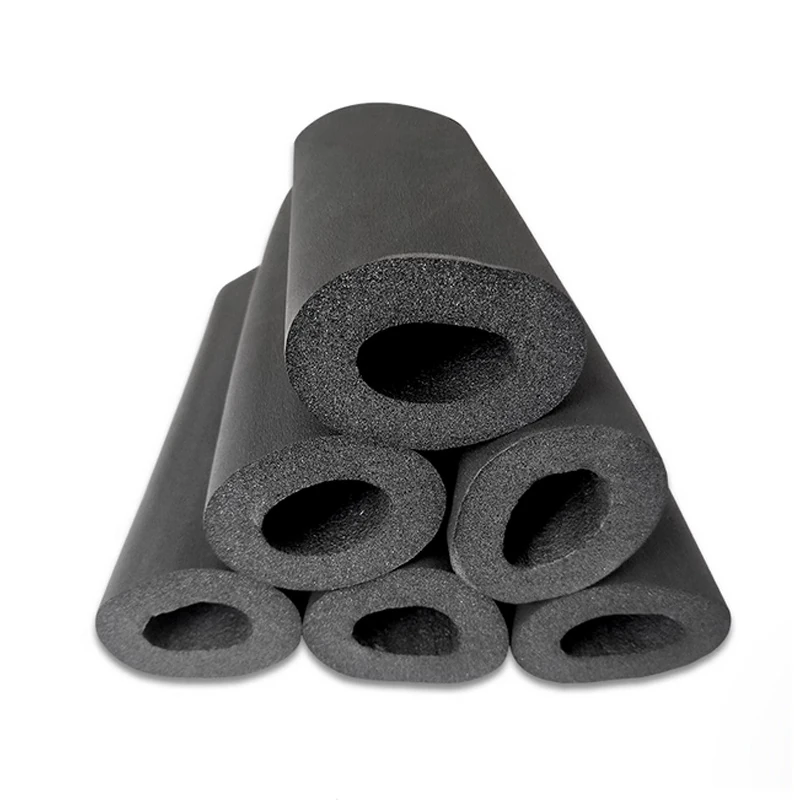
| High Density Rubber Foam Pipe | Intended for projects specifying higher material density. This preformed NBR/PVC range is listed at 80–110 kg/m³. Higher density by itself does not establish better thermal insulation performance. |
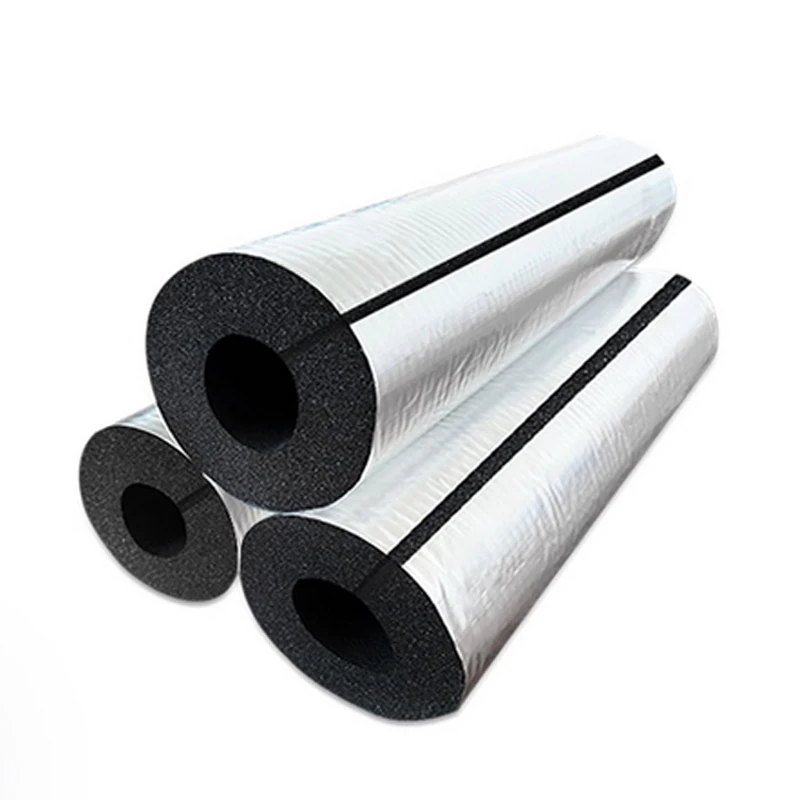
| Foil Faced Rubber Foam Pipe | Used when the specification calls for an aluminum-foil surface on a closed-cell foam tube. The facing construction and its suitability must be checked against the conditions of use. |
Across Insulvora’s foam rubber pipe insulation ranges, the listed wall thicknesses are 15, 20, 25, 30, 40, and 50 mm. The high-density range includes selected tube inside diameters from 10 to 110 mm. Not every inside diameter is supplied with every thickness or product form.
Slit tubes are also available with foil facing, allowing side installation and a specified outer finish in the same configuration. Confirm the exact bore, thickness, density range, and facing when selecting elastomeric foam pipe insulation for a project.
Pipe Sizing and Operating Conditions
Matching Pipe Diameter and Insulation Thickness
For rubber foam pipe insulation, the tube’s inside diameter should match the pipe’s actual outside diameter. Steel, copper, and plastic pipes follow different nominal sizing conventions; pipes with similar nominal descriptions may therefore have different outside diameters. A tube that is too tight may stretch or deform, while an oversized bore can leave gaps that complicate joint sealing and interrupt insulation continuity.
Wall thickness is a separate decision. Two pipes with the same outside diameter can require different insulation thicknesses because of differences in service temperature, ambient conditions, and performance targets. Pipe diameter alone is not enough to determine thickness. Use the Pipe Insulation Sizing Chart for dimensional matching and the Pipe Insulation Thickness Chart for thickness considerations.
Cold and Hot Services
On chilled-water, air-conditioning, and refrigeration lines, rubber foam pipe insulation needs to address both heat gain and condensation. Moisture can form when the outer insulation surface is below the dew point of the surrounding air. Thickness affects the external surface temperature, but an open seam can admit humid air to the cold pipe and produce localized condensation. Continuous joints and sealed terminations are therefore particularly important for elastomeric pipe insulation in cold services.
When specifying rubber pipe insulation for hot-water service, assess heat loss, surface temperature, and material temperature suitability. The relevant Insulvora NBR/PVC tube series lists a material service range of −40°C to +105°C. The selected tube, facing, and joint arrangement must still suit the project: this material range is not a temperature rating for the complete installed system.
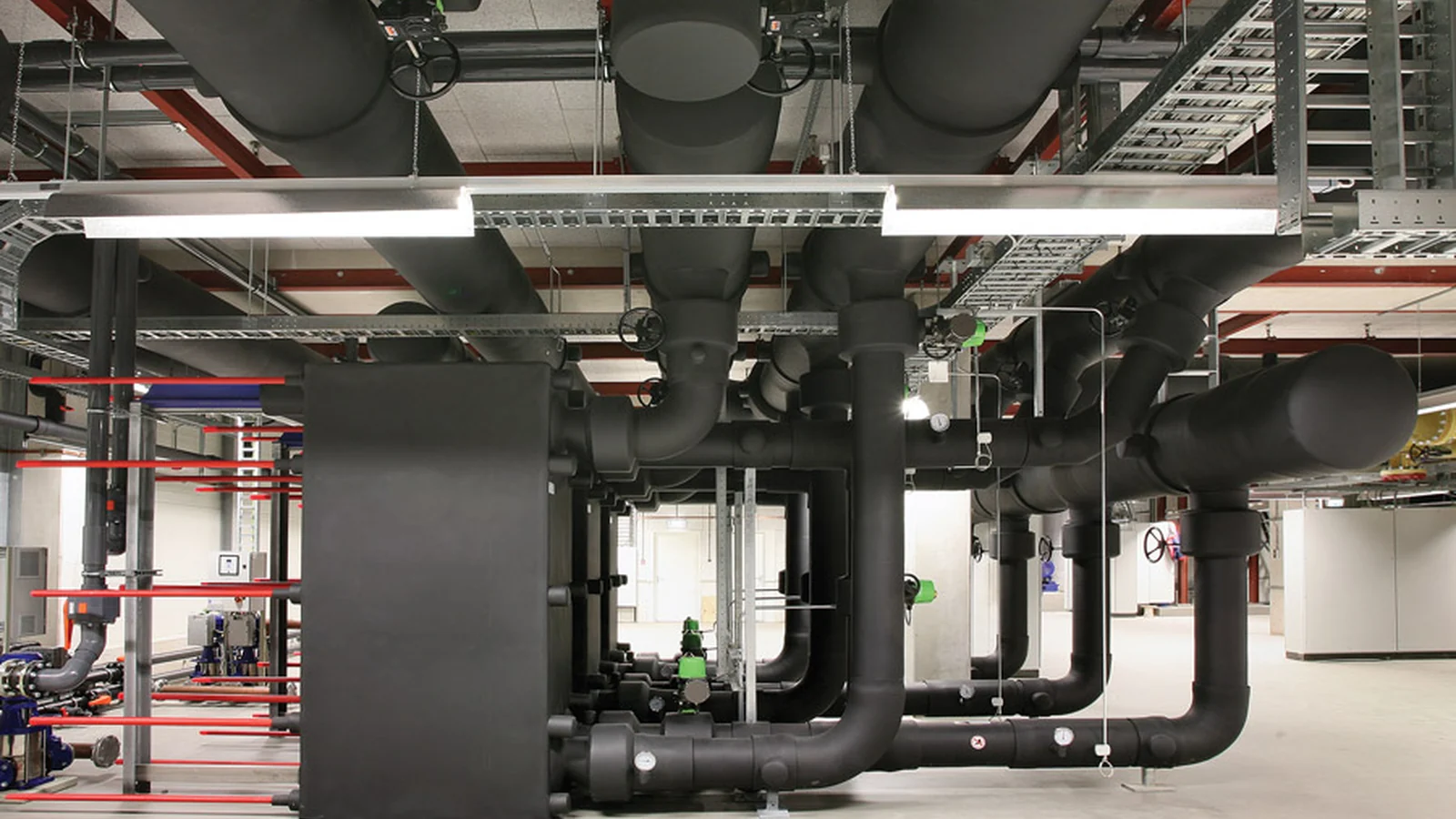
Insulation Continuity at Fittings, Supports and Exposed Runs
Preformed rubber pipe lagging covers straight pipe runs, but elbows, tees, valves, and irregular connections may need cut-and-joined pieces or location-specific insulation arrangements. These details should maintain coverage and allow access to components that must be operated or maintained.
At pipe supports, compression or breaks in the insulation can increase local heat transfer and lower the outer surface temperature. On chilled lines, check tube ends, longitudinal seams, and fitting interfaces for gaps rather than relying on the straight-run insulation alone. Valves and flanges need arrangements that preserve maintenance access without leaving surrounding areas unprotected.
For outdoor rubber foam pipe insulation, consider added protection against sunlight, rain, and mechanical damage. Foil facing alone does not make the installed system weather-resistant or vapor-tight. The required protective layers, joints, and terminations must be considered together.
For further detail, see Pipe Insulation Vapor Barrier for vapor-control principles and Pipe Insulation Installation for practical fitting and joint guidance.
Rubber Foam Pipe Insulation Enquiries
For a rubber foam pipe insulation quotation, provide the pipe outside diameter, intended service and operating conditions, preferred wall thickness, product form or facing requirements, and estimated quantity. Insulvora can review the available tube bore, thickness, density, and finish options and quote the applicable supply configuration.