
Metal Roof Insulation for Thermal and Condensation Control
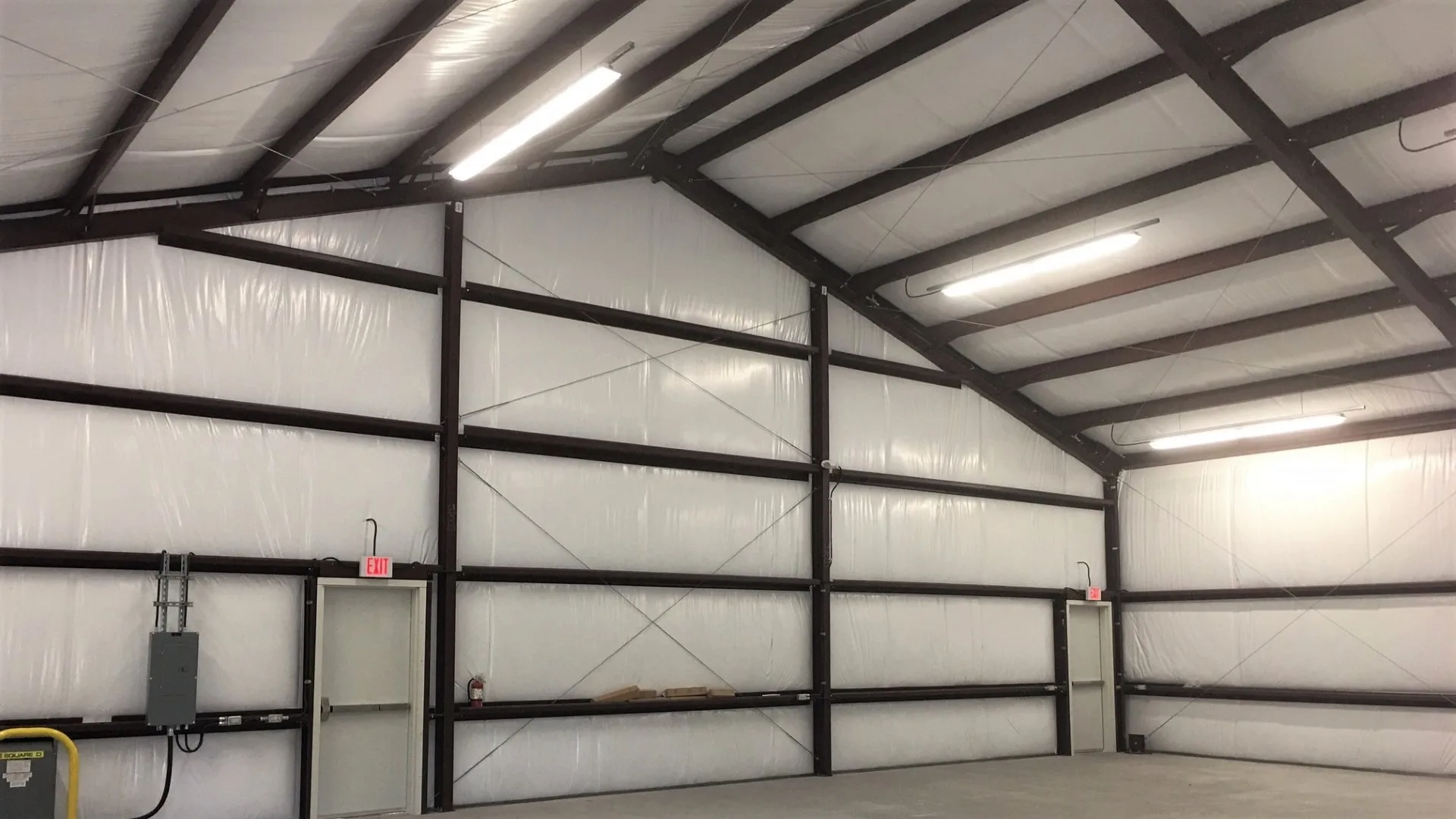
Metal roof insulation must address rapid temperature changes, thermal bridging and condensation risk. Insulvora’s Glass Wool Roll is a practical starting point where the roof can support a flexible blanket at its intended thickness. Foil Faced Glass Wool Roll suits assemblies requiring an aluminum facing, while Roof Rock Wool Board is an option for suitably supported board systems. Final selection depends on roof build-up, purlin layout, available depth and indoor conditions.
Insulation Materials and Product Forms
For metal roof insulation in blanket form, Glass Wool Roll provides flexible coverage beneath roof sheets or within supported liner assemblies. Available thicknesses are 25–100 mm, at a standard width of 1.2 m. Where roof bays vary, secure blanket edges to avoid gaps along the framing.
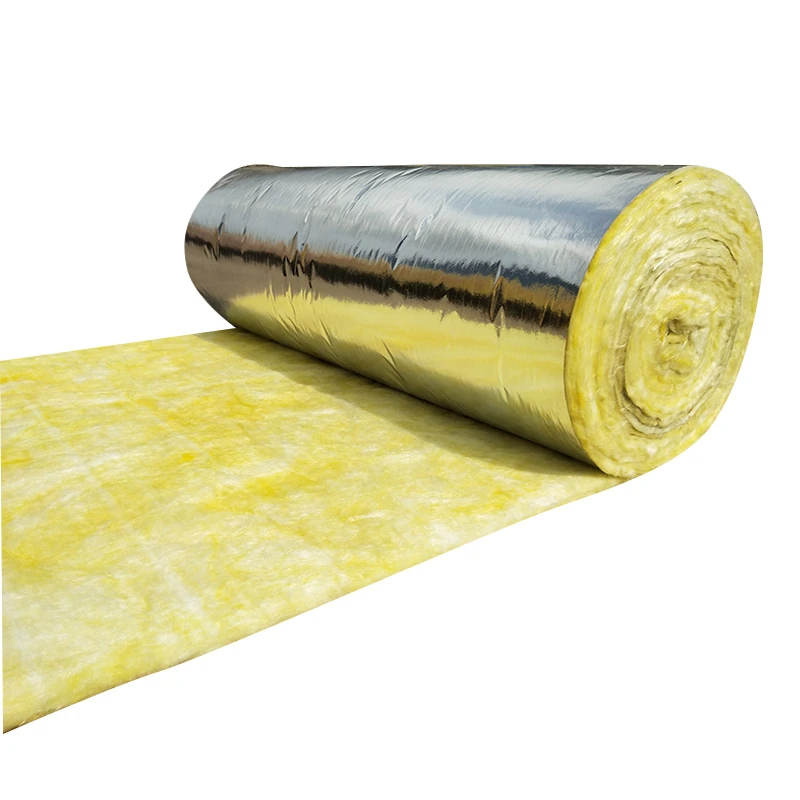
Foil Faced Glass Wool Roll is available in 25–100 mm thicknesses, with single-sided, double-sided and reinforced foil options. Its vapor-control role depends on the facing specification and roof assembly, not simply the presence of foil.
Roof Rock Wool Board provides rigid panels for supported roof assemblies. Standard panels measure 1.2 × 0.6 m, with thicknesses of 30–150 mm. Support, fixing arrangements, and mechanical and fire requirements must suit the selected product and roof system.
Foil Roof Insulation Roll uses closed-cell NBR/PVC foam rather than glass wool. It is a separate option for compatible roof configurations, not a direct substitute for mineral wool blankets or boards.
Roof Build-Up, Support and Installed Thickness
In a metal roof insulation assembly, the material may sit beneath roof sheets, between purlins, above or below liner panels, or in multiple layers. Position governs available depth, support and thermal continuity. Blankets spanning purlin bays need different retention from insulation laid on a continuous supporting deck.
| Roof Condition | Material and Installation Direction |
|---|---|
| Flexible insulation across purlin bays | Use suitably supported glass wool blankets to prevent sagging and maintain the intended installed thickness. |
| Aluminum-facing requirement | Consider foil-faced glass wool, coordinated with the assembly’s facing and vapor-control requirements. |
| Continuous, supported board layer | Consider Roof Rock Wool Board where the supporting system and fixing method suit the selected board. |
| Higher R-value with limited depth | Do not compress a thicker blanket to fit. Review the available build-up depth or a multi-layer arrangement. |
| Retrofit with existing liners | Check access, available depth, existing roof condition and liner condition before selecting the product form. |
Steel purlins and fixings create thermal bridges, while compression reduces resistance below that suggested by nominal thickness. Both affect overall metal roof insulation performance even when the material meets the specified thickness. For whole-assembly R-value or U-value requirements, see Metal Building Insulation R-Value.
Condensation Control and Roof Continuity
Warm, humid indoor air can reach colder roof sheets or steel members through gaps, causing condensation. Repeated moisture exposure may wet insulation, affect adjacent linings and contribute to corrosion. Insulation alone cannot stop air leakage or vapor movement.
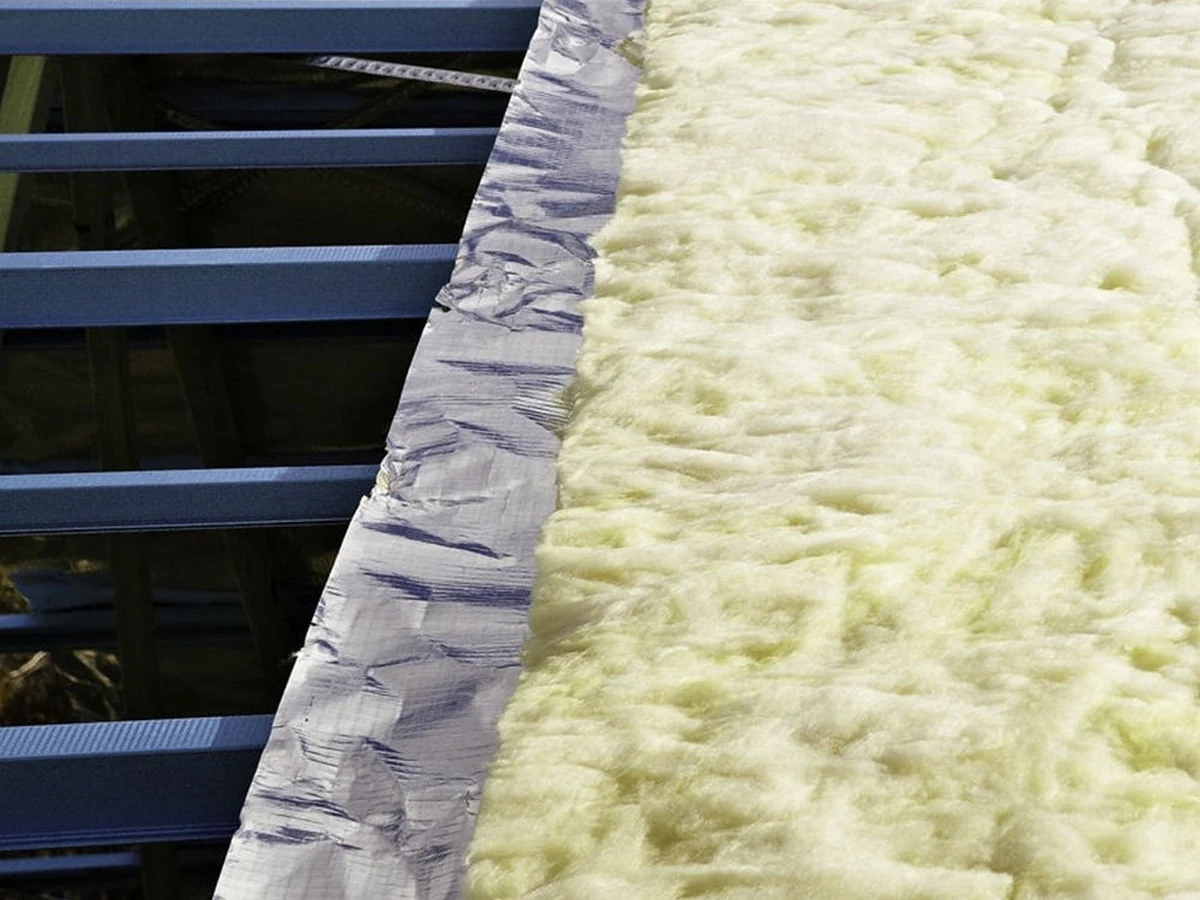
With foil facings or separate vapor-control layers, position and continuity are critical. Unsealed laps, punctures and service penetrations can create paths for moisture to bypass the facing, even when the insulation material is suitable.
Ridges, eaves, skylights, roof curbs, gutters and roof-to-wall junctions require coordinated insulation and sealing. New construction allows these details to be integrated before roof closure. Retrofits require existing leaks, corrosion, liner condition and access to be reviewed before insulation is added. These junctions influence continuity across the metal roof insulation system.
Further fixing, joint and installation guidance is covered in Metal Building Insulation Installation.
Discuss Your Metal Roof Project
To review metal roof insulation for your project, provide the roof profile and purlin spacing, available installation depth, target R-value, indoor temperature and humidity, and any required facing. For retrofit work, include the condition of the existing roof and liner, access limitations and project scope.
Insulvora can review these details against its glass wool and rock wool ranges, confirm available product forms and specifications, and discuss quotation requirements.