
Acoustic Panels for Conference Room Walls and Ceilings
Hard surfaces such as glass partitions, plasterboard, concrete, and large conference tables can cause sound to reflect repeatedly within a meeting room. These reflections may reduce speech clarity during discussions, presentations, and video calls. Strategically placed absorption panels help control unwanted reflections without compromising the room's layout or visual design.
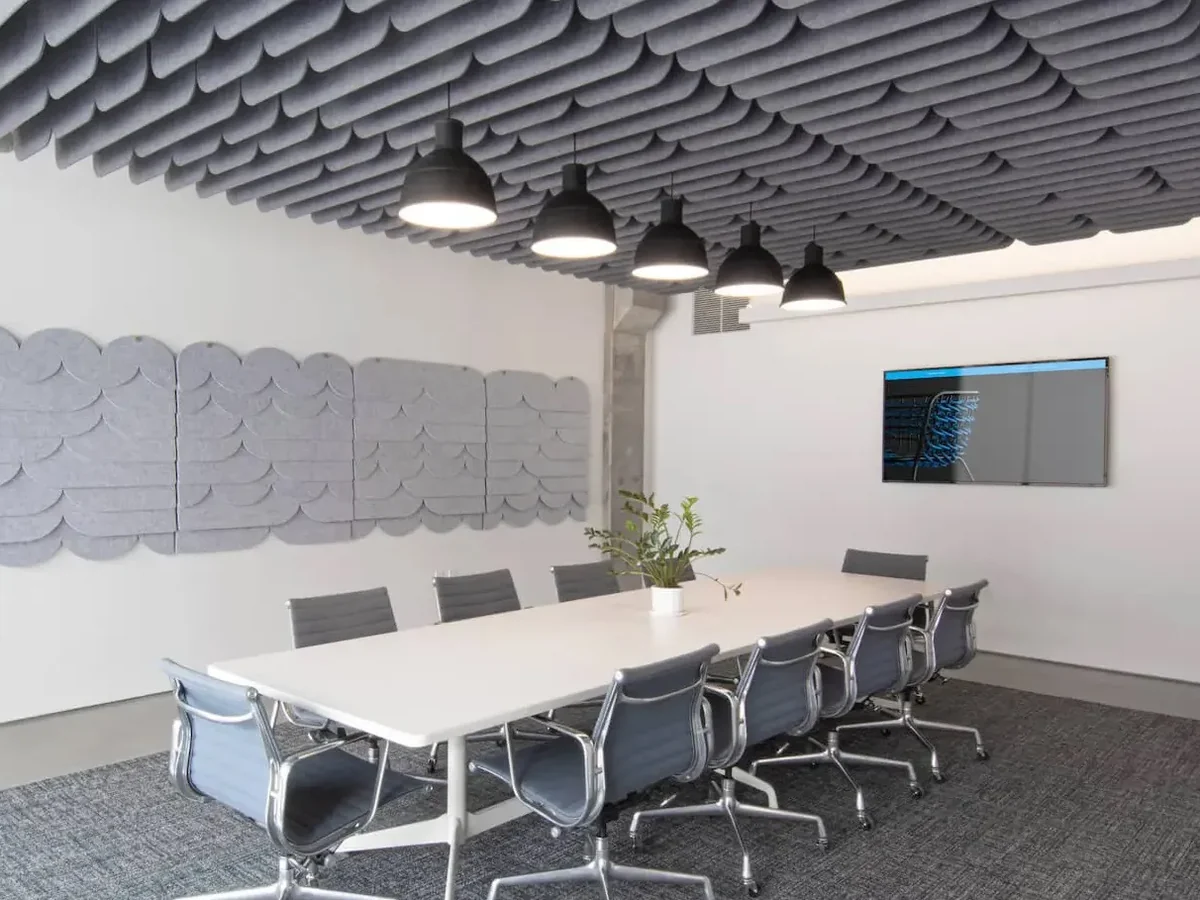
For projects requiring acoustic panels for conference room walls or ceilings, polyester fiber panels offer a practical starting point. Insulvora supplies panels for visible interior applications. Available dimensions, thicknesses, finishes, and other configurations are confirmed against the proposed installation areas and acoustic requirements.

Positioning Acoustic Panels for Conference Room Use
Panel placement should follow how people speak and listen in the room. Room size, glazing, table length, and seating positions influence where reflections occur and which surfaces can receive treatment. For video conferencing, microphone pickup, loudspeaker positions, displays, and camera views also need to be considered.
Acoustic panels for conference room interiors can be positioned differently according to the room conditions:
| Room Condition | Panel Direction | Main Considerations |
|---|---|---|
| Small meeting room with extensive hard wall surfaces | Prioritize walls that reflect speech toward speakers and listeners, rather than treating only a decorative feature wall. | Seating distance from walls; reflections between opposing hard surfaces. |
| Glass-walled conference room | Use remaining solid walls and suitable ceiling areas when glazing limits available wall coverage. | Extent of glazing; display positions; sightlines. |
| Large boardroom | Distribute treatment across wall and ceiling areas serving different seating zones, rather than concentrating it on one end wall. | Multiple speaking positions; seating zones; available panel area. |
| Video-conference room | Target suitable reflective surfaces near main speaking areas and microphone pickup zones. | Microphones; loudspeakers; displays; camera views. |
Built-in fixtures, screens, or glazing may further restrict the surfaces available for panels. The chosen layout should respond to actual speaking and listening positions, not only to the room's visual focal point. Panel coverage should be based on the project's acoustic targets: additional coverage is not automatically more effective. Where an acoustic design or absorption criteria have already been specified, selection and placement should follow those requirements and the applicable test data.
Polyester Fiber Panels and Product Configurations
Insulvora's Polyester Fiber Acoustic Panel is available for visible absorption on meeting room walls and ceilings. When specifying acoustic panels for conference room interiors, product dimensions and appearance must be considered alongside acoustic performance because the panels also form part of the interior finish.
Panel thickness and mounting arrangement can affect sound absorption. Test data for acoustic panels for conference room projects must correspond to the selected product grade, thickness, and tested installation configuration. Neither the material name nor appearance alone establishes compliance with a specified acoustic rating, and results from one product or mounting condition should not be applied automatically to another.
Finished panel length and width affect the division of wall or ceiling surfaces and the position of joints. Dimensions should be coordinated with doors, displays, lighting, and other interruptions to limit unnecessary cutting and narrow leftover sections. Nonstandard sizes or custom shapes depend on the particular product and processing requirements.
Color, face finish, and edge treatment determine how exposed panels fit the interior scheme and how their joints appear. Insulvora can confirm available options against the project's specified dimensions and finish requirements.
Where interior finishes require a particular fire classification or supporting documentation, the Fire Retardant Polyester Acoustic Panel may be relevant. The classification, test method, and documents must apply to the exact product supplied; they should not be assumed to cover every PET panel grade.
Installation Coordination and Acoustic Boundaries
Acoustic panels for conference room installations must fit the usable wall and ceiling areas, which may be smaller than the room's total surface area because of equipment, access points, and architectural details.
Wall installation requires a fixing method suitable for the substrate. Displays, whiteboards, switches, control panels, and door swings restrict panel positions, while service access must remain available. Areas subject to frequent contact also require consideration of the panel surface and fixing method.
Ceiling layouts must accommodate lighting, speakers, air outlets, detectors, sprinklers, and maintenance access. Panel positions and sizes should adapt to these elements without obstructing equipment or leaving impractical narrow sections. Fixing arrangements can affect both the finished appearance and acoustic performance. For more detail on substrates, mounting, joints, and edges, see Acoustic Wall Panel Installation.
Polyester fiber panels are used to control reflections and reverberation inside the room. They do not, by themselves, prevent speech transmission into adjacent offices or block noise entering through walls, doors, or ceiling assemblies. Where sound isolation is required, separate Acoustic Wall Insulation or Acoustic Ceiling Insulation measures may be needed.
Conference Room Acoustic Panel Inquiry
To request acoustic panels for conference room walls or ceilings, provide room drawings or dimensions, available installation areas, seating and AV layouts, acoustic criteria (if specified), preferred panel dimensions and finishes, estimated quantity, and any fire-classification or documentation requirements. Insulvora can then confirm available panel configurations, supporting product documents, and quotation details against the project needs.