
Duct Insulation Cost: Material Quantities, Pricing and Project Quotes
Duct insulation cost depends on the insulation material, thickness, facing, purchasing quantity and quotation terms. For an HVAC project, the area of ductwork requiring insulation is not always the same as the area of material that must be purchased. Roll dimensions and cutting layouts can make a significant difference.
Insulvora supplies foil-faced glass wool blankets and closed-cell NBR/PVC rubber foam sheets and rolls for HVAC contractors, insulation distributors and project buyers. Below, we explain duct insulation cost through pricing units, material options, a roll takeoff and a worked example. Bulk quotations are based on confirmed specifications and quantities.
How Duct Insulation Materials Are Priced
Area pricing helps compare duct insulation cost, but a purchase quotation may be prepared per square metre, roll, sheet or complete material schedule.
| Pricing unit | Typical products | Quotation basis |
|---|---|---|
| USD/m² | Glass wool blankets and rubber foam sheets | Price per square metre of specified material |
| USD/roll | Glass wool and rubber foam rolls | Roll width, length and product specification |
| USD/sheet | Rubber foam sheets | Sheet area, thickness and order quantity |
| Total material order | Multiple products or bulk project schedules | Itemised configurations, quantities, packaging and delivery terms |
To compare duct insulation cost on a like-for-like basis, roll and sheet prices can be converted to a common area unit. However, products should be compared only after their thickness, density where applicable, facing and other required properties have been checked. A lower price per roll does not necessarily mean a lower price per square metre.
A standard Insulvora material quotation covers the specified insulation products, not duct fabrication or on-site installation. Packaging volume and shipping arrangements depend on product thickness, pack dimensions, order size and destination. We offer FOB and FCA delivery terms (Incoterms® 2020); the applicable term and named delivery location are confirmed in the quotation. Freight coverage and any separately charged items must be clear when comparing offers.
Duct Insulation Materials and Product Options
The two main supply options are foil-faced glass wool and closed-cell rubber foam. The appropriate choice depends on the duct system's thermal and moisture-control requirements, not just duct insulation cost.
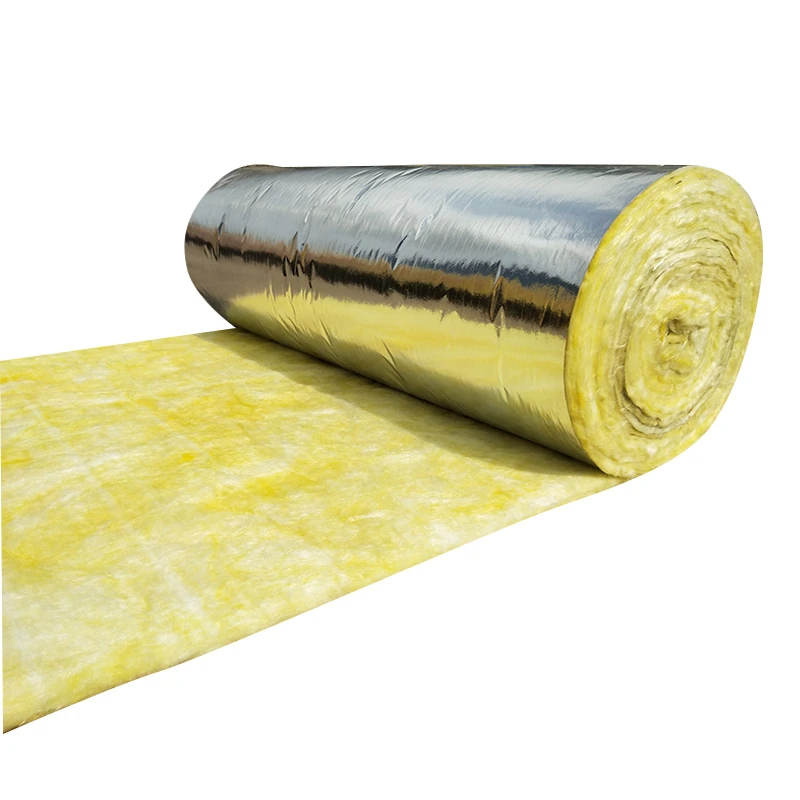
Foil-Faced Glass Wool Blankets
Flexible glass wool blankets are used on the outside of rectangular and round metal ducts. The selected foil facing provides a finished surface and forms part of the vapor-control arrangement, subject to the specified joint and sealing details.
Insulvora offers foil-faced glass wool in thicknesses from 25 to 100 mm, with a choice of densities, roll sizes, and standard or reinforced foil facings. These specifications determine the material and area supplied per roll. Long straight duct runs can be covered with cut blanket sections according to the developed wrap size.
Product: Foil-Faced Fiberglass Insulation
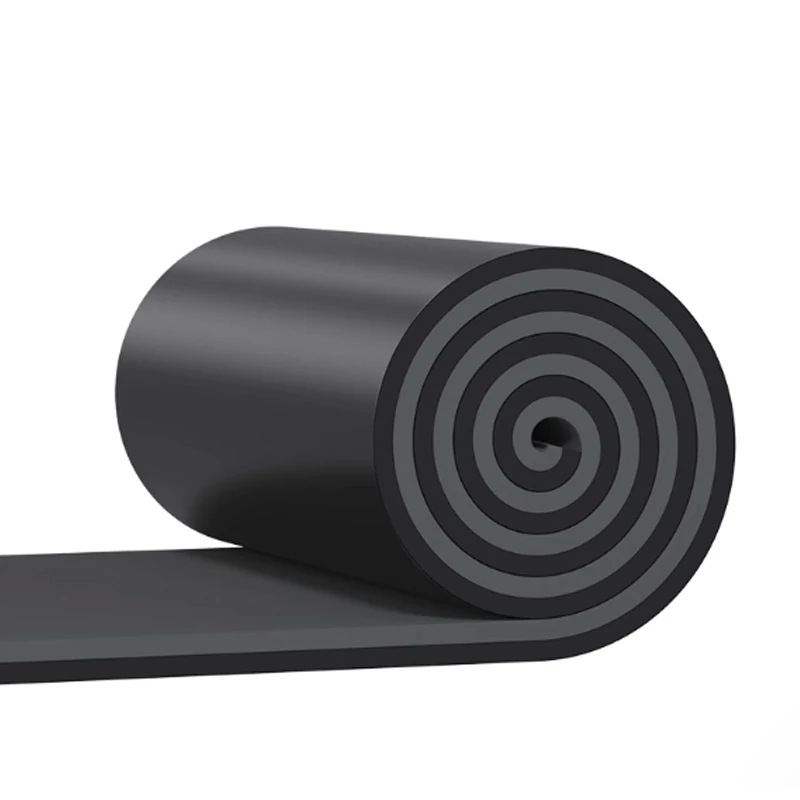
Closed-Cell Rubber Foam Sheets
Closed-cell NBR/PVC rubber foam is used for chilled-air ducts and other HVAC applications where limiting heat gain and surface condensation is important. Insulvora supplies sheets and rolls in different thicknesses, with plain, faced and adhesive-backed options depending on the product series.
Sheet or roll dimensions, insulation thickness and finish affect the supplied configuration. For chilled ducts, the selected thickness and continuity of vapor-resistant joints are important to the installed system's performance.
Product: Elastomeric Insulation
Duct Surface Area and Material Quantities
A duct insulation cost estimate starts with the bare surface area of straight ductwork. The material takeoff then accounts for the actual developed wrap dimension, the cutting layout and any additional pieces required for fittings and joints.
| Duct shape | Basic straight-duct surface area |
|---|---|
| Rectangular duct | A = 2 × (W + H) × L |
| Round duct | A = π × D × L |
W is duct width, H is height, D is diameter and L is straight-duct length. Use metres throughout to obtain an area in square metres. The formulas do not include elbows, transitions, branches or separate fitting allowances.
Worked Example: Rectangular Ductwork
Consider a 25 m straight run of rectangular metal duct, 800 mm wide and 400 mm high, to be externally insulated with approximately 50 mm glass wool blanket. The following assumed wrap dimension is illustrative and must be checked for the actual insulation and installation method.
| Item | Value |
|---|---|
| Duct width | 800 mm |
| Duct height | 400 mm |
| Total straight-duct length | 25 m |
| Bare duct perimeter | 2.40 m |
| Bare duct surface area | 60 m² |
| Nominal insulation thickness | Approximately 50 mm |
| Illustrative developed wrap dimension | Approximately 2.60 m |
| Basic blanket area for the straight run | 65 m² |
Bare duct surface area:
2 × (0.8 + 0.4) × 25 = 60 m²
For this example, assume each full wrap requires a developed blanket dimension of approximately 2.60 m. This is a planning assumption, not a universal addition to the bare-metal perimeter based solely on 50 mm thickness. The actual dimension depends on the selected blanket, corner treatment, joint arrangement and wrapping method. The basic blanket area is:
2.60 × 25 = 65 m²
Now consider rolls measuring 1.2 m wide by 10 m long, or 12 m² per roll. If the 1.2 m roll width is placed along the duct run, each cut section covers up to 1.2 m of straight duct length, before end laps. Covering 25 m therefore requires 21 sections. Each section must be approximately 2.60 m long to wrap the duct, so one 10 m roll yields three complete sections.
21 sections ÷ 3 sections per roll = 7 rolls
Seven rolls contain 84 m² of nominal material, even though the basic blanket-area estimate is 65 m². The difference arises from purchasing complete rolls and the illustrated cutting pattern; usable offcuts may be applied elsewhere. This seven-roll result is a straight-run example, not a final project allowance. End laps, joints, elbows, transitions, branches and other fittings must be included in the final takeoff. Actual duct insulation cost should therefore be based on the material purchase quantity, not the bare duct area alone.
Calculating Duct Insulation Cost and Comparing Quotes
Once the purchasing quantity is established, multiply the ordered rolls or sheets by the quoted unit price. Continue with the same example and assume USD 40 per roll. This is an illustrative calculation figure, not a current Insulvora selling price.
| Cost item | Calculation or result |
|---|---|
| Illustrative roll price | USD 40 |
| Nominal area per roll | 12 m² |
| Nominal material price | USD 3.33/m² |
| Basic purchasing quantity | 7 rolls |
| Material purchase total | USD 280 |
| Cost allocated over 60 m² of bare duct area | USD 4.67/m² |
7 rolls × USD 40 = USD 280
This example isolates duct insulation cost for the supplied blanket; freight and other separately quoted charges are excluded. The nominal material price is USD 40 ÷ 12 m², or about USD 3.33/m²; the purchased-material cost spread over 60 m² of bare duct surface is USD 280 ÷ 60 m², or about USD 4.67/m². These are different measures, and the actual cost changes if the approved cutting arrangement or purchasing quantity changes.
A duct insulation cost comparison between glass wool and rubber foam should begin with products that meet the project's thermal requirements, thickness, facing and moisture-control needs. Different configurations may produce different material quantities and packing requirements, so quoted area price alone does not establish the lower total material cost.
For related design requirements, see Duct Insulation R-Value and Air Duct Insulation.
Request a Duct Insulation Quote
For an accurate duct insulation cost quotation, send Insulvora the required material type, insulation thickness, facing or finish, duct dimensions or material takeoff, estimated purchase quantity and delivery destination. If your project requires several insulation configurations, list their quantities separately. We can confirm the available product configurations, packaging arrangements, material pricing and applicable delivery terms in the quotation.