
Fiberglass Acoustic Insulation for Walls & Ceilings
Fiberglass acoustic insulation is used as a porous absorptive layer in wall and ceiling cavities, partitions, equipment enclosures and framed acoustic components. Within Insulvora's range, Glass Wool Roll is the first route for flexible cavity filling and continuous coverage, while Glass Wool Board suits defined sections that need a stable absorptive core.
The first choice follows the installation position, available depth, support and whether the material is concealed or exposed. Fiberglass acoustic insulation can support absorption inside the assembly, but sound isolation between spaces still depends on the complete wall, ceiling or enclosure—including linings, framing connections, penetrations and seals.
Select the Glass Wool Form Around the Acoustic Assembly
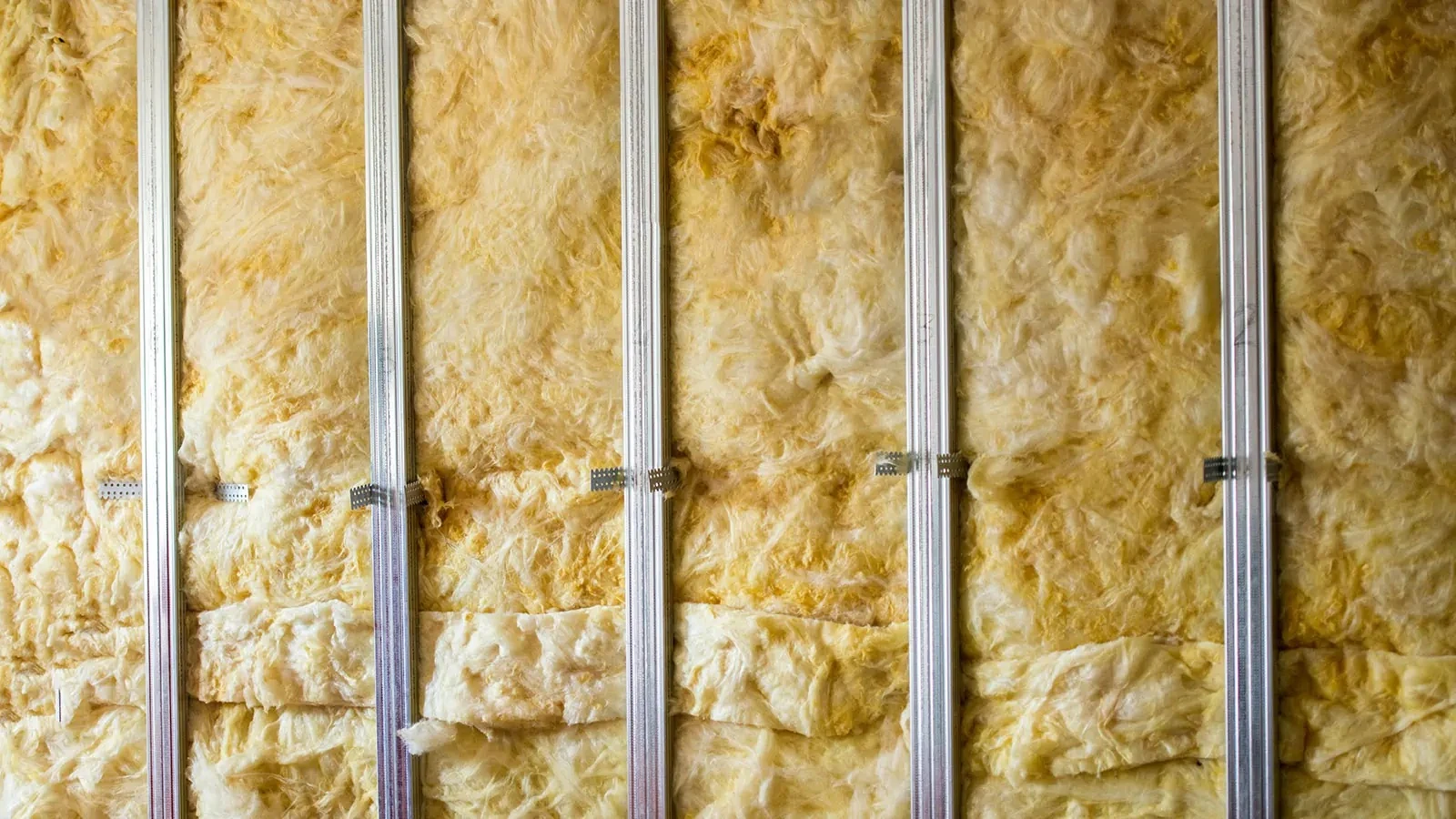
For continuous or irregular wall and ceiling cavities, Glass Wool Roll can be cut around framing and services. Insulvora's roll range covers 10–72 kg/m³ density and 25–100 mm thickness. Suitable retention is still required in vertical and overhead work so the acoustic fiberglass insulation does not move, sag or leave open areas.
Where consistent panel dimensions or secure positioning are important, Glass Wool Board provides a firmer format. The standard board range covers 24–100 kg/m³ density and 20–130 mm thickness. High Density Glass Wool Board covers 64–120 kg/m³ and 20–100 mm where greater rigidity or shape retention is required. Higher density does not, by itself, establish better fiberglass sound absorption or whole-assembly isolation.
Standard framed partitions normally start with roll or board sized to the cavity. Ceiling voids can use either form where the support arrangement, services and access allow it. Flat equipment-enclosure faces or fabricated absorptive components more often favor board, while curved or irregular areas may favor flexible roll. The enclosure temperature and protective lining must also suit the selected product.
A fiberglass acoustic panel intended for exposed installation requires more than bare glass wool board. Facing, edge treatment, framing, mounting and any rear air space affect the finished component. A board used as an absorptive core should not be presented as a ready-to-install decorative panel.
Sound Absorption and Complete Assembly Isolation
Acoustic fiberglass insulation absorbs sound within the material and cavity, but reducing reflections within a room and restricting transmission between spaces are different tasks. Searches for sound deadening fiberglass insulation often combine absorption with vibration damping; glass wool can provide porous absorption, but it does not replace a damping layer used to control resonance in sheet metal.
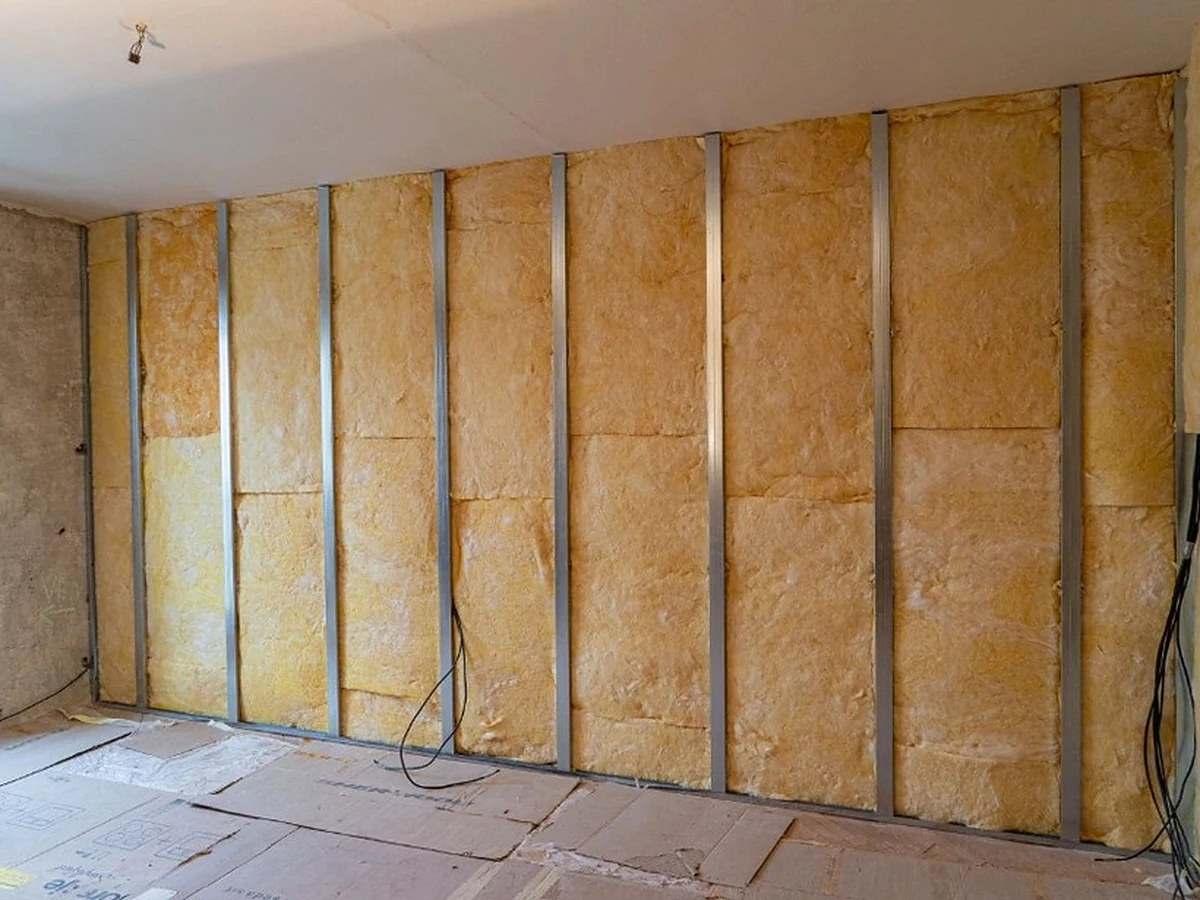
In partition walls, fiberglass sound insulation works with the lining layers, framing connections, perimeter seals and treatment of service penetrations. An unsealed opening or flanking path can weaken the result regardless of the filling density. Projects focused on room-to-room transmission should continue to Acoustic Wall Insulation for the complete wall decision.
Suspended ceilings introduce different details: available void depth, overhead retention, services and possible sound paths through a shared plenum. Acoustic Ceiling Insulation addresses those ceiling-system conditions and the difference between concealed cavity treatment and visible room-acoustic panels.
For equipment enclosures, fiberglass acoustic insulation may provide the internal absorptive layer, while casing construction, openings, internal temperature, protective lining and maintenance access control how that layer can be used. The enclosure must still address leakage paths and vibration where they are part of the noise problem.
What Changes the Final Fiberglass Specification
Cavity depth limits the practical installed thickness. Compressing a thicker product into a shallow cavity does not replace matching the intended installed thickness. Supports must keep fiberglass acoustic insulation positioned and the intended area covered, especially in vertical and overhead assemblies.
For exposed components, facing affects how sound reaches the core, while mounting and any rear air space can change the measured response. A fiberglass acoustic panel should therefore be checked against test data for a comparable finished configuration, not only for bare board.
Fiberglass sound absorption figures, including NRC where available, must correspond to the tested material or assembly. Between-room sound isolation is an assembly-level result; neither value can be inferred from glass wool density alone. Where a project specifies NRC, STC, a dB target or another test method, the requirement should be submitted exactly as written.
Where fiberglass acoustic insulation also serves a thermal function, thickness and product form must accommodate both requirements. Fire-sensitive applications require relevant product and assembly evidence to be checked against the specified conditions.
Discuss Your Acoustic Insulation Project
Need fiberglass acoustic insulation for a wall, ceiling or enclosure? Tell us what you already know about the application. The specification does not need to be complete—Insulvora can help you choose a suitable roll or board and discuss the next step.