
Mineral Wool Insulation Density: Rock Wool Grades and Uses
Choosing the right rock wool density starts with the installation, product form, supporting structure, and mechanical demands—not with the highest density available.
For non-load-bearing partitions, a secure fit within the cavity and the ability to retain the specified thickness are often more important than additional weight. External walls and roofs may call for boards with greater rigidity and suitable mechanical properties. Flexible blankets are better suited to many industrial curves, while straight pipe runs generally benefit from preformed rock wool sections.
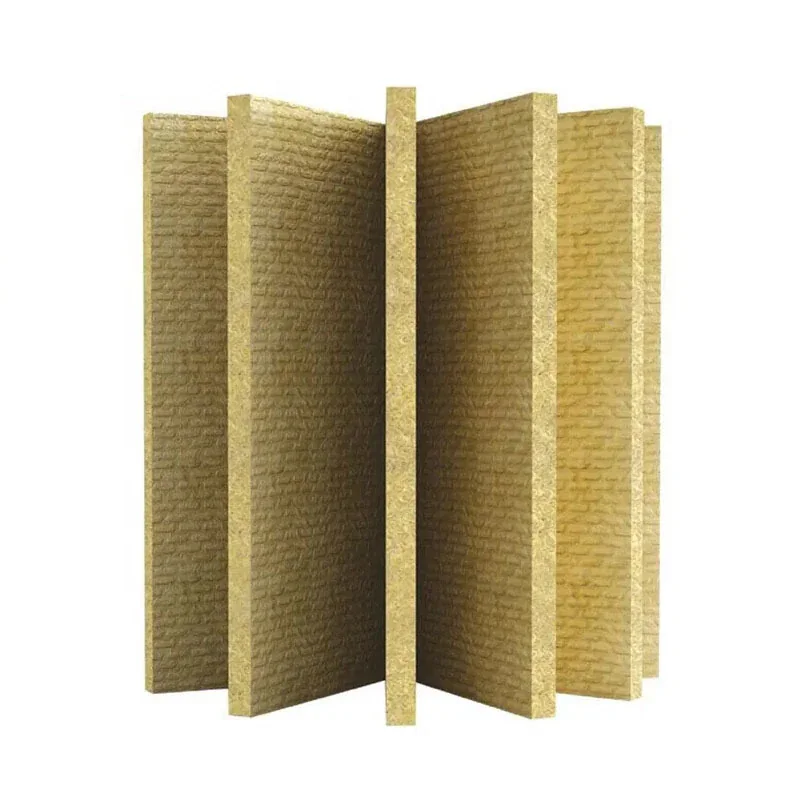
Three points to keep the technical answer tied to the real project:
- Choose by useSelect density for the board, blanket or pipe application—not by assuming higher is always better.
- Check more than densityThickness, conductivity, temperature and mechanical requirements still govern selection.
- Account for weightThe same area and thickness become heavier as density increases.
Mineral wool insulation density is expressed in kg/m³. It helps identify product grades and compare material configurations, but products with similar densities can still differ in thermal, acoustic, and mechanical performance. This guide focuses on rock wool; glass wool is covered separately.
Rock Wool Density Ranges and Available Sizes
Insulvora supplies rock wool boards, blankets, wire mesh blankets, and preformed pipe sections in different densities and constructions for building and industrial insulation.
| Product | Density range | Thickness range | Typical applications |
|---|---|---|---|
| Rock Wool Board | 60–200 kg/m³ | 30–150 mm | Walls, roofs, partitions, and flat equipment surfaces |
| High Density Rock Wool Board | 120–200 kg/m³ | 30–150 mm | Assemblies requiring greater board rigidity, dimensional stability, or mechanical performance |
| Rock Wool Blanket | 40–200 kg/m³ | 25–200 mm | Large equipment, tanks, ductwork, and surfaces requiring flexible coverage |
| Wire Mesh Rock Wool Blanket | 50–100 kg/m³ | 30–100 mm | Large-diameter pipes, industrial equipment, and irregular curves |
| Rock Wool Pipe | 40–200 kg/m³ | 20–150 mm | Industrial piping, mechanical lines, and heating systems |
These figures show the available ranges across product families, not a single specification for every size. Mineral wool insulation density needs to be considered alongside the actual thickness, dimensions, and temperature grade offered for the selected product.
Choosing Rock Wool Density by Application
There is no single mineral wool insulation density threshold that works for every project. The more useful approach is to establish what the insulation must do, then select a product form and density grade that fit those conditions.
Lightweight Partitions and Non-Load-Bearing Cavities
For light-gauge steel partitions, interior walls, and other non-load-bearing cavities, rock wool boards around 60–100 kg/m³ can be a practical starting point within Insulvora's board range. The main considerations are a stable fit, retention of the designed thickness, and the acoustic or fire requirements of the specified assembly.
Where the cavity is better suited to a flexible fill, rock wool blanket may also be considered. Its ability to fit the space, remain supported, and retain thickness matters more than adding density without a clear purpose.
For acoustic partitions, increasing mineral wool insulation density does not automatically improve sound insulation. Board layers, framing, cavity depth, and connections all contribute to the performance of the complete wall.
External Walls, Roofs, and Rigid Board Assemblies
For building envelopes that use board insulation, Insulvora's relevant rock wool board products cover the 100–200 kg/m³ range. When selecting mineral wool insulation density for these assemblies, fixing stability, local pressure, board rigidity, and the effects of subsequent layers matter alongside thermal performance.
Where a higher level of rigidity, load resistance, or shape retention is needed, High Density Rock Wool Board in the 120–200 kg/m³ range is a relevant product direction.
Density alone, however, does not establish a roof board's capacity under sustained or concentrated loads, or its suitability for a particular façade fixing arrangement. Compressive and tensile performance, together with the board construction, remain important selection criteria.
Industrial Equipment, Tanks, and Curved Surfaces
For storage tanks, vessels, large ducts, and industrial equipment, mineral wool insulation density is only part of the specification. Flexibility, surface contact, and the fastening arrangement often matter more than simply choosing a denser material.
Rock wool blankets can cover extensive flat or curved surfaces. For large-diameter pipes, irregular shapes, and equipment requiring additional support during installation, a Wire Mesh Rock Wool Blanket at 50–100 kg/m³ may be suitable.
The wire mesh helps hold the flexible insulation in position during wrapping and fixing. Operating temperature, insulation thickness, and the outer protection system still determine the full arrangement. The mesh is not a substitute for metal cladding or other required weather and mechanical protection.
Industrial Piping and Mechanical Lines
Straight pipework is generally better served by preformed rock wool pipe sections, available across a density range of 40–200 kg/m³.
Unlike flat boards or blankets, pipe sections must first match the pipe's actual outside diameter. The operating temperature, required thickness, and installation conditions then help determine an appropriate grade.
A higher mineral wool insulation density may be useful where greater dimensional stability is required, but not every line needs a high-density grade. On hot pipework, thermal conductivity at operating temperature, long-term dimensional stability, supports, and jacketing are also part of the decision.
What Does Density Actually Affect?
Mineral wool insulation density can influence the way a product handles, supports itself, and performs in a given construction. It is not a standalone rating for every property.
Board Rigidity and Mechanical Performance
Within a comparable product family, increasing density generally means more fiber material per unit volume and may contribute to better rigidity and shape retention.
Compressive performance also depends on fiber orientation, binders, manufacturing, and board construction. Two boards with the same density do not necessarily have the same compressive strength.
For a cavity fill, the appropriate grade is one that stays in place and retains its required thickness. For roofs, floors, or other locations exposed to loads, the board's mechanical properties need closer attention.
Thermal Conductivity and Insulation Thickness
A higher density does not necessarily mean a lower thermal conductivity.
Heat transfer through rock wool depends on the fiber network, gas conduction within the pores, and radiation. The contribution of each changes with temperature and material structure.
Mineral wool insulation density alone cannot establish which of two 50 mm rock wool boards, one at 100 kg/m³ and one at 150 kg/m³, will insulate better. Thermal design must account for the applicable thermal conductivity and installed thickness. For more detail, see the Rock Wool R-Value Guide and Rock Wool Thickness Guide.
Sound Absorption
Rock wool is a porous fibrous material. As sound enters its structure, airflow around the fibers dissipates part of the sound energy.
Changing mineral wool insulation density changes airflow resistance, but sound absorption does not improve indefinitely as density increases. Fiber structure, material thickness, the air space behind the insulation, and the surface treatment all influence performance at different frequencies.
For wall sound insulation in particular, the complete assembly matters: the facing boards, studs, cavity, and connections can be more decisive than the density of the infill alone.
How Density Changes Insulation Weight at the Same Thickness
Mineral wool insulation density also determines the material's weight at a given thickness. This is relevant to large wall areas, suspended ceilings, equipment surfaces, and supporting structures.
For a 50 mm thick flat rock wool layer:
| Density | Thickness | Theoretical material mass per square metre |
|---|---|---|
| 80 kg/m³ | 50 mm | 4.0 kg/m² |
| 120 kg/m³ | 50 mm | 6.0 kg/m² |
| 160 kg/m³ | 50 mm | 8.0 kg/m² |
Mass per unit area = density × thickness (in metres)
For example, 120 kg/m³ × 0.05 m = 6.0 kg/m². These are rock wool material weights only; facings, fixings, and cladding are excluded.
For weight calculations, mineral wool insulation density has a direct effect: at the same thickness, moving from 80 to 120 kg/m³ increases material weight by 50%. Across a large installation, that difference affects shipping, handling, and load calculations. It does not mean thermal resistance, compressive strength, or sound absorption increases by the same percentage.
From Mineral Wool Insulation Density to Product Specifications
In practice, mineral wool insulation density should be selected together with the product form, thickness, and intended function.
For building cavities, prioritize a stable fit and thickness retention. For external walls and roofs, consider board rigidity, mechanical loads, and fixing details. For industrial equipment, account for the surface shape, operating temperature, and outer protection. For piping, the pipe diameter, thickness, and service conditions must be considered together.
A rock wool board and a preformed pipe section can both be rated at 120 kg/m³, yet their shape, fiber construction, and installation methods make them different products, not direct substitutes.
Insulvora offers boards, flexible blankets, wire mesh blankets, and preformed pipe sections for building envelopes, equipment insulation, and industrial piping. For glass wool applications, see the Fiberglass Insulation Density Guide for the density ranges and application considerations of that mineral wool family.
Find the Right Rock Wool Product for Your Project
Insulvora supplies standard and high-density rock wool boards, flexible blankets, and pipe sections in a range of thicknesses. Share the required density, product form, and application to discuss available grades, supply configuration, and pricing.