
Foil Insulation for Walls
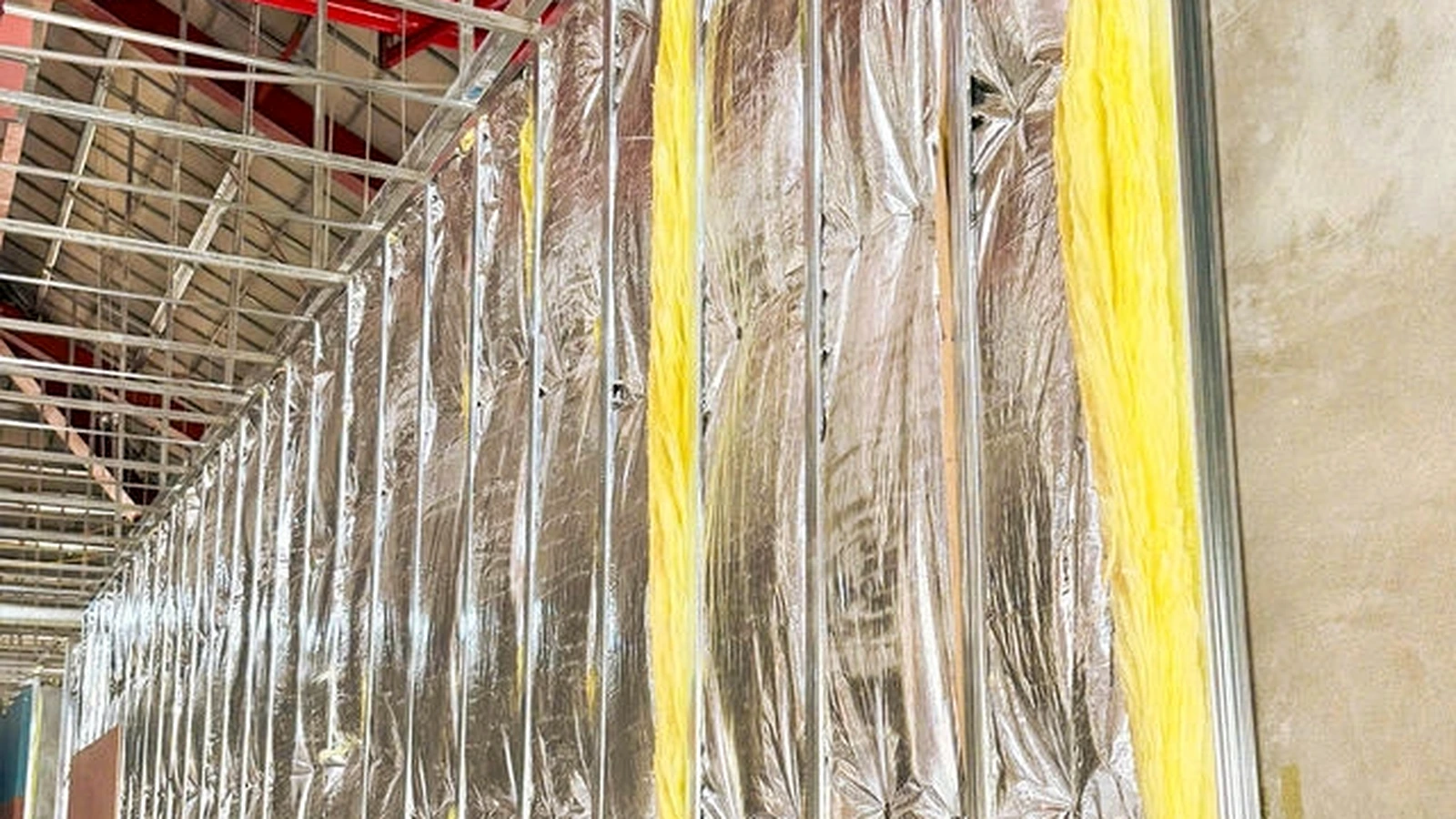
Foil insulation for walls is available from Insulvora as foil-faced glass wool rolls and aluminum-faced NBR/PVC elastomeric foam. For framed cavities requiring bulk insulation, glass wool combines an insulation core with a specified aluminum facing. For projects that call for a closed-cell foam composite, reinforced aluminum-faced and adhesive-backed configurations offer different thicknesses and surface finishes. Product suitability must be checked against the intended wall construction and installation conditions.
The foil facing may serve as a protective surface, a low-emissivity surface or part of a designed vapor-control layer. These are different functions, and none makes foil a substitute for the insulation core.
Product Formats for Wall Requirements
The first choice is between bulk insulation for a framed cavity and a specified foil-faced foam composite. The three product ranges below provide distinct configurations of foil insulation for walls.
| Wall requirement | Product | Construction and available options |
|---|---|---|
| Framed cavity requiring bulk insulation with an aluminum facing | Foil Faced Glass Wool Roll | Flexible glass wool, 25–100 mm thick, with single- or double-sided plain or reinforced foil |
| Closed-cell foam with a reinforced aluminum surface | Reinforced Foil Insulation Board | NBR/PVC elastomeric foam; standard 10, 20 and 30 mm thicknesses; grid, checkered and plain aluminum finishes; optional adhesive backing |
| Foil-faced foam requiring a particular thickness, facing or backing configuration | Self Adhesive Heat Reflective Insulation | NBR/PVC elastomeric foam; selected 5–50 mm thicknesses; grid, mesh or plain aluminum; adhesive and non-adhesive versions |
For framed cavities, match the selected glass wool thickness to the available cavity depth. The intended wall build-up also determines which facing configuration should be considered.
The two elastomeric ranges overlap in material and some available options. Both include reinforced aluminum finishes and adhesive-backed configurations, so adhesive backing alone is not a reliable distinction. Where a project specifies 25 mm foam, that thickness is listed in the Self Adhesive Heat Reflective Insulation range, while the standard Reinforced Foil Insulation Board range lists 10, 20 and 30 mm. The latter also offers checkered aluminum finishes.
Neither foam range constitutes a complete wall system on its own. Suitability as foil insulation for walls depends on the substrate, fixing method, position in the wall and the required facing performance.
Foil Position and Function in Wall Assemblies
The reflective contribution of foil insulation for walls depends on the adjacent air space. When a low-emissivity aluminum surface faces an air gap, it can reduce radiant heat exchange. Where the foil is in direct contact with another solid layer, that air-space contribution is lost; the insulation core still provides its own thermal resistance.
If the facing is intended for vapor control, its position must be compatible with the wall's moisture management and drying strategy. Indoor humidity, local climate and the vapor permeability of neighboring layers all matter. Adding a low-permeance facing where another vapor-resistant layer is already present can restrict drying and increase the risk of trapped moisture.
Metal studs and connections form thermal bridges through or around the insulation. An aluminum facing does not eliminate those paths. Overall wall performance still depends on continuity of insulation, framing details and the arrangement of layers.
Seams and Connections
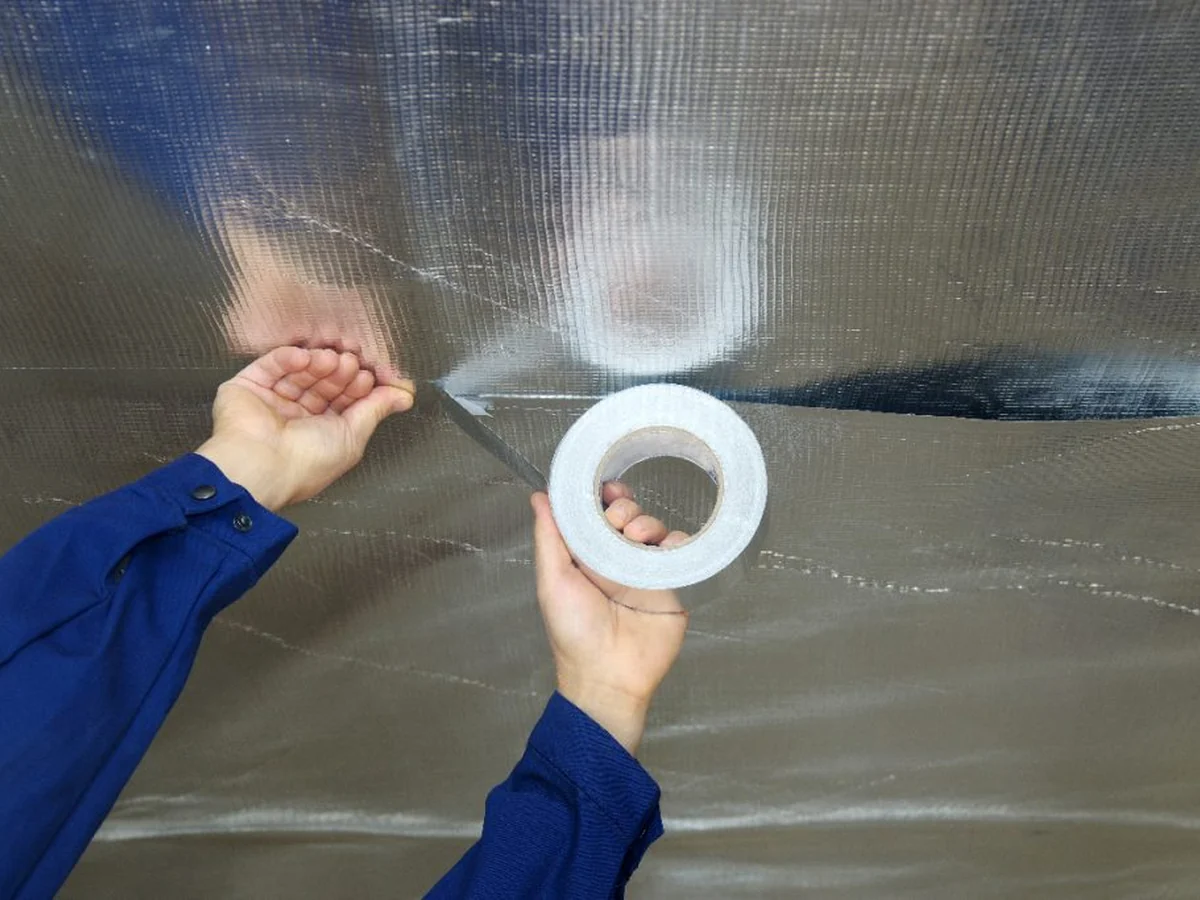
Glass wool rolls installed in wall cavities must fit closely and be adequately supported to prevent movement and uninsulated gaps. Where foil is designed to provide a continuous vapor-control layer, laps, edges, penetrations and transitions must preserve that continuity. Unsealed joints can compromise the intended function.
Self-adhesive foam composites require compatible substrates and attachment suitable for their installed position. If reflective performance is specified, installation must also preserve the designed air-space arrangement.
Reflectivity, vapor permeance and fire-performance claims for foil insulation for walls require test evidence relevant to the specified product construction. Results for an individual product should not be treated as proof of the performance of the complete wall assembly.
For wider insulation-system choices, see Wall Thermal Insulation. For wall assemblies with metal framing, refer to Metal Building Wall Insulation. Faced vs Unfaced Fiberglass Insulation explains differences between glass wool insulation cores and facing configurations.
Discuss Your Wall Insulation Project
For an enquiry about foil insulation for walls, share the wall construction, available cavity depth or required foam thickness, preferred foil finish, and whether adhesive backing is needed. Include relevant substrate and installation conditions. Insulvora can then discuss the available product configurations and pricing against those requirements.