
HVAC Insulation Solutions | Match Materials to Conditions
Refrigerant copper lines, chilled-water piping, ducts, hot-water lines, and other mechanical services operate under different temperatures, humidity levels, condensation risks, and installation conditions. Choosing an air conditioning insulation material begins with the system duty, followed by the right product form and specification.
Insulvora supplies closed-cell NBR/PVC rubber foam tubes and sheets, glass wool rolls, boards and pipe sections, and rock wool pipe sections and blankets. These AC insulation materials serve different HVAC applications; no single product route covers every system component.
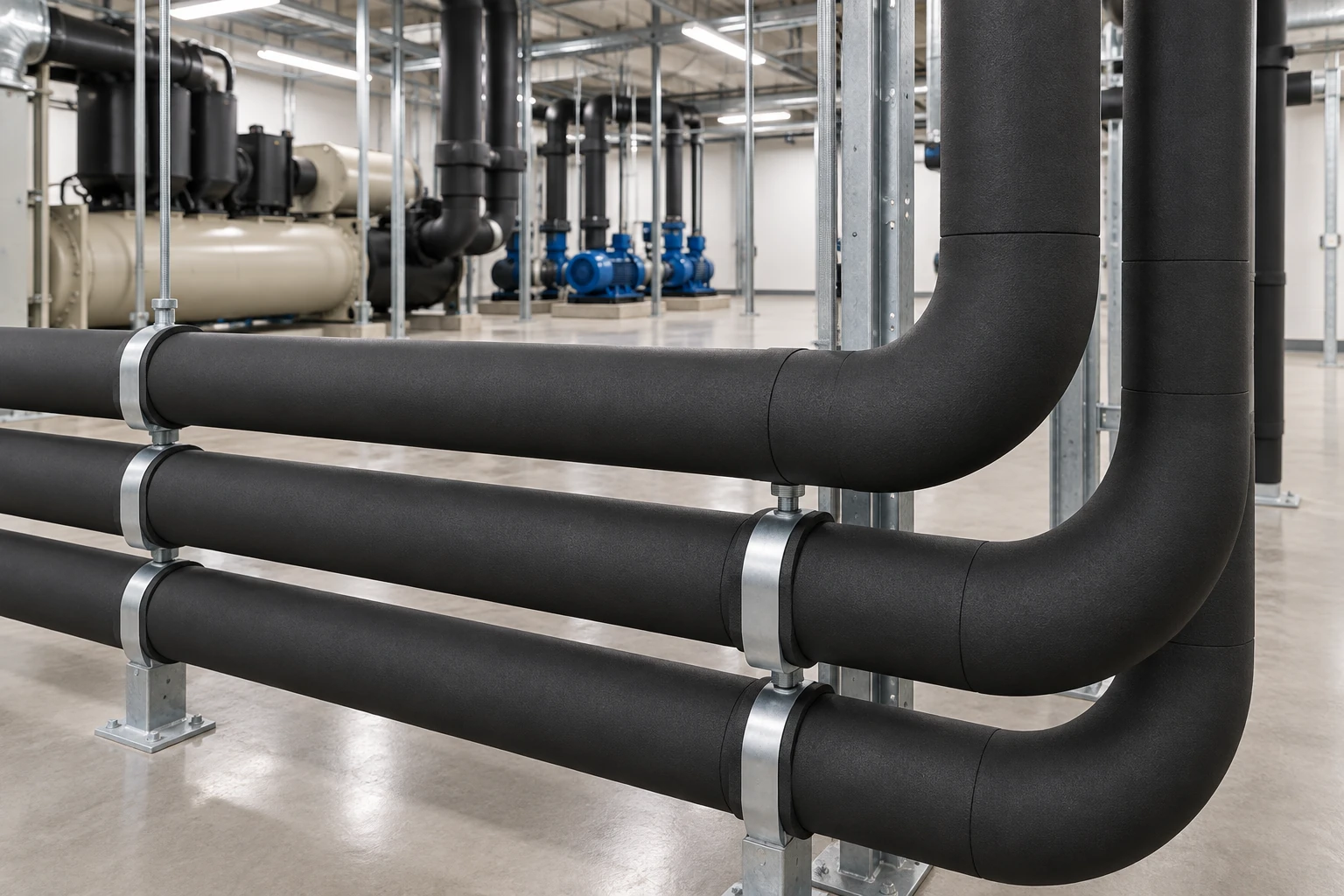
Start with the HVAC Duty
| HVAC Application | First Product Route | Key Information to Confirm |
|---|---|---|
| Refrigerant and AC copper lines | Closed-cell NBR/PVC rubber foam tube | Copper OD, operating temperature, ambient humidity, insulation thickness |
| Chilled-water piping | Rubber foam tube or sheet | Pipe size, water temperature, condensation conditions, valves and supports |
| Supply, return, and other ductwork | Glass wool roll/board or rubber foam sheet | Duct size, thermal duty, acoustic requirements, condensation and facing |
| Hot-water and higher-temperature mechanical piping | Glass wool or rock wool pipe section | Continuous temperature, pipe size, thickness, external protection |
The table identifies first product routes among AC insulation materials, not finished specifications. Refrigerant and chilled-water lines require control of heat gain, condensation, and moisture ingress. A preformed closed-cell tube is generally the starting point for regular AC copper piping, while larger or irregular surfaces may require sheets. The final air conditioning insulation material must fit the pipe geometry and operating conditions.
Duct insulation may combine thermal and acoustic duties, so the air conditioning insulation material may be fiberglass HVAC insulation or rubber foam sheet, depending on facing and condensation requirements. Higher-temperature mechanical piping instead requires product capability verified against its continuous service temperature.
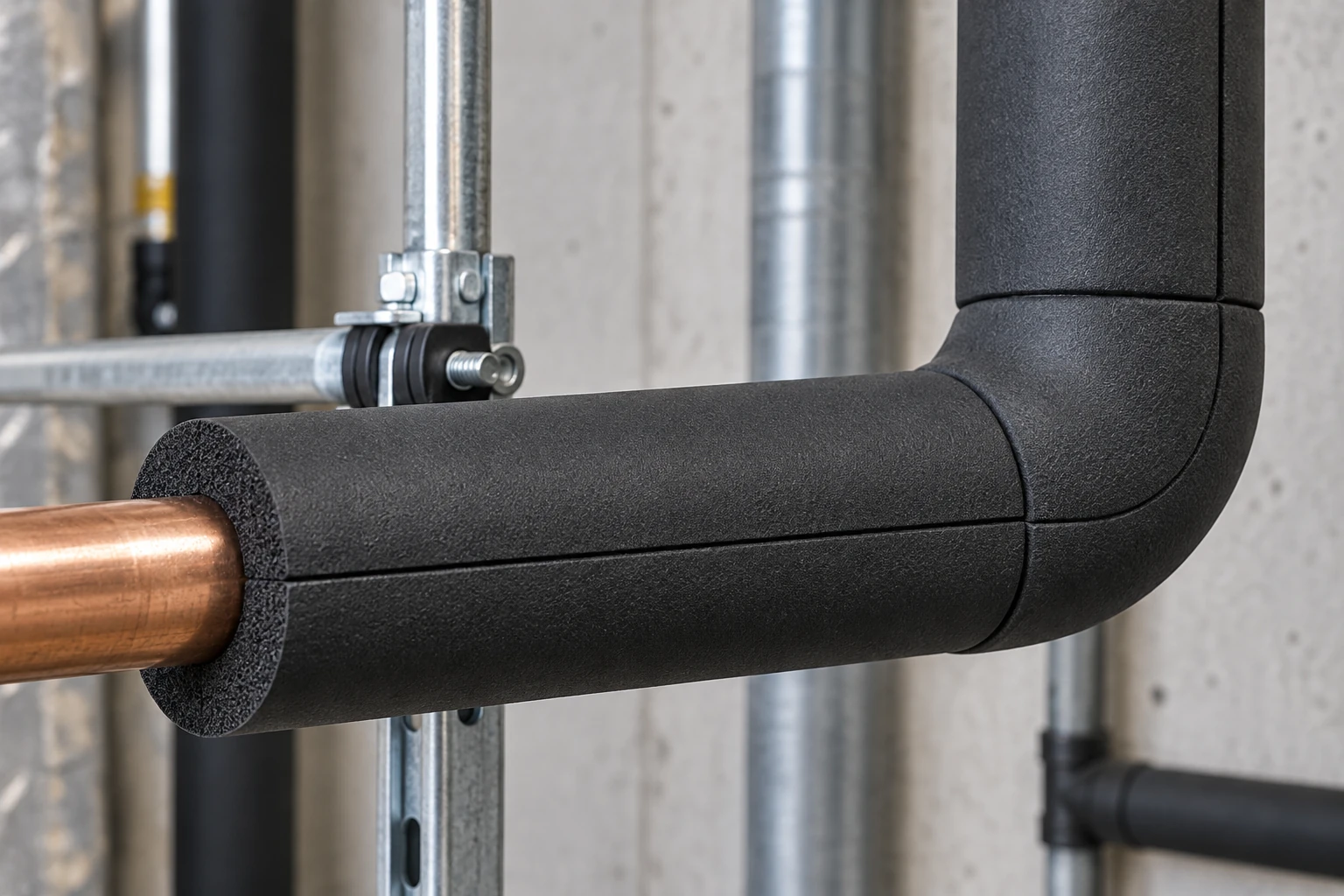
What Changes the Final Specification
Service temperature establishes the initial material range; ambient temperature and humidity affect condensation risk on cold systems. Pipe diameter, duct dimensions, and geometry determine whether tubes, pipe sections, sheets, rolls, or blankets are appropriate. Selecting an air conditioning insulation material therefore requires both operating and dimensional information.
Specified thickness, thermal conductivity, fire performance, facing, and acoustic requirements narrow the final product choice. These need to match the selected series and configuration, not just the generic material type. For duct-related AC insulation materials, facing and joint treatment also affect the completed system.
Outdoor installations may require weather and mechanical protection, including where pipework transitions between indoor and outdoor locations. The protective arrangement should be confirmed together with the air conditioning insulation material, rather than treated as an unrelated addition.
Insulvora HVAC Product Routes
Closed-Cell Rubber Foam
Closed-cell NBR/PVC rubber foam serves refrigerant lines, AC copper piping, chilled-water pipes, and larger cold surfaces. Available forms include preformed tubes, sheets, self-adhesive sheets, and faced configurations. Small-diameter copper sleeves and wider tube ranges accommodate different pipe sizes; sheets fit locations where tubes are impractical.
For many cold HVAC duties, this is the first air conditioning insulation material to evaluate. Published data for certain Insulvora NBR/PVC products covers service temperatures from -40°C to +105°C. Confirm the applicable temperature range against the chosen product series, facing, and product data; it is not a blanket rating for every configuration.
Glass Wool
Glass wool is an air conditioning insulation material supplied as rolls and boards for thermal and acoustic insulation of suitable HVAC ducts, and as pipe sections for round piping. For fiberglass HVAC insulation on ductwork, facing, joints, and condensation conditions must be considered together.
Current Insulvora glass wool pipe sections cover approximately 22–720 mm internal diameter and 25–100 mm thickness. Product selection depends on pipe size, service temperature, and required configuration.
Rock Wool / Mineral Wool
Rock wool is mainly used for higher-temperature mechanical piping. Insulvora supplies pipe sections, boards, blankets, and wired blankets. Preformed sections suit regular round pipes, while blanket products may suit larger or more complex surfaces.
Current rock wool pipe-section ranges cover approximately 22–910 mm internal diameter and 20–150 mm thickness. Verify the pipe dimensions, operating temperature, thickness, and external protection before choosing a configuration.
Keep the Insulation System Continuous
Even a correctly specified material can perform poorly where insulation or vapor control is interrupted. On cold piping, elbows, tees, valves, flanges, supports, and wall penetrations require continuous treatment with the straight runs. These points can otherwise become condensation or moisture-entry locations.
Duct corners, flanges, and hangers also need attention. With fiberglass HVAC insulation, facing and joints form part of the system; rubber foam sheets depend on continuous, properly treated seams. Selecting the right air conditioning insulation material does not remove the need for sound installation detailing.
For hot-water and higher-temperature piping, confirm product temperature capability, insulation thickness, support details, and required cladding as part of the complete system.
Continue to the Relevant HVAC Application
The application pages below narrow air conditioning insulation material selection to a particular service. Product pages provide detailed dimensions, thicknesses, densities, facings, and other product-level information.
Air Conditioning Pipe Insulation
For conventional cold AC piping: confirm pipe size, service conditions, and the appropriate rubber foam form.
Refrigerant Line Insulation
For refrigerant lines: examine operating temperature, humidity, elbows, joints, and condensation control.
Mini Split Line Insulation
For split-system copper lines and indoor/outdoor connections: check copper size, thickness, and outdoor protection.
Chilled Water Pipe Insulation
For chilled-water systems: review pipe sizes, long runs, valves, supports, and insulation continuity.
Air Duct Insulation
For supply and return ducts: assess thermal, acoustic, condensation, and facing requirements across available AC insulation materials.
Mechanical Pipe Insulation
For hot-water and mechanical services: evaluate glass wool or rock wool based on continuous temperature and pipe dimensions.
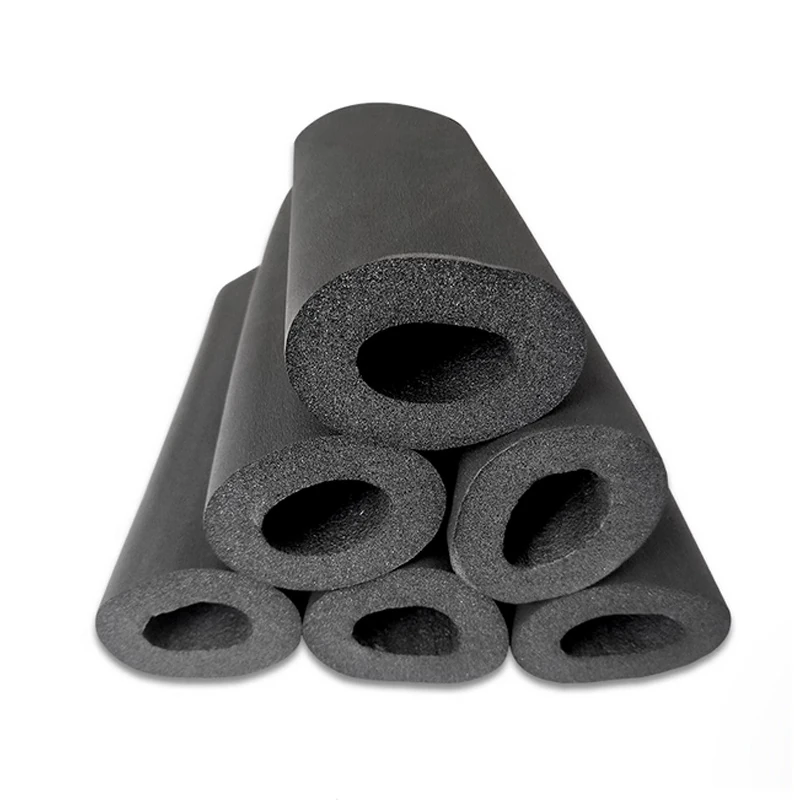
Send Your HVAC Project Requirements
Provide the HVAC service, operating temperature, pipe or duct dimensions, ambient conditions, and any specified thickness, facing, or performance requirements. Insulvora can check available air conditioning insulation material forms and size ranges, discuss suitable options, and prepare a project or bulk-supply quotation based on confirmed requirements.