
Rockwool Safety: Health Effects, Handling, and Installation
Is rockwool safe? Conventional rock wool can be used safely for its intended thermal and acoustic insulation applications in buildings and industrial facilities when appropriate precautions are followed. The main rockwool safety concern is loose fibers and dust released during handling, cutting, installation, and removal—not the presence of properly installed and undisturbed insulation.
Airborne fibers and dust can temporarily irritate the skin, eyes, nose, or throat.
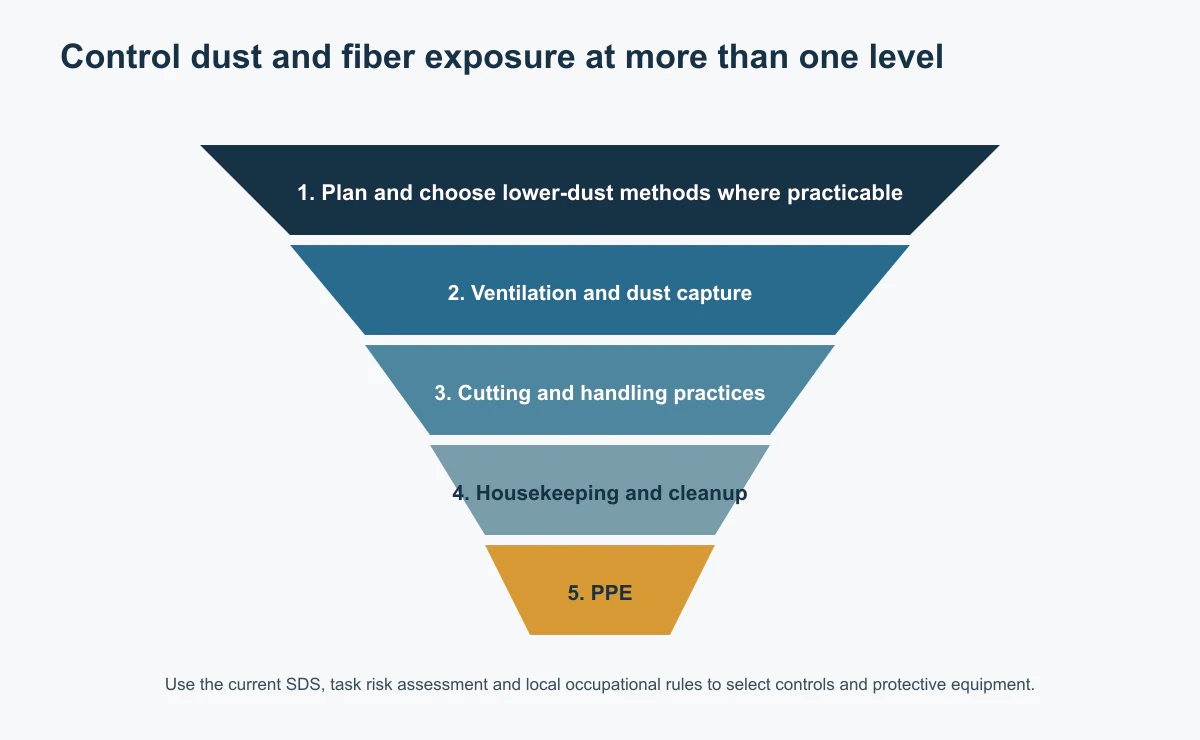
Key Handling Precautions
- Control dustChoose suitable cutting methods, maintain ventilation, and clean work areas promptly.
- Protect the installerUse gloves, suitable clothing, eye protection, and respiratory protection when required by the task.
- Leave a clean resultRemove offcuts and dust before the insulation is enclosed or the area is occupied.
Is Rockwool Safe to Handle?
Yes, with appropriate precautions. During construction work, rockwool safety depends on how much the fibers are disturbed, the amount of dust generated, and the available ventilation.
Why Is Rockwool Itchy?
Loose fibers can cause itching, mild redness, or discomfort through mechanical contact with the skin. This does not necessarily indicate an allergic reaction or lasting injury. Hands, arms, and the neck are especially exposed when workers carry boards, fit blankets, or install insulation overhead. Gloves and long sleeves help limit direct contact.
Is Rockwool Dangerous to Breathe?
Cutting and removal can release airborne particles and fibers that irritate the nose, throat, or airways and sometimes cause coughing. Occasional contact differs from prolonged work in a dusty area. Dust control and suitable respiratory protection should reflect the task and ventilation conditions.
The International Agency for Research on Cancer (IARC) places conventional insulation rock wool in Group 3—not classifiable as to its carcinogenicity to humans. This classification neither establishes that the material causes cancer nor means dust exposure is harmless. Rock wool is also different from asbestos and refractory ceramic fibers; their risks should not be treated as equivalent.
Rockwool Safety: Activities That Increase Dust Exposure
Moving intact boards generally produces less airborne dust than cutting, grinding, or removing insulation. A task-based rockwool safety approach distinguishes skin contact from airborne dust and matches each concern to a practical control.
| Task or condition | Main concern | Practical control |
|---|---|---|
| Moving and fitting boards | Fibers contacting skin or clothing | Gloves, long sleeves, minimal handling |
| Cutting and notching | Dust at the cutting point | Low-dust tools; extraction when needed |
| Overhead installation | Fibers falling toward the face | Eye and head protection, suitable clothing |
| Poorly ventilated spaces | Suspended dust | Ventilation, extraction, appropriate respiratory protection |
| Removing old insulation | Breakage and accumulated dust | Controlled removal and prompt cleanup |
Rockwool Safety During Cutting, Installation, and Cleanup
Reduce dust at the source. For rockwool safety during cutting, use suitable manual tools for boards and blankets where practical. If power tools are necessary, provide effective dust extraction. Keep insulation packaged until needed and avoid repeated cutting or handling.
Maintain ventilation. Provide airflow and local extraction where appropriate, especially indoors or in confined work areas. A respirator should not replace practicable dust controls.
Wear suitable protection. Gloves, long sleeves, and safety glasses help limit direct contact, particularly during overhead work. Dusty tasks may require a properly fitted particulate respirator that meets local requirements, such as an appropriate N95 or FFP2 mask.
Clean without spreading fibers. Collect offcuts and use a vacuum suitable for fine dust or damp-wipe surfaces. Avoid dry sweeping or compressed air. Package waste appropriately, follow local disposal rules, and change heavily contaminated work clothing before entering clean areas.
What to Do After Contact With Rock Wool Fibers
If fibers irritate the skin, avoid rubbing and wash gently with cool water and mild soap. Change into clean clothing. If fibers enter the eyes, do not rub them; rinse thoroughly with clean water and seek medical attention if pain or irritation persists. After breathing dust, move to fresh air and seek care if symptoms persist or breathing becomes difficult. Persistent skin irritation should also be assessed.
Is Rockwool Insulation Safe After Installation?
Correctly fitted rock wool that remains intact and undisturbed generally releases far less dust and fiber than material being cut or removed. Rockwool safety in service also depends on how the surrounding construction protects the insulation.
In walls and partitions, rock wool is usually behind framing and finished surfaces, limiting everyday contact. Around equipment, piping, and accessible service areas, facing or cladding may reduce disturbance while providing mechanical or moisture protection.
Not every application needs the same enclosure. Protection should suit the assembly and maintain insulation performance. If the material becomes damaged, persistently wet, or exposed during maintenance, assess whether repair or replacement is necessary. Apply dust controls whenever insulation is disturbed or removed.
Rock Wool Products and Installation Considerations
Boards, blankets, and preformed pipe sections share basic handling precautions but differ in how they are cut, fitted, and protected. Choosing the appropriate form can reduce unnecessary site cutting and loose dust, making product selection part of practical rockwool safety planning.
Rock Wool Board: Walls, Partitions, and Flat Surfaces
Rock Wool Board is used in walls, partitions, roofs, and other assemblies requiring stable board insulation. Insulvora offers different densities, thicknesses, and sizes to suit installation needs. Planning the board layout in advance helps reduce cuts and dust. Roofs and external walls also require appropriate fixing and surface protection.
Rock Wool Blanket: Large Areas and Curved Surfaces
Rock Wool Blanket offers flexibility for certain equipment surfaces, ductwork, and curved assemblies. It follows shapes less suited to rigid boards, although trimming and fastening should still limit fiber disturbance. Industrial applications may require external protection according to temperature and service conditions.
Rock Wool Pipe: Mechanical and Industrial Piping
Rock Wool Pipe is preformed for suitable mechanical and industrial piping. Matching its internal diameter and insulation thickness to the pipe reduces complex site cutting. Joints, fasteners, and outer cladding must suit operating conditions.
For product forms, available specifications, and applications, visit the Rock Wool range.
Rockwool Safety and Product Inquiries
Insulvora supplies rock wool boards, blankets, and pipe insulation for building and industrial projects. Share the intended application and installation requirements so we can confirm suitable product forms, available specifications, and quotation options.