
Round Duct Insulation and Rectangular Duct Insulation
Round duct insulation and rectangular duct insulation meet similar thermal and condensation-control needs, but duct geometry changes material fit, joint layout and support. Curved ductwork generally favors flexible wrapping, while rectangular faces can accommodate wraps, boards or sheets. Geometry provides the first product-form direction; operating conditions determine the final material and thickness.
Insulvora supplies foil-faced glass wool rolls, glass wool boards and foil-faced rubber foam boards for these applications. Selection is based on duct air temperature, surrounding temperature and humidity, condensation risk, indoor or outdoor location, and the project's thermal and surface requirements.
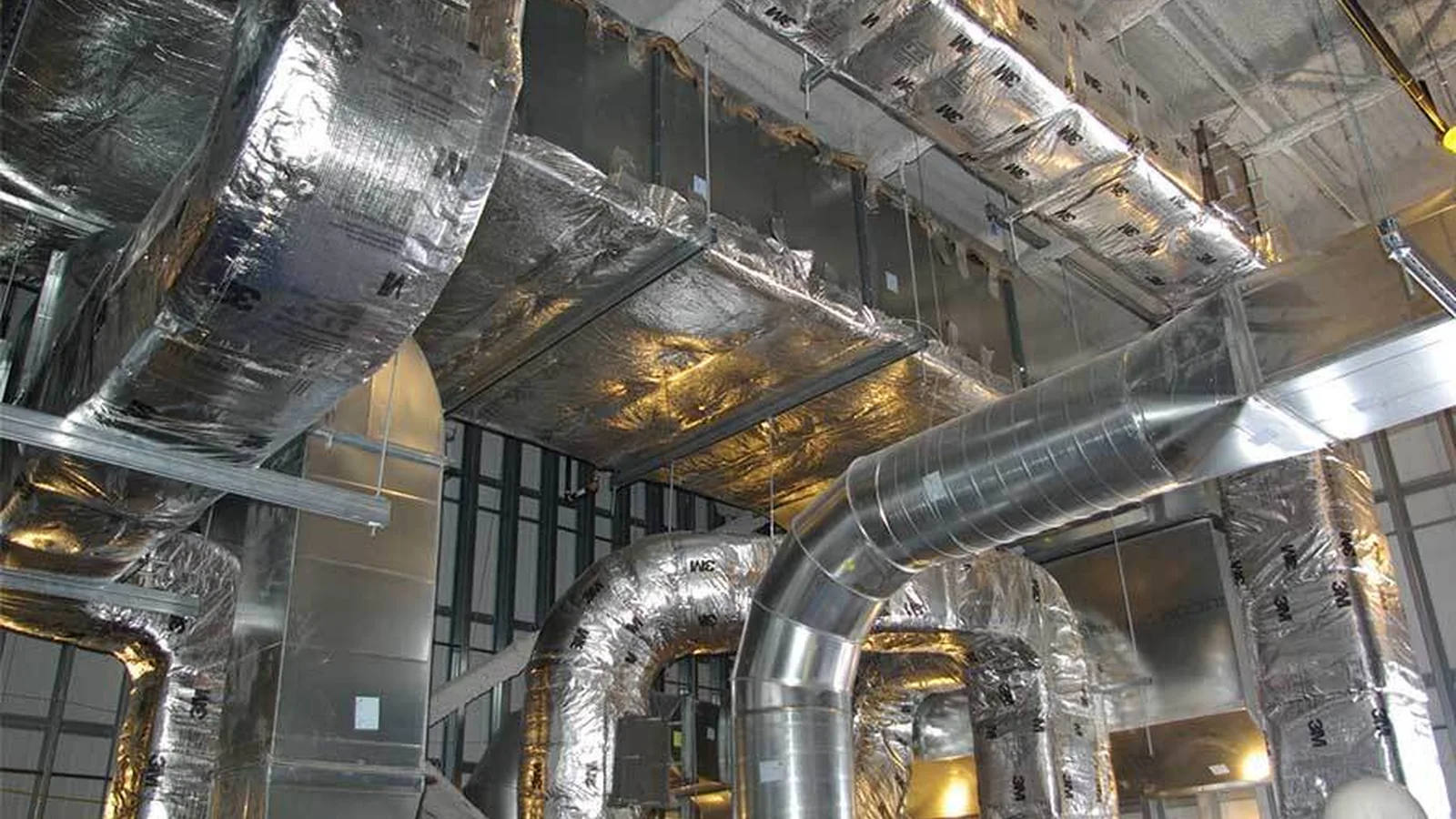
Match Insulation Form to Duct Geometry
For round duct insulation, flexible glass wool wrap can follow the continuous curved surface. The wrap must retain the specified installed thickness, without excessive stretching or compression. Straight runs also need planned longitudinal and circumferential joints.
For rectangular duct insulation, broad flat faces can accommodate flexible blankets, boards or suitable elastomeric forms. Boards offer a stable layer for larger surfaces; flexible materials can wrap changing dimensions. Corners, flanges and the lower face affect cutting, joint placement and support.
| Project condition | Round duct insulation | Rectangular duct insulation |
|---|---|---|
| First product form | Flexible wrap or sheet | Wrap, board or sheet |
| Main surface | Continuous curved surface | Broad flat faces and corners |
| Fit priority | Continuous circumference and installed thickness | Face fit, corners and support |
| Main joint locations | Longitudinal and circumferential seams | Panel joints, corners and edges |
| Geometry-sensitive areas | Elbows, branches and transitions | Flanges, transitions and access points |
| Cold-air service | Keep seams and vapor-control layer continuous | Maintain continuity across faces, corners and penetrations |
The table describes the initial geometry choice, not every installation detail. For round duct insulation, elbows, branches and transitions need particular care to prevent open seams or locally reduced thickness. For rectangular ducts, lower-face support, external corners, access doors, hangers and penetrations must not interrupt the required insulation or facing continuity.
Where a facing is part of the vapor-control system, joints and local repairs must maintain that function. Duct shape alone does not determine the final material.
Operating Conditions Determine the Final Material Route
Cold-air round duct insulation and rectangular duct insulation must limit heat gain and address condensation where the duct surface is colder than the surrounding air. As ambient temperature and relative humidity rise, continuity of the vapor-control system becomes more important. Insulation, facing, seams and repairs must function as one assembly; thermal conductivity alone does not establish condensation performance.
Where thermal and acoustic performance are both important, glass wool rolls or boards are practical routes to evaluate. Where a closed-cell construction and vapor-control continuity take priority, elastomeric insulation offers another route. The selected product form, facing and joint treatment still need to suit the duct and operating conditions.
Outdoor ductwork also needs protection against rain, sunlight and mechanical exposure outside the insulation layer. This protection must suit the material, facing and actual exposure, not simply the duct shape.
Required thickness depends on the thermal target, duct air temperature, ambient conditions and insulation properties. It cannot be chosen from round or rectangular geometry alone.
Insulvora Product Routes for Different Duct Forms
Foil-Faced Glass Wool Roll
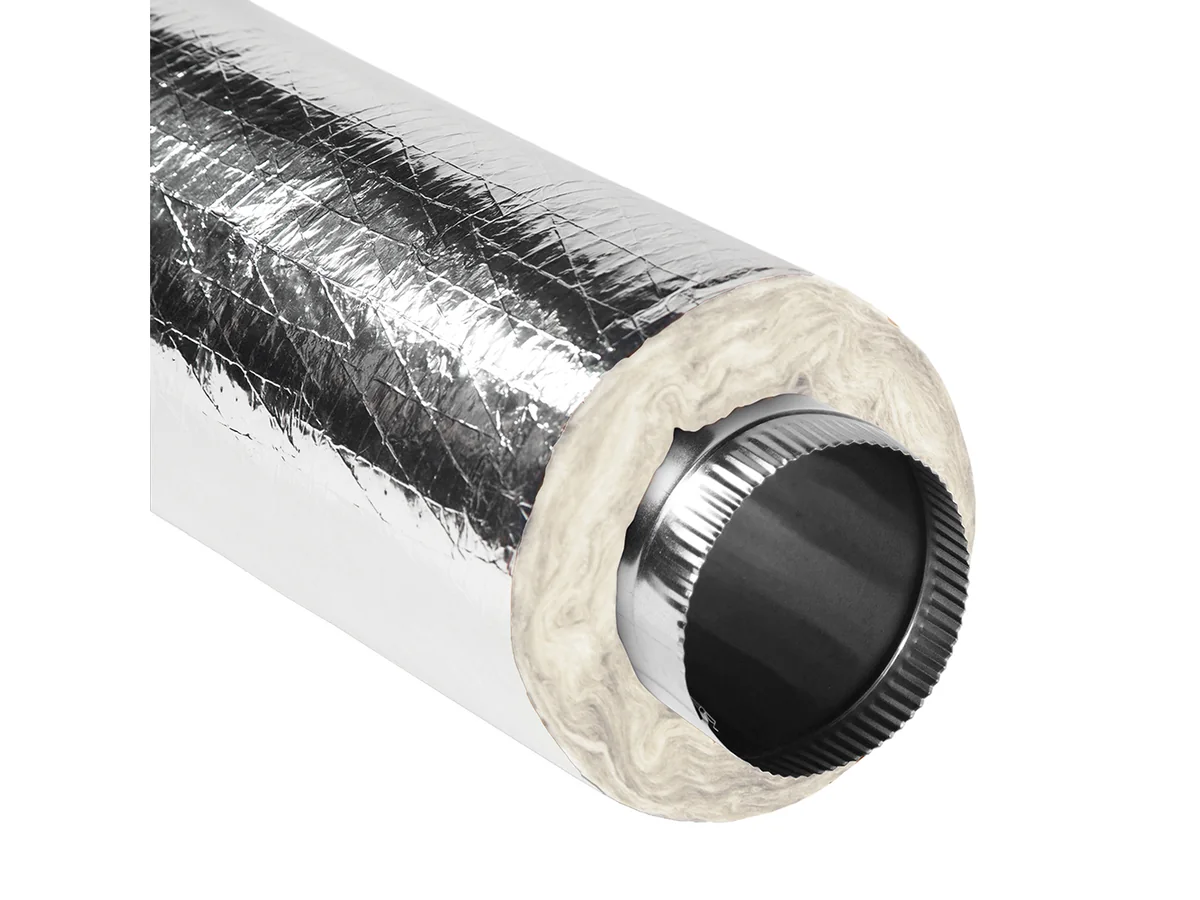
For round duct insulation, foil-faced glass wool roll is a flexible form that follows curved surfaces and can also serve rectangular ducts designed for external blanket insulation. Glass wool provides thermal and acoustic performance. The selected facing can support appearance, installation detailing or specified vapor-control requirements as part of a complete assembly.
Insulvora supplies foil-faced glass wool rolls in 25–100 mm thicknesses, with a standard 1.2 m width. Options include single- or double-sided aluminum foil, reinforced FRK / glass-scrim constructions and plain facing. Facing selection must match operating conditions and joint treatment.
View Foil Faced Glass Wool RollGlass Wool Board
For rectangular duct insulation, glass wool board provides a stable panel form over broad flat faces. Compared with flexible blanket, it requires defined cutting, positioning, panel joints and support.
Insulvora glass wool board is available in 20–130 mm thicknesses, with sizes from 600–2400 mm long × 400–1200 mm wide. Density, thickness and panel dimensions are matched to thermal performance, installation conditions and project specifications.
View Glass Wool BoardFoil-Faced Rubber Foam Board
Foil-faced rubber foam board is another option where a closed-cell elastomeric structure, moisture resistance and continuous vapor control are required. NBR/PVC foam provides thermal insulation; aluminum facing offers an integrated outer surface for projects specifying that construction.
Available thicknesses are 5 / 10 / 20 / 30 / 50 mm, with square or grid aluminum facing and a self-adhesive backing. The final configuration must suit the duct geometry, required thickness, facing and seam continuity. When round duct insulation is being considered, confirm that the chosen board configuration suits the curvature and planned seams.
View Foil Faced Rubber Foam BoardContinue to the Next Project Decision
Air Duct Insulation
For a broader comparison of thermal, condensation-control and acoustic material routes across a duct system, continue to Air Duct Insulation.
Metal Duct Insulation
For sheet-metal duct surfaces, cold-surface condensation and related system details, continue to Metal Duct Insulation.
Duct Insulation R-Value
When the material route is defined but thermal resistance or thickness remains to be checked, continue to Duct Insulation R-Value.
Duct Insulation Installation
Once product form and thickness are largely confirmed, review joints, corners, support and penetrations in Duct Insulation Installation.
Project Specification Confirmation
For a round duct insulation or rectangular duct insulation enquiry, provide duct shape and dimensions, duct air temperature, ambient temperature and humidity, indoor or outdoor location, required thickness if specified, facing needs and expected quantity. Insulvora can review suitable roll, board or sheet options, product dimensions and configuration before preparing a project or bulk-supply quotation.