Rock Wool vs Mineral Wool: What Is the Difference?
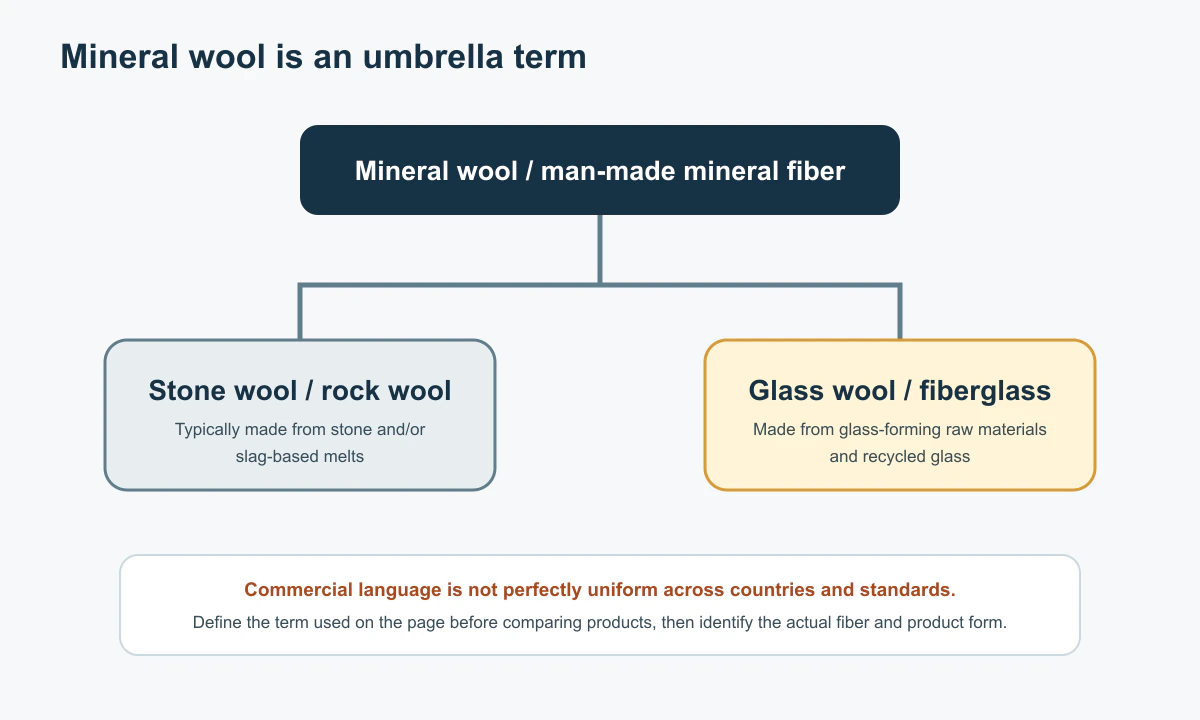
Rock wool, also called stone wool, is a type of mineral wool—not a competing material. It is made from rock and other suitable mineral raw materials. Mineral wool is a broader family of fibrous insulation that may also include slag wool and, in some classification systems, glass wool.
In a rock wool vs mineral wool comparison, first establish whether “mineral wool” refers specifically to rock wool or to the wider family. The fiber type and finished-product requirements determine whether two descriptions refer to the same insulation.
Key points for specification review
- Interpret the termCheck whether “mineral wool” is a broad category or shorthand for rock wool.
- Identify the materialConfirm whether rock wool, slag wool, glass wool or another type is intended.
- Match the productConfirm form, density, thickness and verified performance for the project.
Rock Wool, Mineral Wool and Other Mineral Fibers
Market terminology varies. This table distinguishes material categories from finished products in rock wool vs mineral wool specifications.
| Term | Classification and characteristics | Practical meaning |
|---|---|---|
| Mineral wool | Broad family of fibrous insulation made from molten inorganic raw materials | Included types depend on the terminology or standard used |
| Rock wool / stone wool | Mineral-wool type made from rock and suitable mineral feedstock | Identifies rock-based insulation |
| Slag wool | Fibrous material made mainly from suitable metallurgical slag | Related to rock wool but not automatically the same product |
| Glass wool | Fibrous material made from glass-based feedstock | A distinct material type included under mineral wool in some systems |
| Mineral fiber | Broader term for mineral-origin fibers | Does not identify a particular insulation product |
In many North American specifications, mineral wool commonly refers to rock wool and slag wool; some European classifications also include glass wool. The distinction in mineral fiber vs mineral wool is broader still: a mineral fiber is not necessarily a defined mineral-wool insulation product.
A stone wool vs mineral wool comparison may concern naming rather than performance. For a rock wool vs mineral wool specification, compare actual product grades and required properties.
Rock Wool vs Mineral Wool: When Do the Names Mean the Same Thing?
Is mineral wool the same as rockwool? Sometimes. A drawing may specify a 50 mm stone-wool board while the material schedule calls it a 50 mm mineral-wool board. If fiber type, board construction and performance requirements match, the descriptions may refer to the same product category. A rock wool vs mineral wool quotation can use those confirmed requirements.
But “50 mm mineral-wool insulation” does not establish fiber type or form. It might mean a board, blanket or another form with different density or performance requirements. “50 mm stone-wool board” identifies the material and form, leaving density, dimensions and product performance to be confirmed.
For pipework, “mineral-wool pipe insulation” is similarly broad. A rock-wool pipe section must be matched to pipe outside diameter, section bore, insulation thickness, service temperature and outer protection.
For rock wool vs mineral wool substitutions, a shared family name does not guarantee interchangeability. In mineral wool vs rockwool specifications, different names need not identify different materials. When another product is proposed, thermal, fire, mechanical and installation requirements must still be met.
Rock Wool vs Mineral Wool: Which Performance Differences Matter?
Once the material has been identified, rock wool vs mineral wool is a comparison of specific insulation products. Neither name establishes conductivity, temperature limits or fire performance.
| Comparison point | What matters |
|---|---|
| Thermal performance | Conductivity at the relevant temperature and required insulation thickness |
| Service temperature | The finished product's rated operating conditions, not only the fiber's heat resistance |
| Fire performance | Material reaction-to-fire properties versus fire resistance of the complete assembly, including facings |
| Density and strength | Density together with rigidity, compressive properties and dimensional stability where applicable |
| Product form | Whether board, blanket or preformed pipe sections suit the installation and fixing method |
Two 50 mm mineral-wool boards may differ in density, conductivity and compressive properties. Partition infill may prioritize fit and sound control, while roof or equipment insulation may place greater demands on rigidity, loading or operating temperature.
There is no universal rock wool vs mineral wool performance ranking. For a comparison between different material types, see Rock Wool vs Fiberglass.
From Material Names to Insulvora Products
When a rock wool vs mineral wool specification confirms that rock wool is required, the next decision is the product form. Insulvora supplies boards, flexible blankets and preformed pipe insulation for suitable building and industrial use.
Rock Wool Board: Buildings and Equipment
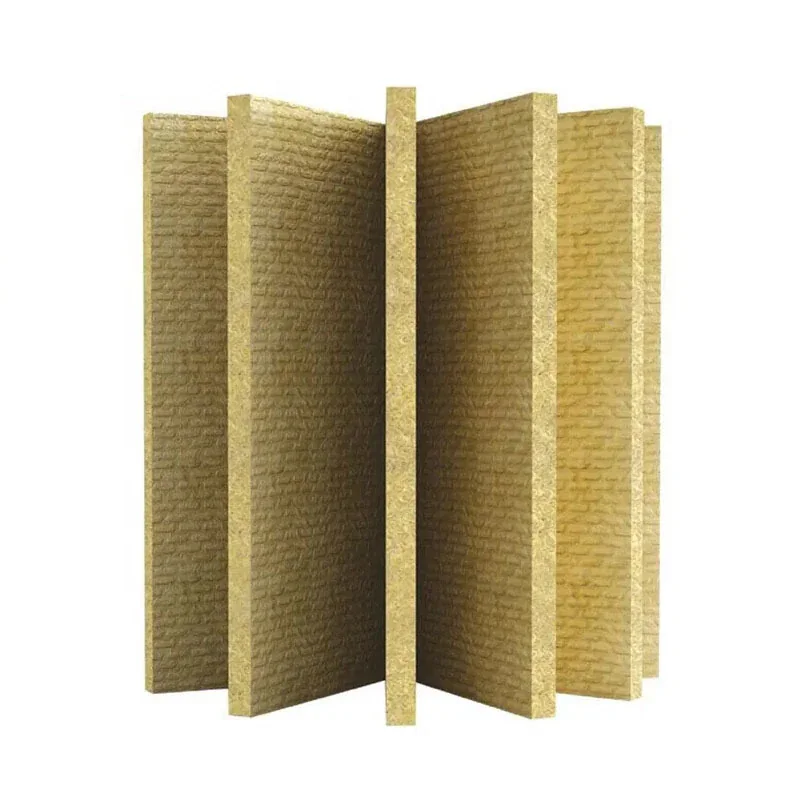
Rock Wool Board is available for suitable walls, roofs, partitions and industrial-equipment insulation. The existing range includes:
- Density: 60–200 kg/m³
- Thickness: 30–150 mm
- Standard size: 1200 × 600 mm
Select density and thickness to suit the assembly, available space and thermal or mechanical requirements. Where greater board rigidity or a specified higher density is needed, see High Density Rock Wool Board.
Rock Wool Blanket: Curved and Irregular Surfaces
Rock Wool Blanket is a flexible form for suitable equipment surfaces and wrapped insulation assemblies. Available ranges include:
- Density: 40–200 kg/m³
- Thickness: 25–200 mm
- Width: 0.6–1.2 m
Blankets can follow many curved or irregular surfaces more readily than rigid boards. Wire-mesh-reinforced versions are available for additional support and retention.
Rock Wool Pipe Sections: Industrial Pipework
Rock Wool Pipe is preformed cylindrical insulation for suitable industrial and mechanical piping. The existing range includes:
- Inside diameter: 22–910 mm
- Insulation thickness: 20–150 mm
- Standard length: 1000 mm
Preformed sections reduce cutting compared with wrapping flat boards. The section bore must match the actual pipe outside diameter, while wall thickness follows the operating and thermal requirements.
Choose the Right Rock Wool Product
For a building or industrial insulation inquiry, share the application, preferred form, dimensions and operating conditions. Insulvora can help identify available rock wool boards, blankets or pipe sections and discuss specifications and pricing for your quotation.