
Best Insulation for Outdoor Water Pipes: Materials and Selection
\nFor most outdoor water-supply, cold-water, and moderate-temperature hot-water lines, closed-cell rubber foam pipe sleeves are usually the first choice. They reduce heat loss or gain, help control moisture vapor, and fit many smaller pipes, bends, and confined installations.
For large industrial hot-water pipes or temperatures beyond conventional rubber foam ratings, fiberglass and rock wool pipe sections are alternatives. The best insulation for outdoor water pipes depends on service temperature, actual pipe size, and exposure conditions—not just material type.
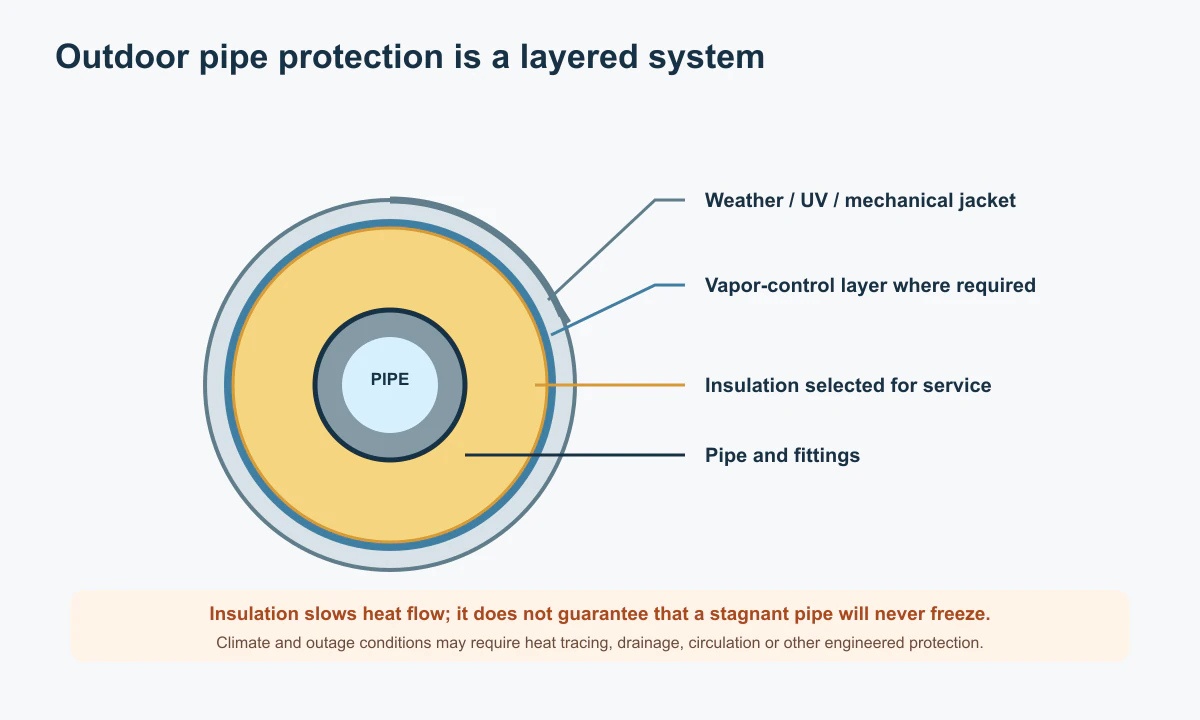
Three decisions for outdoor piping:
- Thermal materialMatch the temperature rating, actual pipe size, and required thickness.
- Exposure protectionAddress sun, rain, snow, impact, and water entry at joints and fittings.
- Freeze strategyConsider heat tracing, drainage, or other measures where insulation alone is insufficient.
Which Insulation Works Best for Different Outdoor Pipes?
Use this comparison to identify the best insulation for outdoor water pipes under common operating and exposure conditions.
| Outdoor pipe condition | Recommended material or system | Main reason |
|---|---|---|
| Typical outdoor supply, cold-water, or moderate-temperature hot-water lines | Closed-cell rubber foam sleeves | Flexible coverage for common pipe sizes and fittings; thermal and moisture control |
| Low-temperature water pipes in humid locations | Closed-cell rubber foam with sealed joints and outdoor protection | Limits heat gain, condensation, and moisture entry |
| Large industrial hot-water lines | Fiberglass or rock wool pipe sections with weather-resistant cladding | Preformed sections for larger pipes and specified operating temperatures |
| Pipes approaching or exceeding rubber foam's rated temperature | Appropriately rated fiberglass or rock wool pipe sections | Higher service-temperature requirements take priority |
| Exposed, stagnant pipes in severe cold | Suitable insulation with heat tracing or other freeze protection when required | Insulation slows cooling; active measures address sustained heat loss |
| Pipes exposed to sun, rain, snow, or impact | Suitable insulation with weather-resistant or mechanical protection | Protects against UV, water ingress, and damage |
This table is a starting point, not a universal specification. Confirm the product's rating, dimensions, and protective system for the project.
Closed-Cell Rubber Foam for Everyday Outdoor Water Lines
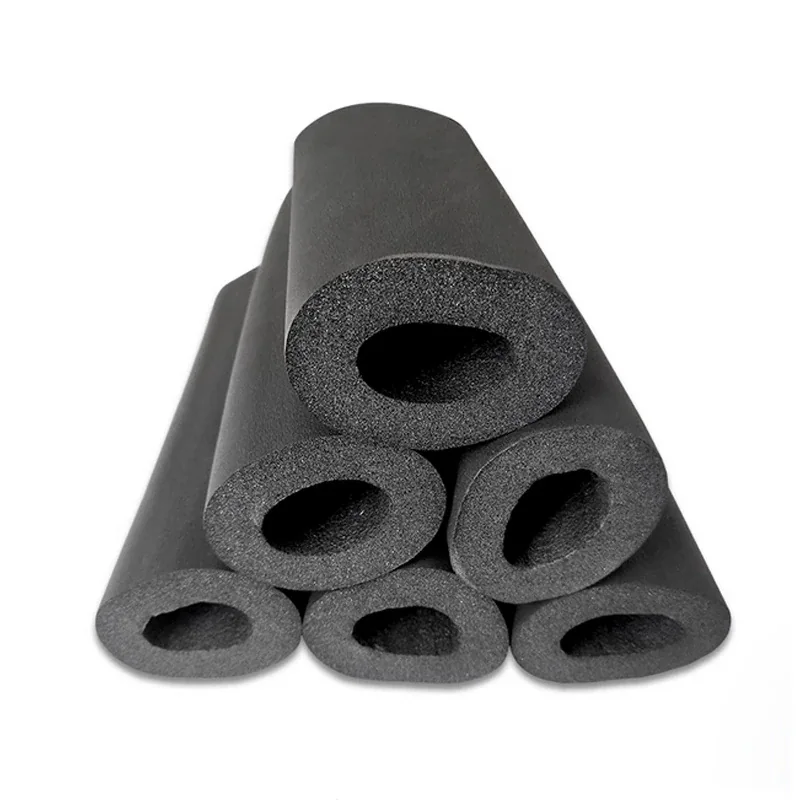
Closed-cell NBR/PVC rubber foam is flexible and has low thermal conductivity. It is used on hot- and cold-water lines, air-conditioning water systems, PPR piping, and suitable solar hot-water installations. Within its rated temperature range, preformed sleeves are often the best insulation for outdoor water pipes of smaller diameters, especially around fittings or in confined spaces.
Preformed sleeves can match the pipe's actual outside diameter. Their closed-cell structure helps resist moisture-vapor movement, but joints, cuts, elbows, and terminations still need sealing, particularly below the ambient dew point.
Insulvora supplies NBR/PVC products, including water pipe freeze protection insulation, with these specifications:
- Thicknesses: 8, 15, 20, 25, 30, 40, and 50 mm.
- Inside diameters: Multiple options within 6–110 mm.
- Thermal conductivity: ≤0.034 W/(m·K) at a 0°C test temperature.
- Form: Preformed sleeves for compatible water, PPR, and hot-water pipes.
Sizes and thicknesses come in defined combinations; not every diameter is available in every thickness. For installed piping, slit rubber foam pipe insulation can simplify fitting. If a faced product is required, see foil-faced rubber foam pipe insulation.
When Fiberglass or Rock Wool Is the Better Option
For large industrial diameters, higher temperatures, or specified pipe-section systems, the best insulation for outdoor water pipes may be appropriately rated fiberglass or rock wool instead of rubber foam.
Fiberglass pipe sections reduce heat loss on compatible hot-water and industrial piping. Preformed cylinders maintain consistent thickness along straight runs. Insulvora offers fiberglass pipe insulation with 22–720 mm inside diameters and 25–100 mm thicknesses.
Rock wool pipe sections suit industrial hot-water and higher-temperature applications, including projects requiring higher temperature ratings, specified reaction-to-fire performance, or metal-clad construction. Insulvora offers rock wool pipe insulation with 22–910 mm inside diameters and 20–150 mm thicknesses. Exact configurations depend on pipe size and service requirements.
Both fibrous materials require effective outdoor weather protection. Water entering through damaged cladding or unsealed joints can reduce insulation performance.
Outdoor Jacketing: Weather Protection and Vapor Control
Choosing the best insulation for outdoor water pipes also requires a protective system suited to site conditions. Insulation, jacketing, and essential installation accessories work together.
Rain Protection Is Different from Vapor Control
Outdoor jacketing must prevent rain and snow from entering at seams, valves, supports, and pipe ends. On cold pipes, vapor can condense where surfaces fall below the surrounding air's dew point.
Weatherproof jacketing keeps liquid water out; vapor-control layers limit vapor migration. Depending on the material and operating temperature, these functions may require separate layers or a suitable combined system. For pipes operating below the ambient dew point, a properly designed continuous vapor barrier is required; metal cladding alone should not be assumed to provide one.
UV Exposure and Mechanical Damage
Prolonged sunlight can damage unprotected rubber foam. Rooftop, exterior-wall, and equipment-platform piping may also face abrasion, impacts, and maintenance activity. Ordinary foil facing is not necessarily a complete weatherproof jacket.
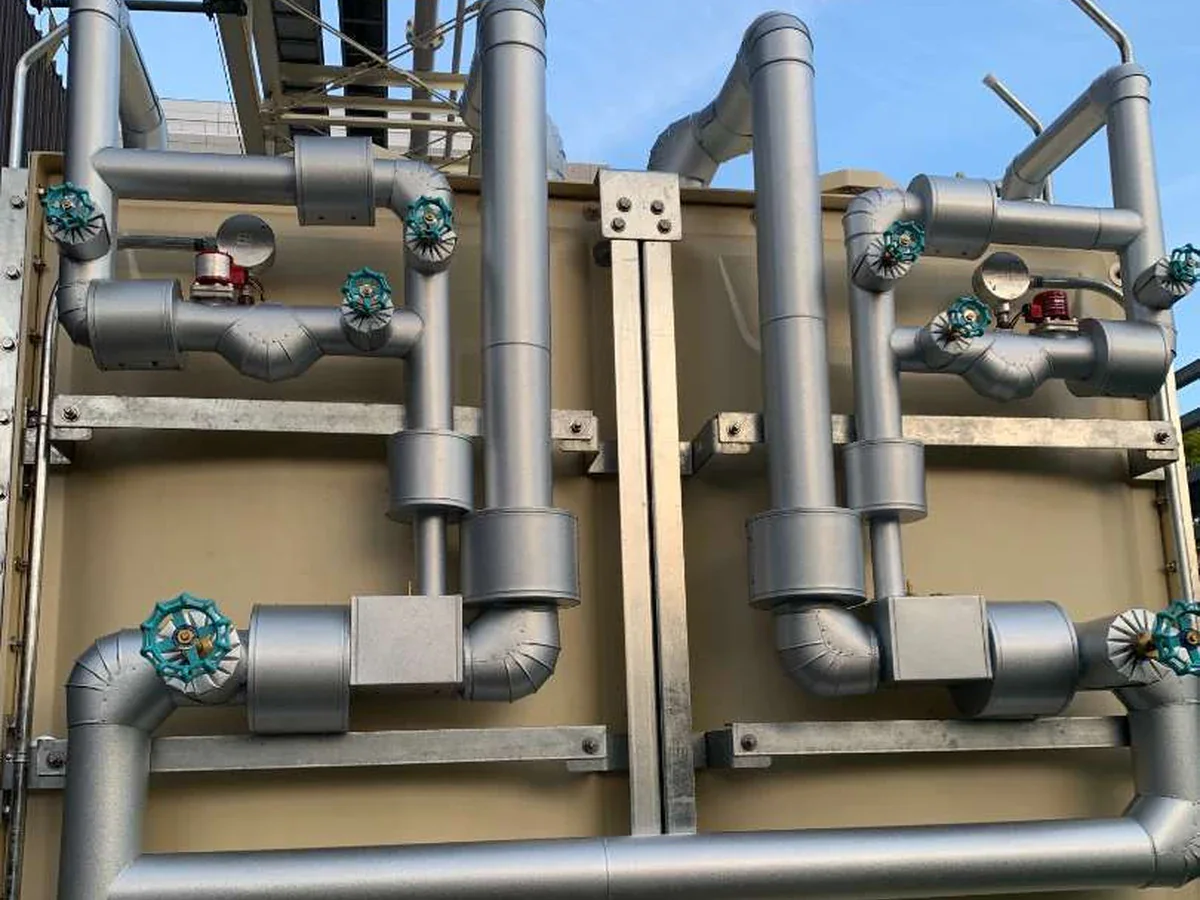
For exposed runs, the best insulation for outdoor water pipes must be paired with suitable metal cladding or a dedicated weather-resistant cover. Overlaps, elbows, end closures, and penetrations around supports and valves require protection, not only straight runs. Inadequate outdoor protection can also raise long-term costs despite a lower initial material price.
For installation details, see Outdoor Water Pipe Insulation.
Freeze Protection: Insulation Thickness Is Only Part of the Answer
In freezing climates, choosing the best insulation for outdoor water pipes begins with whether the pipe receives ongoing heat or the water may remain stagnant.
Flowing water with sufficient incoming heat, or a heated line, benefits from reduced heat loss. Insulation slows cooling but cannot indefinitely prevent stagnant water from freezing without sufficient heat input. Exposed pipes in severe cold may need heat tracing; seasonal lines may be drained when not in use.
Pipe diameter, initial water temperature, wind, ambient temperature, and exposure duration affect cooling rates. No single insulation thickness guarantees freeze protection in every condition.
Matching Sleeve Size and Insulation Thickness
The best insulation for outdoor water pipes must fit correctly. Match the sleeve's inside diameter to the pipe's actual outside diameter, not automatically to its DN or NPS nominal designation. Nominal and actual dimensions vary between piping systems.
Thickness selection depends on water temperature, exposure, pipe diameter, thermal conductivity, and the project's goal. Hot-water insulation limits heat loss; cold-water insulation may also address condensation; freeze-prone lines may require active protection.
With the same rubber foam, 15, 25, and 50 mm thicknesses provide different thermal resistance. Yet thickness alone cannot establish whether a pipe will remain free of ice or condensation. Choosing the best insulation for outdoor water pipes means checking sleeve fit, thickness, and weather protection together.
See the Pipe Insulation Thickness Chart and Pipe Insulation Vapor Barrier for related technical guidance.
Outdoor Pipe Insulation Products from Insulvora
To identify the best insulation for outdoor water pipes for your project, share the actual pipe dimensions, operating temperature, and exposure conditions. Insulvora can discuss suitable closed-cell rubber foam sleeves, fiberglass or rock wool pipe sections, available size combinations, and pricing.