
Outdoor Water Pipe Insulation
Outdoor water pipe insulation must match the pipe’s thermal duty and the conditions surrounding the installed system. Freeze-risk lines, cold-water pipes exposed to condensation, and hot-water lines have different requirements. Outdoor exposure adds separate concerns: sunlight, rain, humidity, weathering, and possible physical damage.
For cold-water and many freeze-risk applications, preformed closed-cell elastomeric pipe insulation is a starting product option. For hot-water lines, confirm that the operating temperature falls within the selected product’s verified service range before determining the required size, thickness, and exterior protection.
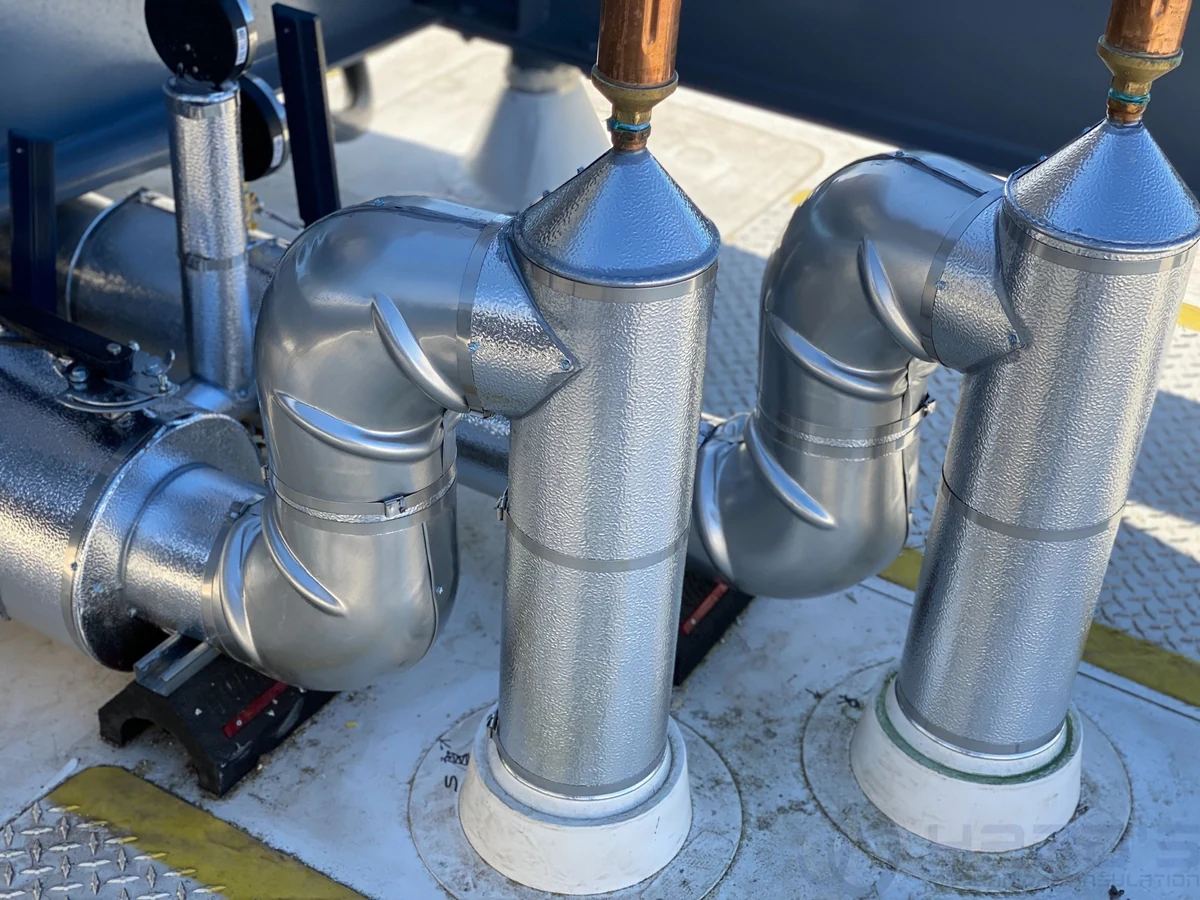
Start With the Pipe Duty
Freeze-risk water lines. Insulation slows heat loss from the water and pipe to cold surroundings; it does not generate heat or guarantee that water will not freeze. Minimum ambient temperature, duration of subfreezing conditions, water movement, and the presence of heat tracing all affect freeze risk. Where prolonged freezing is possible, outdoor water pipe insulation may need to be combined with heat tracing, an enclosure, or another freeze-protection measure.
Outdoor cold-water lines. Condensation becomes a concern when the pipe surface temperature falls below the surrounding air’s dew point. The insulation must limit heat gain, while a continuous closed-cell system helps control moisture at the pipe. Water temperature, ambient temperature, humidity, and thickness all influence the required specification. Detailed treatment of joints and interruptions is addressed below.
Outdoor hot-water lines. The objective is to reduce heat loss while keeping the insulation within its verified service-temperature range. Confirm the operating temperature and heat-loss requirement first. Where those conditions exceed the elastomeric product range or a project specification requires another material, evaluate a different pipe insulation option.
Match the Application to an Available Product Form
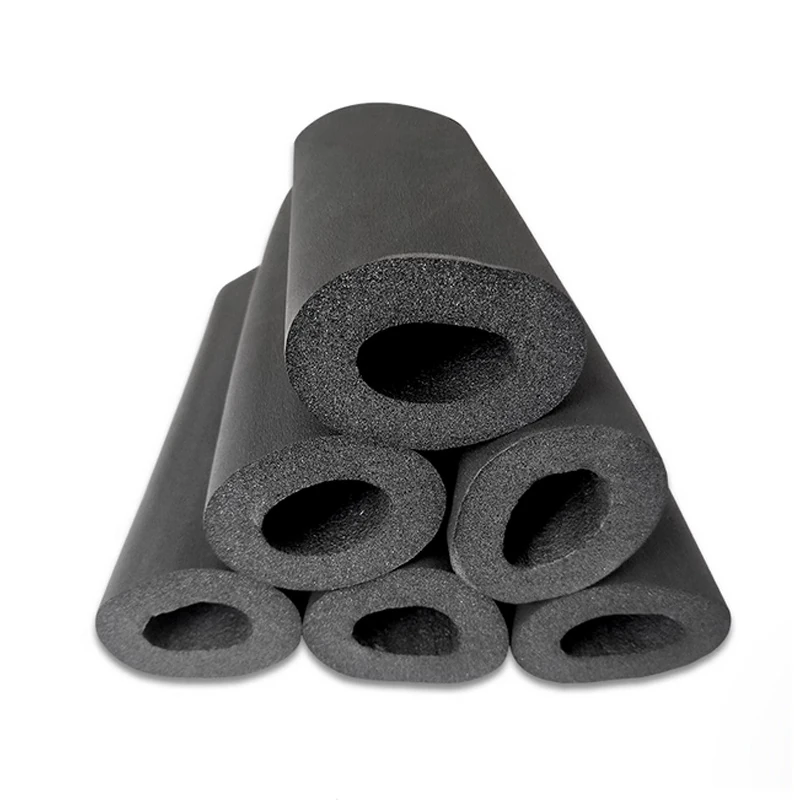
For outdoor water pipe insulation projects, Insulvora supplies preformed closed-cell NBR/PVC rubber foam pipe insulation. Its Water Pipe Freeze Protection Insulation series lists thicknesses from 8 to 50 mm and a verified service-temperature range of −40°C to +105°C for that series. Match the pipe outside diameter and selected thickness to the project requirements; these figures are not a universal specification for every outdoor installation.
For piping already installed where an unsplit sleeve cannot be slipped over the pipe, slit rubber foam pipe insulation provides an option for fitting the insulation from the side. Standard and slit sleeves serve different installation conditions; neither removes the need to assess exposure and the finished system.
| Water-Line Condition | First Product Direction | Main Factors Affecting the Final Specification |
|---|---|---|
| Freeze-risk water line | Preformed closed-cell rubber foam pipe insulation | Minimum ambient temperature, exposure duration, water movement, heat tracing, and outdoor exposure |
| Outdoor cold-water / condensation risk | Closed-cell rubber foam pipe insulation | Water temperature, ambient temperature and humidity, insulation thickness, and moisture-control continuity |
| Outdoor hot-water line | Pipe insulation within the verified service-temperature range | Operating temperature, heat-loss requirement, pipe size, and outdoor protection |
Outdoor Protection Depends on Exposure
A line beneath a roof overhang, in a partly sheltered equipment area, on an exterior wall, or on an open roof may need a different level of exterior protection. The insulation addresses the thermal requirement; its outer protection must suit the exposure where the piping is installed.
Direct sunlight and rain raise questions about UV resistance, weathering, and protection against water entry. Pipework in walkways, service areas, or locations subject to maintenance activity may also need mechanical protection against impact. A material can meet the pipe’s operating-temperature requirement without being suitable for indefinite direct outdoor exposure in its bare form. Outdoor water pipe insulation must therefore be assessed as an installed system, not solely as an insulation tube.

Maintain Continuity at Fittings and Interruptions
In outdoor water pipe insulation systems, straight runs are generally easier to cover continuously than elbows, valves, supports, wall penetrations, and termination points. These locations need attention when planning sleeve cuts, joint treatment, and any outer protective layer.
On cold-water lines, gaps in insulation or moisture-control continuity can create local condensation risks. Outdoors, exposed seams or poorly protected terminations can also allow rainwater into the system. Corners, overlaps, and finishing points in exterior protection must therefore be addressed together with the main pipe run. A specification based only on straight-pipe diameter is incomplete when fittings and interruptions are present.
Continue With the Relevant Application or Product
For freezing conditions, start with Water Pipe Freeze Protection Insulation. For cold-water or humid installations, compare Cold Water Pipe Insulation and Pipe Insulation for Condensation. For hot-water service, use Hot Water Pipe Insulation to review the applicable temperature requirements and material direction.
If closed-cell elastomeric insulation is the selected approach, Rubber Foam Pipe Insulation provides product size and configuration details. For moisture-control considerations at joints and related locations, refer to Pipe Insulation Vapor Barrier. These routes help translate an outdoor water pipe insulation requirement into a suitable product form and project specification.
Request a Quote
For outdoor water pipe insulation enquiries, provide the pipe outside diameter, water or operating temperature, site exposure conditions, required length or quantity, and whether the piping is already installed. Insulvora can review relevant pipe insulation forms, available thicknesses, and exterior-protection considerations for a project or bulk-supply quotation. Final product selection and supply details are confirmed against the project requirements.