
Cold Water Pipe Insulation
Cold water pipe insulation for building services should be selected according to actual water temperature, surrounding air temperature and humidity, and installation exposure—not simply the pipe name. For ordinary cold-water lines running below ambient temperature, Insulvora’s main material route is a closed-cell NBR/PVC elastomeric rubber foam pipe sleeve where heat gain and surface condensation both need attention.
First establish whether the line is ordinary building cold-water service or a continuously operating chilled-water circuit. A dedicated chilled-water circuit generally needs a more demanding assessment of vapor control and system continuity. This distinction sets the starting point for low temperature pipe insulation without treating different services as interchangeable.
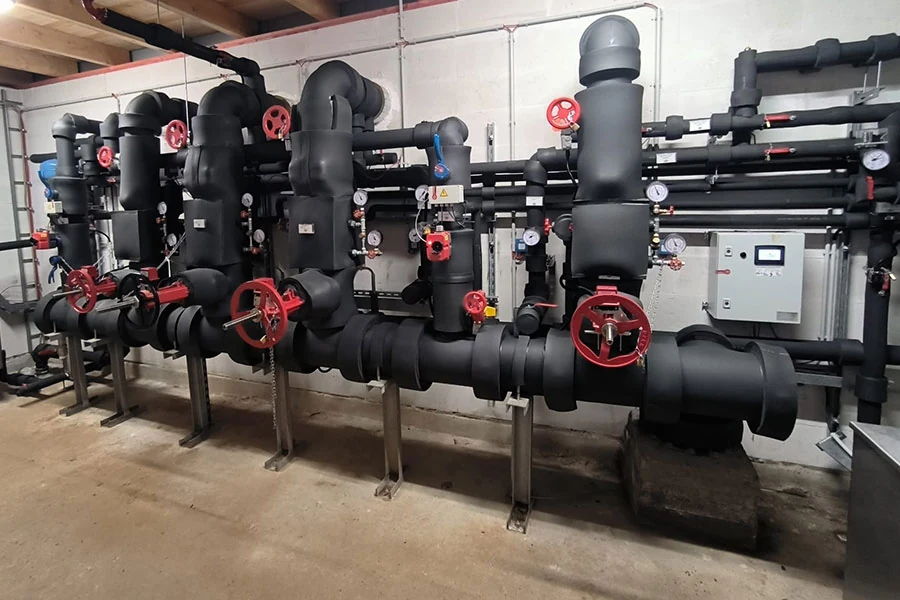
Separate Ordinary Cold-Water Service from Chilled Water
For cold water pipe insulation in buildings, distribution lines, equipment connections, and general mechanical water piping often operate closer to ambient temperature than dedicated chilled-water systems. Their insulation duty must be assessed against the actual water temperature, the surrounding air, and how long the line stays cold. An occasional risk of surface condensation is different from continuous operation at substantially lower temperatures.
For ordinary below-ambient service, cold water pipe insulation can reduce heat gain and, with an appropriate system design, help keep the outer insulation surface above the local dew point. Dedicated chilled-water loops typically remain cold for longer; for low temperature pipe insulation in these circuits, this increases the demands on sealed joints, moisture resistance, and uninterrupted insulation. Confirm the service boundary before selecting the sleeve specification; if the pipe belongs to a dedicated chilled-water circuit, use the Chilled Water Pipe Insulation application route.
Heat Gain, Condensation, and Installation Exposure
In a conditioned indoor area with stable temperature and humidity, the main tasks are to limit heat gain and prevent the insulation surface from falling below the local dew point. For cold water pipe insulation, the necessary thickness and moisture-control details depend on actual operating conditions rather than the pipe size alone.
Warm, humid plant rooms, service spaces, equipment areas, and locations with higher air exchange increase condensation risk at the same water temperature. Lower water temperature, warmer air, and higher relative humidity make continuous insulation and well-sealed joints more important. Extended low-temperature operation in humid surroundings may require the more demanding vapor-control assessment associated with low temperature pipe insulation, rather than an ordinary cold-water assumption.
Outdoor cold-water lines face additional exposure to rain, solar radiation, UV, mechanical damage, and potentially low ambient temperatures. These conditions require assessment of suitable external protection as well as the insulation material. Where outdoor exposure determines the specification, continue under Outdoor Water Pipe Insulation before confirming the product arrangement.
Closed-Cell Rubber Foam Pipe Insulation: Main Product Route
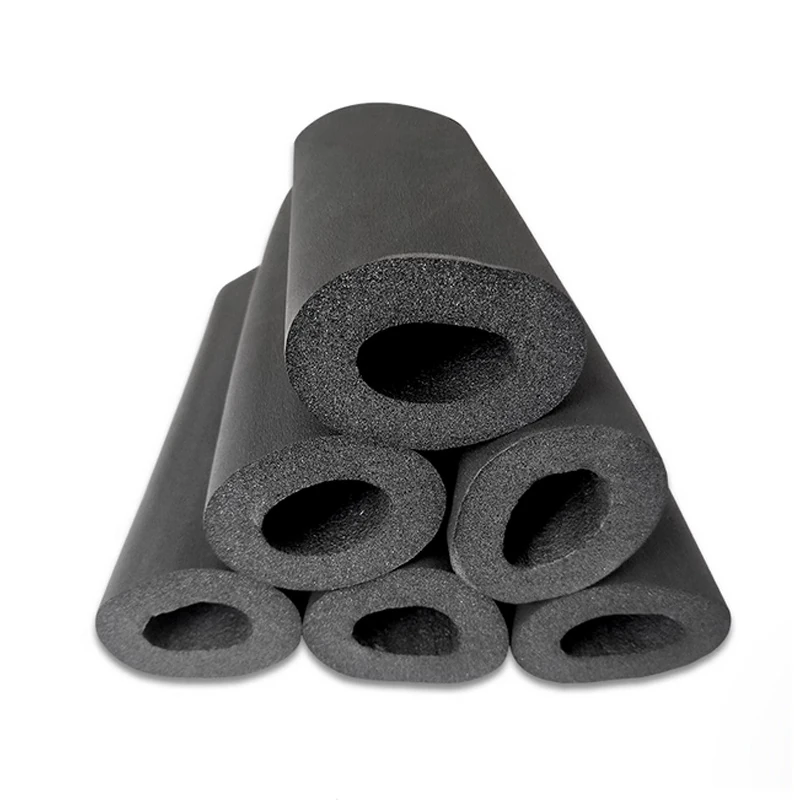
For ordinary below-ambient water piping with condensation risk, Insulvora supplies preformed closed-cell NBR/PVC elastomeric rubber foam as the main cold water pipe insulation product route. Its closed-cell structure provides thermal resistance while helping restrict water-vapor movement into the insulation. The actual performance still depends on the specified thickness, surrounding conditions, and continuity of the installed system.
Available forms include preformed pipe sleeves, slit pipe sleeves, and selected high-density and foil-faced configurations. The appropriate option depends on actual pipe outside diameter (OD), installation method, surface requirement, and project conditions. Options differ between product series.
Selected existing pipe-sleeve series are available in insulation thicknesses of 15–50 mm, with configurations covering inner diameters up to approximately 110 mm. These ranges do not apply to every series. Confirm inner diameter, insulation thickness, density, length, and surface finish against the applicable Rubber Foam Pipe Insulation series before specifying or ordering. This product-level confirmation is especially important where low temperature pipe insulation requires closer matching to the operating duty.
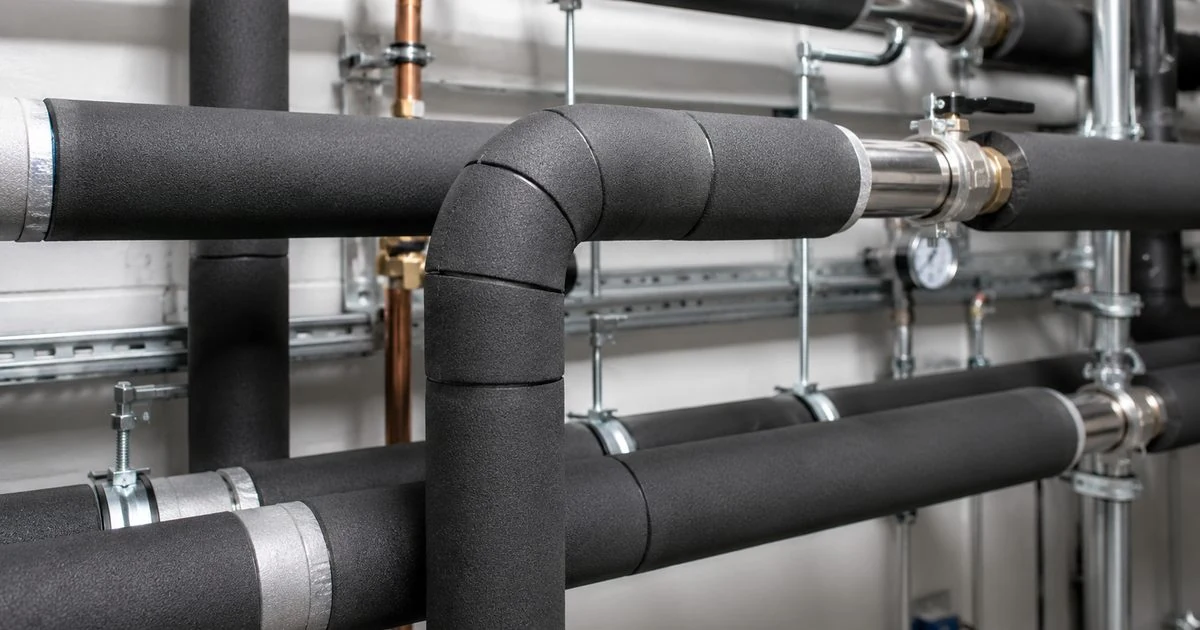
Maintain Insulation Continuity at Joints and Supports
Cold water pipe insulation is a system, not just a set of straight pipe sleeves. Longitudinal seams, butt joints, elbows, valves, supports, wall penetrations, and transitions can create local weak points. Poorly sealed joints may allow moisture into the insulation or leave colder exposed areas; excessive compression at supports can reduce local thermal performance.
Concealed piping above ceilings, inside shafts, or in other difficult-to-access spaces deserves particular attention because a local cold spot or condensation problem may be hard to detect and repair. The insulation detail should maintain continuity around fittings and support locations, with attention to both thermal and moisture performance. For low temperature pipe insulation, these installation requirements should be checked alongside the material and thickness rather than after the straight runs are selected.
Follow the Route That Matches the Service
Once the water temperature, installation environment, and main risk are known, cold water pipe insulation selection can move to the remaining product or design question. For low temperature pipe insulation, this may mean moving to a dedicated application or technical reference before requesting a final specification.
| Project condition or next question | Relevant page |
|---|---|
| Ordinary cold-water line; confirm sleeve form and available dimensions | Rubber Foam Pipe Insulation |
| Continuously operating dedicated chilled-water system | Chilled Water Pipe Insulation |
| Existing sweating or localized condensation | Pipe Condensation Insulation |
| Deeper review of vapor-control requirements | Pipe Insulation Vapor Barrier |
| Rain, UV, or outdoor mechanical exposure | Outdoor Water Pipe Insulation |
| Thermal-resistance assessment | Pipe Insulation R-Value |
| Insulation thickness not yet established | Pipe Insulation Thickness Chart |
Confirm Your Cold-Water Pipe Requirement
For a cold water pipe insulation quotation, provide the pipe OD, operating water-temperature range, surrounding temperature and humidity, installation location, and any specified insulation thickness or surface finish. Insulvora can then confirm the applicable product series, available sleeve dimensions and configurations, and project or bulk-supply quotation details. Where the conditions call for chilled-water service, outdoor protection, or closer vapor-control review, clarify those requirements before final product confirmation.