Fiberglass vs Black Foam Pipe Insulation Materials Comparison: Which Should You Choose?
Closed-cell NBR/PVC elastomeric foam is generally the more straightforward option for chilled-water, refrigeration and air-conditioning piping, particularly in humid areas or layouts with many bends. Preformed fiberglass (glass-wool) pipe sections are more relevant to higher-temperature industrial piping. Both can serve hot-water systems within their ratings and installation requirements.
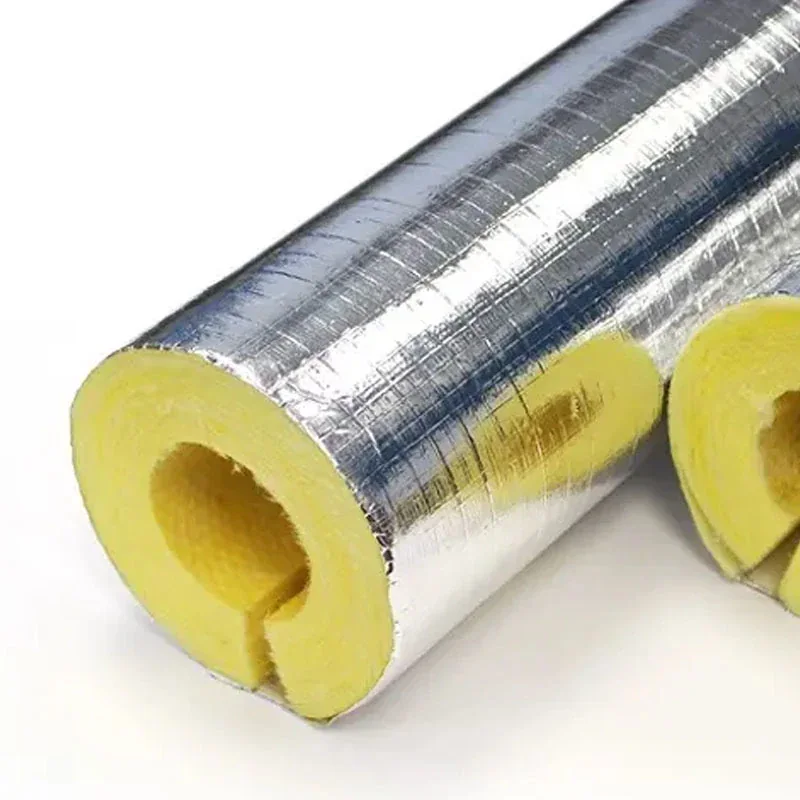
This fiberglass vs black foam pipe insulation materials comparison covers two specific product forms: preformed fiberglass pipe sections and black closed-cell NBR/PVC elastomeric tubes. Black color alone does not establish a foam's composition or performance.
Three checks before choosing a material
- Cold service: Closed-cell foam can simplify vapor-resistant insulation, provided all joints and terminations are sealed.
- Hot service: Fiberglass sections suit many heated mechanical and industrial lines within the selected product's rating.
- Installed cost: Account for pipe fit, thickness, fittings, vapor protection, jacketing and labor—not just material price.
Fiberglass vs Black Foam Pipe Insulation Materials Comparison
A fiberglass vs black foam pipe insulation materials comparison should examine the complete installed system.
| Factor | Fiberglass / Glass-Wool Pipe Sections | Black NBR/PVC Elastomeric Foam Tubes |
|---|---|---|
| Structure | Preformed, fibrous pipe sections | Flexible, closed-cell foam tubes |
| Thermal conductivity | Reference range: 0.035–0.042 W/(m·K) | ≤0.034 W/(m·K) at 0°C |
| Service temperature | Listed maximum: 450°C | Listed range: −40°C to +105°C |
| Moisture control | Requires a continuous vapor barrier for cold service | Closed-cell structure provides vapor resistance; joints still need sealing |
| Installation | Well suited to straight runs and jacketed systems | Easier to fit around bends and congested piping |
| Exposure | Suitable weatherproof or mechanical jacketing as required | UV, weather and impact protection where exposed |
| Typical direction | Hot process and industrial piping | Chilled-water, refrigeration and air-conditioning piping |
In a fiberglass vs black foam pipe insulation materials comparison, the thermal conductivity values must not be ranked directly because their reference temperatures are not equivalent. Pipe diameter, insulation thickness, mean operating temperature and workmanship also influence heat loss or heat gain.
Condensation Control on Chilled-Water and Refrigeration Lines
For cold systems, a fiberglass vs black foam pipe insulation materials comparison must consider both moisture entry and surface condensation. Humid air can penetrate gaps in an insulation assembly, while an exposed outer surface below the ambient dew point may collect moisture.
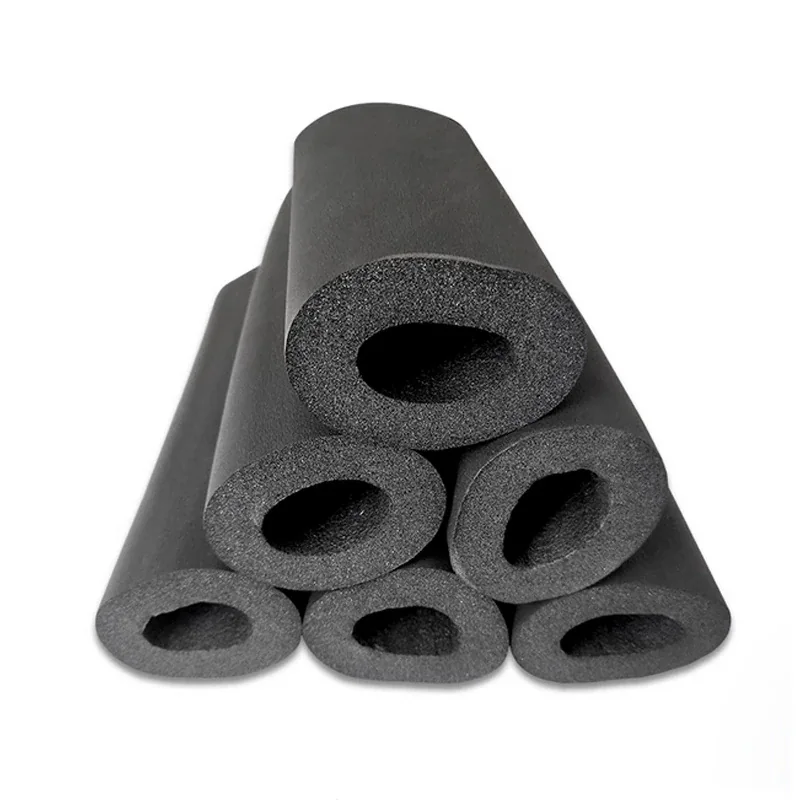
Closed-cell NBR/PVC foam combines thermal insulation and vapor resistance in a flexible tube. This suits air-conditioning copper lines, chilled-water branches and runs with frequent elbows. Closed cells do not make unsealed joints vapor-tight. Slits, seams, ends, valves and supports require careful treatment to prevent humid air from reaching cold surfaces.
Fiberglass pipe sections may also be used for cold piping when a continuous vapor barrier, suitable facing and properly sealed joints are provided. Damage to that system can allow moisture into the fibrous insulation and reduce its effectiveness.
Selection direction: For routine cold lines in humid or congested locations, elastomeric foam is generally the first option. Fiberglass remains viable where the project includes a properly designed and maintained vapor-control and jacketing assembly.
Hot-Water and High-Temperature Service
On hot-water and heating lines, a fiberglass vs black foam pipe insulation materials comparison starts with the selected product's operating temperature rating. Around 50–80°C, elastomeric tubes may be easier to install on smaller or irregular runs, while fiberglass sections work well on straight piping and externally jacketed systems.
Insulvora's listed NBR/PVC foam tube range is −40°C to +105°C; the listed fiberglass pipe section has a maximum service temperature of 450°C. When operating temperature exceeds the selected foam grade's limit, fiberglass is the more relevant route, provided the grade and all related components are suitable for the service.
At higher temperatures, insulation thickness must address heat loss and exposed surface temperature, including personnel-contact risk. Jackets, fasteners and sealing materials must also withstand the operating conditions; the insulation core alone does not determine system suitability.
Fire requirements deserve a separate check. Glass wool is inorganic and fibrous, whereas NBR/PVC foam is an organic cellular material. Their reaction-to-fire behavior differs. A material's fire classification is not the fire resistance of the complete pipe assembly.
Fiberglass Pipe Insulation vs Rubber Foam: Installation and Cost
Installation affects any fiberglass vs black foam pipe insulation materials comparison. Flexible elastomeric tubes require less shaping around small pipes, elbows and crowded HVAC runs; longitudinally slit tubes can be convenient when retrofitting existing piping. Preformed fiberglass sections are practical on long, regular runs and larger industrial diameters, including systems with metal jacketing, but fittings require appropriate cuts and joint treatment.
Both products need protection appropriate to their exposure. Fiberglass assemblies may require weatherproof or mechanical jacketing, while standard elastomeric foam exposed to sunlight needs UV and weather protection. Pipe supports should not compress insulation excessively or interrupt vapor-control continuity, especially on cold lines.
Compare the total installed system rather than the price per meter. Relevant costs include labor, fittings, seam sealing, vapor barriers or jackets, maintenance access and future upkeep. Foam can simplify detailing on complex cold piping; fiberglass can fit long, hot-service runs with an established jacketing design. Neither advantage establishes a universal lower-cost choice.
Insulvora Pipe Insulation Options
For purchasing decisions, this fiberglass vs black foam pipe insulation materials comparison connects the technical differences with Insulvora's listed product forms and sizes.
Fiberglass pipe sections
Preformed glass-wool sections for industrial hot lines, mechanical piping and systems using external protection. The listed range includes:
- Density: 40–80 kg/m³
- Inner diameter: 22–720 mm
- Thickness: 25–100 mm
- Standard length: 1 m
- Maximum service temperature: 450°C
Product details: Glass Wool Pipe Insulation. Related uses: Glass Wool Pipe Insulation Applications.
Closed-cell NBR/PVC foam tubes
Elastomeric insulation for chilled-water, HVAC, refrigeration and other piping within the specified grade's service limits. The listed slit-tube range includes:
- Density: 65–85 kg/m³
- Thicknesses: 15, 20, 25, 30, 40 and 50 mm
- Thermal conductivity: ≤0.034 W/(m·K) at 0°C
- Service temperature: −40°C to +105°C
- Format: preformed longitudinally slit tubes
Available inner diameters vary by thickness and must match the pipe's actual outside diameter. See Slit Rubber Foam Pipe and Rubber Foam Pipe Insulation for related products.
Fiberglass vs Foam Pipe Insulation: Product Guidance and Quotes
For a project-specific fiberglass vs black foam pipe insulation materials comparison, share the pipe outside diameter, service temperature, installation environment, required thickness or thermal target, and estimated quantity. Insulvora can review suitable product forms, available specifications and quotation requirements against those details.