
Industrial Pipe Insulation
Industrial pipe insulation starts with the service conditions: operating temperature, pipe diameter, geometry, ambient moisture, exposure, and maintenance access. Preformed rock wool pipe or pipe sections are typically the first route for regular hot-process lines. Flexible rock wool and wire mesh rock wool blankets suit larger diameters and irregular shapes, while suitable below-ambient piping generally calls for closed-cell elastomeric insulation to address condensation and water-vapor ingress.
Insulvora supplies industrial pipe insulation materials in preformed and flexible forms, including rock wool pipe, rock wool pipe sections, flexible rock wool, wire mesh rock wool blankets, glass wool pipe insulation, and closed-cell NBR/PVC pipe insulation. The appropriate product is determined by the actual pipe duty and the available product specifications.
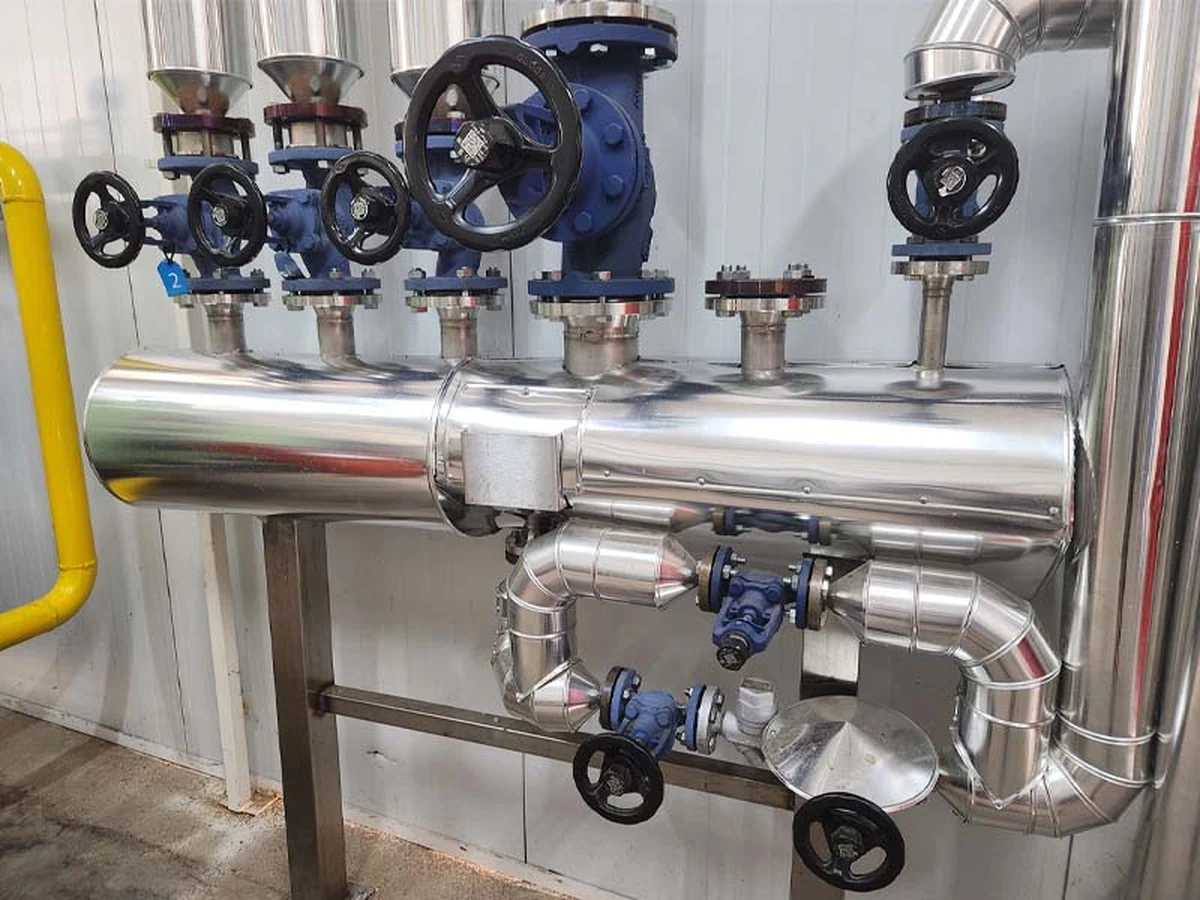
Industrial Pipe Insulation Materials by Service Duty
Start with the operating condition and pipe geometry, then compare the available form, size range, and limits. The following routes combine initial material selection with Insulvora's current product information.
Regular Hot-Process Piping — Rock Wool Pipe and Pipe Sections
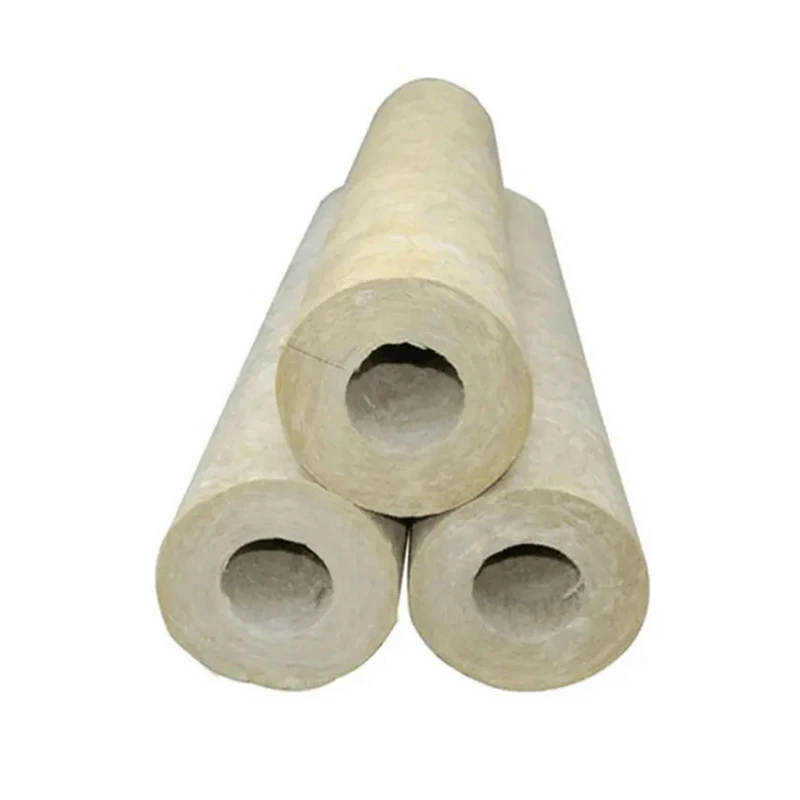
For industrial pipe insulation on regular round piping and repeated straight runs, preformed rock wool pipe or pipe sections are a practical starting point. Their preformed shape is matched to the pipe diameter.
Current product data lists inner diameters of 22–910 mm, insulation thicknesses of 20–150 mm, and a standard length of 1 m. The corresponding product data specifies a maximum operating temperature of 600°C. Final selection must be confirmed against the chosen product, operating temperature, pipe size, and project requirements; other performance values depend on the selected product.
Large Diameters, Bends, and Irregular Surfaces — Flexible Rock Wool Forms
Where standard pipe sections cannot provide a practical fit around large-diameter runs, frequent bends, reducers, or irregular surfaces, flexible rock wool and wire mesh rock wool blankets offer more adaptable product forms. Fastening and external protection must be considered together with the insulation.
For the wire mesh rock wool blanket, current product data lists thicknesses of 30–100 mm and widths of 0.4 m, 0.6 m, or 1.2 m, with galvanized wire mesh reinforcement. Its listed maximum operating temperature is 750°C. These figures relate to the wire mesh blanket specification; suitability and specifications for other flexible rock wool products require separate confirmation.
Regular Piping Within the Glass Wool Temperature Range
Glass wool pipe insulation is an alternative among industrial pipe insulation materials for regular piping where the service temperature is within the selected product's applicable range. Its preformed shape is selected to match the required pipe diameter and insulation thickness.
Available dimensions include inner diameters of 22–720 mm, wall thicknesses of 25–100 mm, and a standard length of 1 m. The applicable temperature range must be checked against the specific product rather than assumed from the material name.
Below-Ambient and Condensation-Sensitive Piping — Closed-Cell Elastomeric Insulation
For cold-service lines, industrial pipe insulation materials must address heat gain as well as surface condensation and water-vapor ingress. Closed-cell elastomeric pipe insulation is normally the first option to evaluate where these conditions are critical.
Insulvora supplies closed-cell NBR/PVC pipe insulation for suitable low-temperature services. The required form and thickness depend on operating temperature, pipe size, ambient humidity, and installation environment. Confirm the available size, applicable service-temperature range, and product configuration for the specific project.
The dimensions and temperature limits above come from the relevant product data and should be applied to the specified products, not treated as interchangeable limits across the different product forms. For projects already following a mineral wool system, see Mineral Wool Pipe Insulation for the corresponding material route.
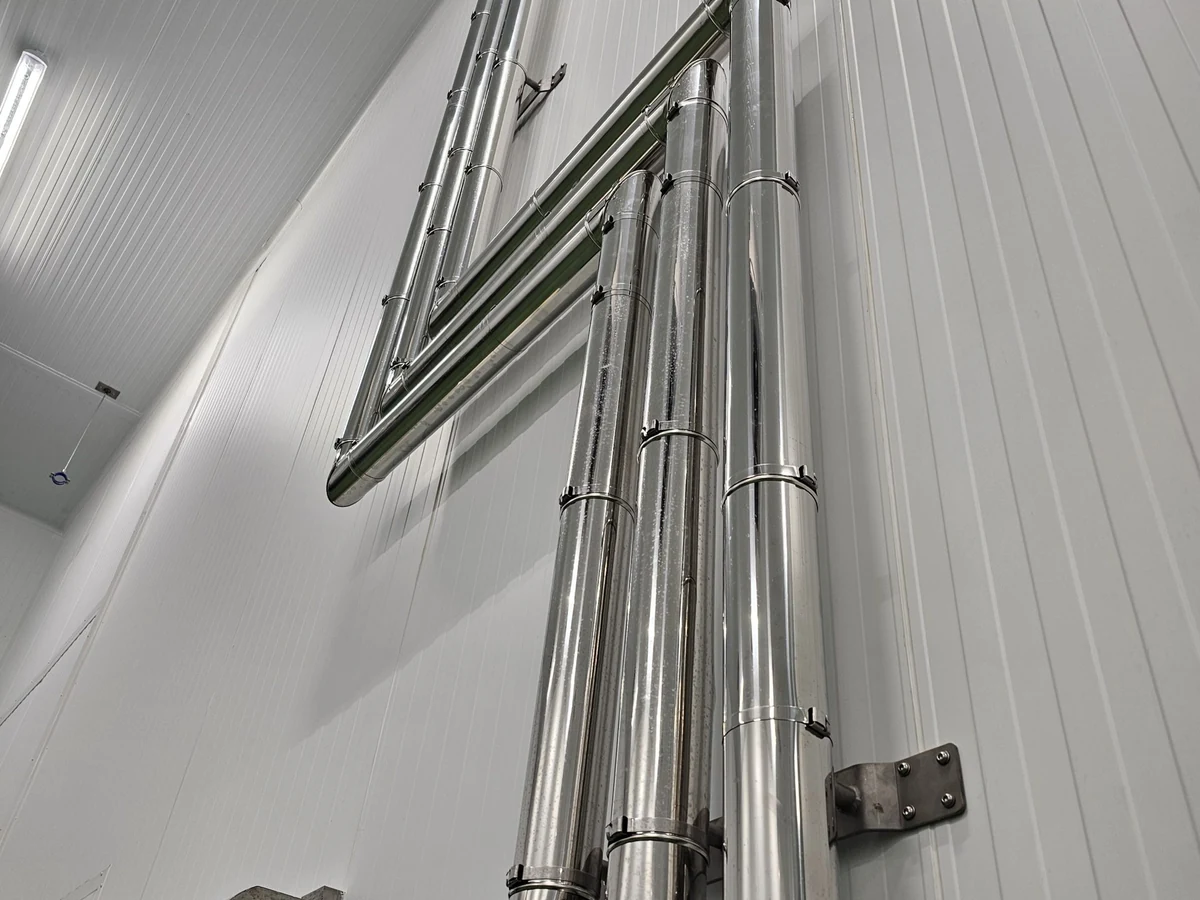
Supports, Valves, Flanges, and External Protection
Material choice is only part of industrial pipe insulation. Pipe supports, removable components, exposed runs, and thermal movement can interrupt the insulation envelope. These details need to be considered with the intended installation and protection system.
Pipe supports. Supports carry mechanical loads and may interrupt insulation continuity. Insulation placement, fastening, and external protection should match the support arrangement instead of assuming an uninterrupted straight run.
Valves and flanges. Valves and flanges may need inspection, removal, or maintenance. Coverage should account for access requirements without permanently enclosing parts that must be reached regularly.
Outdoor and mechanical exposure. Industrial piping exposed to rain, wash-down, impact, or other site conditions may need metal cladding or another suitable protective covering. Joints, terminations, and penetrations also need detailing that limits water entry.
Thermal movement. Hot piping expands and contracts as temperatures change. Long runs, connections, and external coverings need to accommodate the movement allowed by the piping design.
Find the More Specific Pipe Application
After identifying suitable industrial pipe insulation materials, continue with the application that best matches the service duty. Each route addresses a more specific set of operating conditions.
Process Piping Insulation
For process piping networks where the process medium, operating temperature, bends, valves, flanges, supports, and external protection need to be assessed as one system.
Steam Pipe Insulation
For steam distribution lines where steam temperature, heat loss, and continuous operating conditions are the main selection factors.
High Temperature Pipe Insulation
For pipe services where operating temperature sets a primary material boundary and the insulation grade and protection system require closer confirmation.
Boiler Pipe Insulation
For hot piping connected with boiler systems, with selection depending on pipe location, operating temperature, and installation environment.
Exhaust and Flue Pipe Insulation
For exhaust and flue lines where elevated temperatures, changing geometry, thermal movement, and indoor or outdoor exposure call for more specific detailing.
Request a Quote
For a project or bulk-supply enquiry, share the pipe service and operating temperature, pipe diameter, required insulation thickness, estimated quantity, and installation or exposure conditions. Note any large-diameter sections, frequent bends, valves, flanges, or other areas needing special attention.
Insulvora can review the relevant industrial pipe insulation materials and product forms, identify product details that need confirmation, and discuss the appropriate options for a project quotation.