Process Piping Insulation
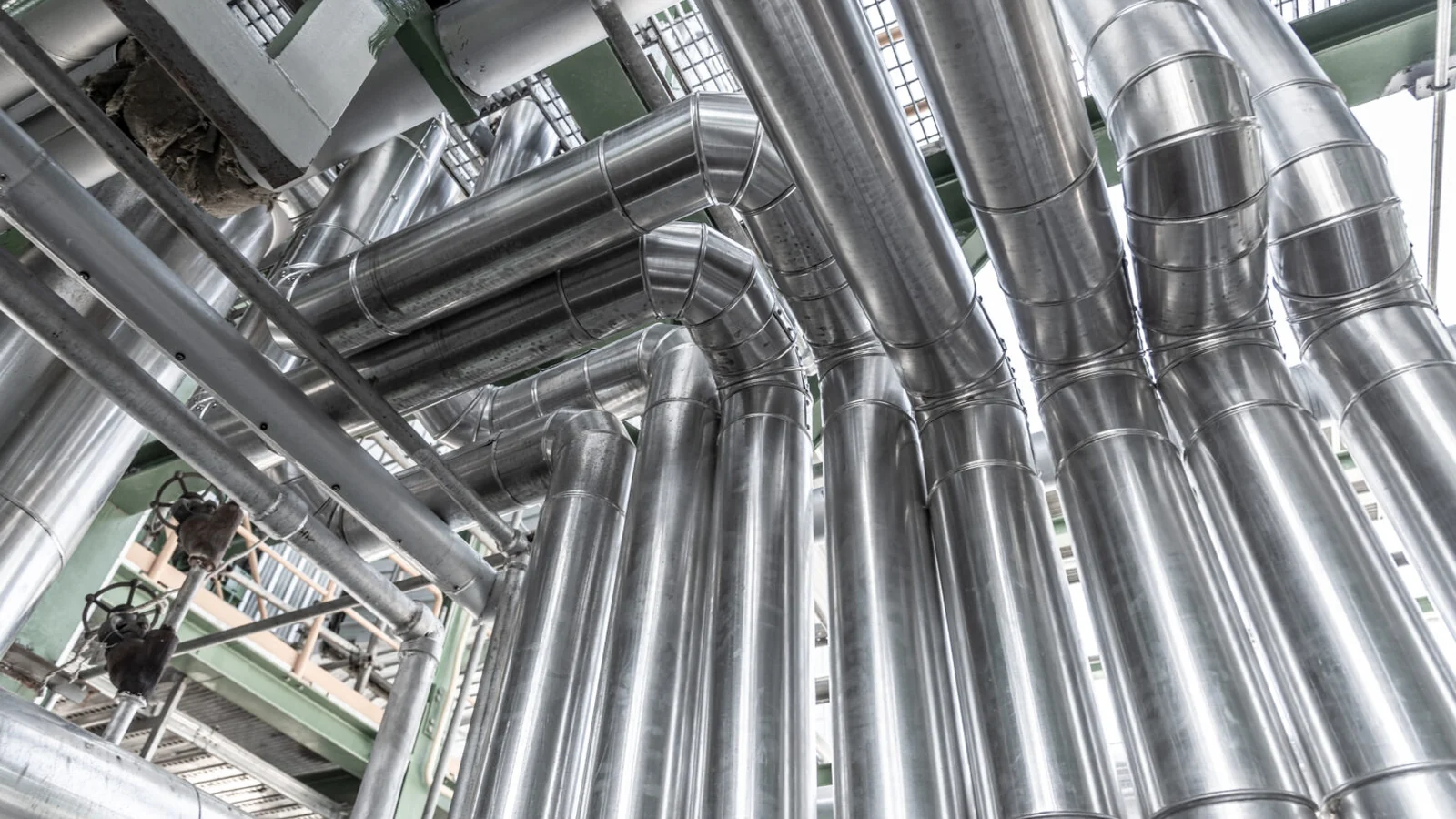
Process piping insulation is specified around fluid service, operating temperature, pipe diameter and the project's thermal objectives. For compatible hot-service lines, preformed rock wool pipe sections are suited to straight runs. Flexible rock wool blankets and wire-mesh reinforced blankets offer alternatives for larger diameters and irregular surfaces.
Below-ambient piping needs separate consideration. Where condensation is a risk, the insulation material and vapor-control system must work together; a hot-service configuration should not simply be carried over to these lines.
Product Forms and Available Sizes
For process piping insulation, the available product form must suit the pipe geometry, required dimensions and installation access. Insulvora supplies the following rock wool options:
| Pipe Condition | Product | Available Range |
|---|---|---|
| Regular straight runs | Rock Wool Pipe / Pipe Section | 22–910 mm inside diameter; 20–150 mm thickness |
| Larger diameters and curved surfaces | Rock Wool Blanket | 25–200 mm thickness |
| Large pipes and complex curves requiring reinforcement | Wire Mesh Rock Wool Blanket | 30–100 mm thickness; galvanized wire mesh |
Preformed pipe sections provide a consistent insulation thickness along straight runs when the section bore matches the pipe's actual outside diameter. For industrial piping insulation, larger pipes do not automatically require blankets: available section sizes, pipe geometry and installation access also determine the choice.
Flexible blankets are an alternative where preformed sections cannot readily fit the pipe or surface. For irregular profiles that need reinforcement and secure wrapping, wire-mesh blankets have a galvanized mesh structure that helps retain the insulation during installation. Neither type of blanket replaces weather-resistant outer cladding where exposure requires it.
Service Conditions and Insulation Specification
Process piping insulation must be specified for the conditions of each line, even within a shared piping system. Insulvora rock wool pipe sections have a maximum operating temperature of 600°C. Standard rock wool blankets and wire-mesh blankets are rated up to 600°C, while high-temperature blanket grades are available up to 750°C.
These ratings belong to the respective product forms and grades. A blanket rated for a higher temperature does not increase the operating limit of preformed pipe sections. If a line exceeds a product's rated range, both the insulation grade and product form need separate review.
For industrial piping insulation, thickness should be chosen to achieve the required thermal result. Process temperature maintenance and heat-loss control aim to limit heat transfer along the line; personnel protection also takes the accessible outer surface temperature into account. Pipe diameter, operating conditions and ambient exposure affect the final thickness. The pipe insulation sizing chart and thickness chart provide further dimensional and design references.
Below-ambient lines also require attention to moisture. Water vapor entering the insulation system can undermine condensation control, so material choice and vapor-barrier continuity must be considered together rather than relying on hot-service temperature ratings.
Fittings, Supports and Outer Protection
In process piping insulation, elbows, tees, valves and flanges need details suited to their geometry and maintenance requirements. Insulvora can supply fabricated rock wool pieces for these components to project specifications. Where valves and flanges require periodic access, the arrangement must permit removal and reinstallation of the insulation without leaving adjacent sections exposed.
Pipe shoes, hangers and structural connections interrupt the regular insulation arrangement. Poorly detailed transitions can create thermal bridges or paths for water entry. Insulation terminations and jacketing must accommodate each connection while protecting the pipe.
Outdoor industrial piping insulation requires weather-resistant outer protection, particularly at jacketing overlaps, penetrations, supports and low points. Water trapped beneath damaged or poorly sealed cladding can reduce insulation effectiveness and contribute to corrosion on susceptible metal pipework. The pipe insulation installation guidance covers further joint, support and installation details.

Process Piping Insulation Project Confirmation and Quotation
For an industrial piping insulation quotation, please provide the fluid service, operating and design temperatures, pipe outside diameters and lengths, specified insulation thickness or thermal targets, installation environment, cladding requirements, and relevant fitting drawings or quantities.
Insulvora uses these details to review the pipe-section bore, product form and grade, insulation thickness, fabricated fittings and itemized supply requirements. A separate breakdown for straight runs and fabricated components helps clarify product quantities and quotation scope across the piping schedule.
Discuss Your Process Piping Insulation Project
For industrial piping insulation projects, share your piping schedule and service conditions so Insulvora can review suitable rock wool product forms, fitting requirements and the scope for quotation.