
Pipe Insulation Specification: Materials, Thickness and System Requirements
A practical pipe insulation specification identifies the service conditions, insulation material, pipe dimensions, required thickness, thermal performance and installed-system details. These requirements should be specific enough to support product selection, quotations and installation acceptance—not merely state a material name and nominal thickness.
Cold and hot piping require different design checks. Chilled-water and refrigerant lines need heat-gain and condensation control, while hot-water, steam and process lines require attention to heat loss, surface temperature and material service limits. Outdoor exposure adds weather and mechanical protection requirements to either system.
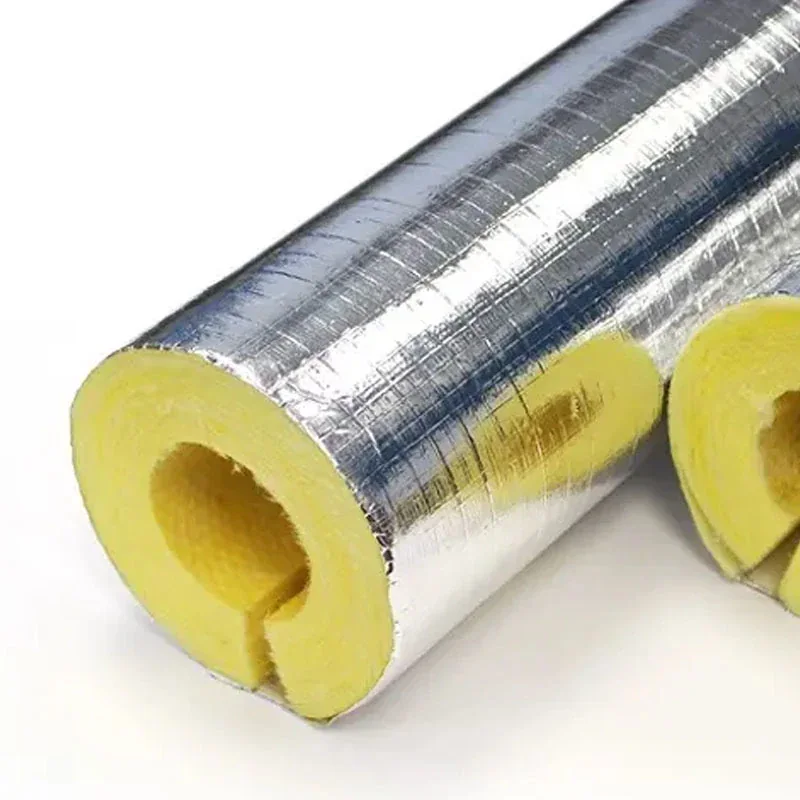
A usable pipe insulation specification connects three groups of requirements:
- Service conditions: Pipe operating temperature, actual outside diameter, ambient conditions and insulation objective.
- Product evidence: Material grade, thermal conductivity and its stated basis, insulation bore, wall thickness and applicable temperature limits.
- Installed system: Joints, vapor control, pipe supports, protective finishes and inspection criteria.
Insulation Requirements by Pipe Service
Start the pipe insulation specification with the operating conditions and the purpose of insulation. The table gives common material directions; final selection still depends on the relevant product grade and project requirements.
| Pipe service | Common materials and product forms | Main specification considerations |
|---|---|---|
| Chilled-water piping | Closed-cell elastomeric foam tubes; glass wool pipe sections with a suitable vapor-retarder system | Condensation-control thickness, vapor continuity, pipe sizing and sealed joints |
| Air-conditioning refrigerant lines | Closed-cell elastomeric foam tubes | Minimum operating temperature, tube inside diameter, heat gain and moisture protection |
| Building hot-water piping | Glass wool or rock wool pipe sections; elastomeric tubes where suitable for the service temperature | Heat loss, operating temperature, insulation thickness and external protection |
| Steam and industrial heating lines | Rock wool pipe sections; glass wool pipe sections rated for the relevant temperature | Continuous service temperature, heat loss, surface temperature and support details |
Exposure is a separate system consideration. An indoor material selection may also be appropriate outdoors, but a pipe insulation specification for exposed piping must address rainwater ingress, UV exposure, impact and moisture entry at ends and penetrations. For high-temperature service, check the suitability of binders, facings and other system components as well as the insulation material itself.
Key Parameters in a Pipe Insulation Specification
Operating Temperature and Ambient Conditions
State the minimum, normal and maximum pipe operating temperatures. Occasional temperature excursions on industrial lines may also affect the selection of insulation and associated components.
For chilled-water and refrigerant piping, record the ambient temperature and relative humidity. Condensation can develop when the insulation surface falls below the surrounding air's dew-point temperature. Controlling it requires an appropriate insulation thickness together with suitable moisture resistance and continuous joint sealing.
For hot-water and steam piping, the operating-temperature range establishes material suitability, while allowable heat loss and accessible surface temperatures inform thickness selection.
Thermal Conductivity and Insulation Thickness
A pipe insulation specification should state thermal conductivity with its relevant test or mean-temperature basis. Values measured under different conditions are not directly interchangeable, even when reported in the same units.
At comparable conditions, lower thermal conductivity generally reduces heat transfer, and greater insulation thickness can further reduce heat loss or gain. The required thickness also depends on pipe diameter, ambient conditions and the material used. For hot pipes, the design may be governed by heat-loss or surface-temperature limits; for cold pipes, both heat gain and condensation must be addressed.
Where project design has established the required thickness, specify that value in the purchasing documents. Otherwise, the Pipe Insulation Thickness Chart offers further reference. A pipe insulation specification should name the selected thickness rather than leave it open at quotation stage.
Product performance requirements must also match the relevant grade and test conditions. Where fire performance is specified, distinguish a material's reaction-to-fire classification from any fire-resistance requirement for a complete assembly; they are not interchangeable.
Pipe Outside Diameter, Insulation Bore and Finished Diameter
For preformed tubes and pipe sections, a pipe insulation specification must identify both inside diameter (bore) and wall thickness. Select the bore against the pipe's actual outside diameter, not only a nominal DN or NPS designation.
For example, an NPS 2 steel pipe has an outside diameter of 60.3 mm. With 40 mm insulation, the approximate finished outside diameter, excluding cladding, is:
60.3 + (2 × 40) = 140.3 mm
This finished diameter affects pipe spacing, supports, valve clearances and the space required for cladding. Copper, steel and plastic pipe systems can follow different nominal-size conventions, so similar nominal labels do not always indicate the same actual outside diameter. Consult the Pipe Insulation Sizing Chart when matching pipe dimensions to insulation bore.
Insulvora Pipe Insulation Products and Available Sizes
Insulvora supplies preformed elastomeric foam tubes, glass wool pipe sections and rock wool pipe sections. Their available dimensions and suitability differ by product family. The following ranges provide a starting point for matching a pipe insulation specification to a product.
| Product family | Available product range | Typical application direction |
|---|---|---|
| NBR/PVC closed-cell foam tubes | Inside diameters in the 10–110 mm range; wall thicknesses 15–50 mm; selected grades with thermal conductivity ≤0.034 W/(m·K) at 0°C | Air-conditioning, chilled-water and suitable hot-water lines |
| Preformed glass wool pipe sections | Inside diameters 22–720 mm; wall thicknesses 25–100 mm; standard section length 1 m | Building hot-water, mechanical and suitably rated industrial piping |
| Preformed rock wool pipe sections | Inside diameters 22–910 mm; wall thicknesses 20–150 mm; standard section length 1 m | Industrial heating, steam and higher-temperature piping |
When matching a pipe insulation specification to these ranges, remember that they are not a guarantee that every bore and wall-thickness combination is available. Each requested combination must be checked against the applicable product grade, size offering and dimensional tolerances.
Closed-cell elastomeric foam tubes. NBR/PVC foam helps control heat gain and water-vapor entry on appropriate services. Insulvora offers standard, slit and foil-faced tube options. Slit tubes can simplify work on existing piping when the installation allows longitudinal and circumferential joints to be sealed with compatible adhesives and sealants. See Slit Rubber Foam Pipe.
Glass wool pipe sections. Insulvora's preformed range includes densities of 40–80 kg/m³ and thermal-conductivity figures of 0.035–0.042 W/(m·K), subject to the relevant product grade and test temperature. Below-ambient applications require an effective vapor-retarder system, while elevated-temperature installations require a suitable service rating and protective finish. See Glass Wool Pipe Insulation.
Rock wool pipe sections. Available densities span 40–200 kg/m³, with selected product grades listed for service temperatures up to 600°C. At elevated temperatures, the complete system must also accommodate supports, thermal expansion, joint arrangements and appropriate metal cladding. The insulation material's temperature rating does not by itself establish the service limit of every assembled component. See Rock Wool Pipe Section.
Example: Writing a Pipe Insulation Specification
Consider an indoor chilled-water branch line with the following assumed design conditions. This is an illustrative sizing and specification example, not a verified condensation-control design.
| Item | Example requirement |
|---|---|
| Actual pipe outside diameter | 25 mm |
| Water operating temperature | 7°C |
| Indoor design conditions | 30°C, 70% relative humidity |
| Insulation material | NBR/PVC closed-cell elastomeric foam |
| Product form | Preformed slit insulation tube |
| Tube dimensions | 25 mm inside diameter, 25 mm wall thickness |
| Joint treatment | Continuously bonded and sealed longitudinal and circumferential joints |
| Details | Insulation and vapor control maintained at elbows, tees, valves and supports |
The 25 mm bore × 25 mm wall-thickness combination is available in Insulvora's slit elastomeric tube range. Before adopting the thickness for an actual chilled-water installation, confirm that the insulation surface will remain above the ambient dew point under the design conditions. An available 25 mm product thickness is not a universal condensation-control recommendation.
A pipe insulation specification clause based on these assumed requirements could read:
Indoor chilled-water branch piping shall be insulated with preformed NBR/PVC closed-cell elastomeric foam tubes, 25 mm inside diameter and 25 mm wall thickness, for a pipe outside diameter of 25 mm. Seal longitudinal and circumferential joints continuously with adhesive compatible with the insulation. Insulate elbows, tees and valves using suitable formed or cut pieces, maintaining continuity of vapor protection. Provide load-bearing insulated supports to prevent local compression or exposed pipe surfaces. Finished insulation shall be continuous and free from visible gaps, damage and unsealed joints.
A pipe insulation specification for hot-water or higher-temperature industrial lines follows the same structure: state the actual pipe dimensions and service temperatures; select a suitable material and grade; then define thickness, protective finish and critical installation details.
Joints, Vapor Control and External Protection
The installation requirements in a pipe insulation specification must account for changes in geometry, access for maintenance and exposure conditions—not just straight pipe runs.
Cold piping: maintain vapor continuity. Moisture can enter even a low-permeability closed-cell system through unsealed seams. Where glass wool or other fibrous insulation is used below ambient temperature, specify continuity of the vapor-retarder facing at seams, ends, supports and penetrations. Elbows, tees and valves also require suitable insulation and sealing details.
Hot piping: maintain coverage and mechanical stability. Account for service-temperature suitability, thickness and support arrangements through elbows, valves and flanges. Components needing periodic access may use suitable removable insulation assemblies without leaving the surrounding insulation system unprotected.
Outdoor piping: distinguish weather protection from vapor control. Aluminum or other suitable metal cladding helps protect against rain and physical damage, but does not automatically act as a vapor retarder. Cold outdoor piping must address both vapor migration and external water ingress, including termination and penetration details.
For additional guidance on moisture-control details, see Pipe Insulation Vapor Barrier.
Pipe Insulation Products for Your Project
Share your pipe insulation specification or project requirements with Insulvora. Include the pipe material and actual outside diameter, operating-temperature range, ambient or exposure conditions, selected or required insulation thickness, product form, facing and estimated quantities where available.
We can review the requested material and size combinations against our elastomeric foam, glass wool and rock wool pipe insulation ranges, then discuss applicable product options and quotation details.