
Chilled Water Pipe Insulation
Chilled water pipe insulation must limit heat gain and reduce the risk of surface condensation on supply and return lines operating below ambient temperature. For typical chilled-water systems, closed-cell elastomeric pipe insulation is the first material route to evaluate. Preformed glass wool pipe sections are an alternative when specified by the project, provided the assembly includes continuous vapor control. The appropriate product form and thickness depend on water temperature, ambient temperature and humidity, actual pipe outside diameter (OD), installation location, and details at valves, fittings, and supports.

Two Product Routes for Chilled-Water Piping
The material route should be matched to the project specification and moisture-control requirements before sizes and quantities are confirmed. Chilled water pipe insulation is selected as a system: the pipe section, joints, fittings, supports, and any required protection all matter.
Closed-Cell Elastomeric Pipe Insulation
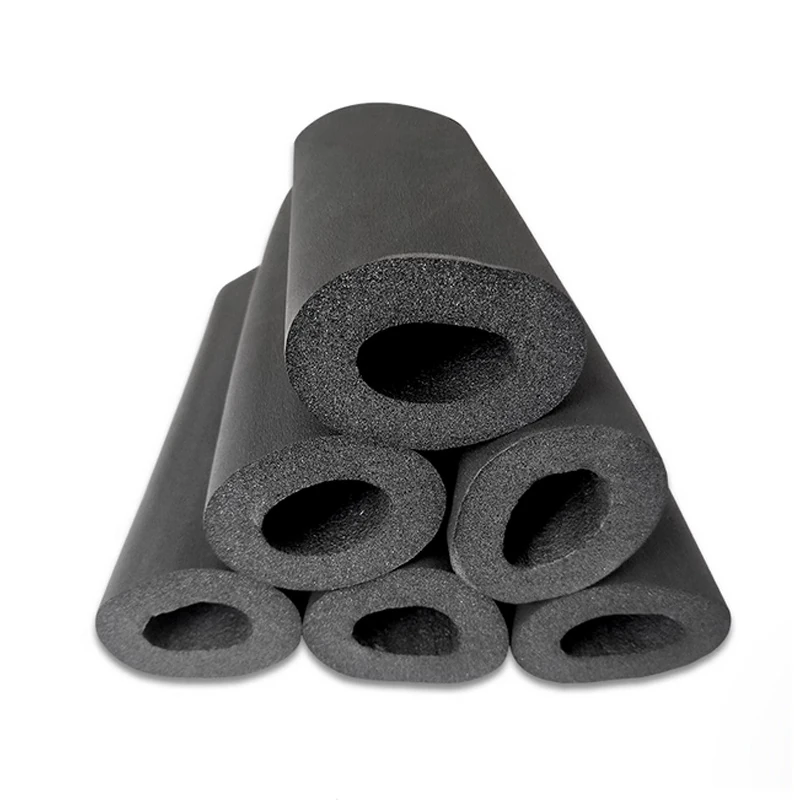
For typical supply and return runs, closed-cell elastomeric tubes are the first option to review, especially where condensation control is critical. Preformed pipe insulation should be selected by matching the insulation inner diameter (ID) to the actual pipe OD rather than relying only on the nominal pipe size.
Insulvora supplies standard rubber foam pipe insulation as well as slit, high-density, and faced options. In the documented High Density Rubber Foam Pipe range, available thicknesses include 15, 20, 25, 30, 40, and 50 mm. These figures apply to that specific range; available dimensions and finishes must be checked for the product being quoted. For chilled water line insulation, confirm the required form, ID, and thickness against the relevant product data.
See Rubber Foam Pipe Insulation for available product forms.
Glass Wool Pipe Insulation
For chilled water pipe insulation projects that specify preformed fibrous pipe sections, glass wool is another material route. Insulvora's listed range includes 22–720 mm inner diameters, 25–100 mm wall thicknesses, and 1 m section lengths. Compare the required pipe sizes and insulation thicknesses with the available range before confirming the configuration.
For below-ambient service, the glass wool core alone is not a complete moisture-control system. The assembly requires continuous vapor control, sealed longitudinal and circumferential joints, and any necessary outer protection. In these projects, chilled water pipe insulation must be evaluated as a complete assembly rather than as an insulation core alone.
See Glass Wool Pipe Insulation for the specified fibrous pipe-section route.
Project Conditions That Affect Product Selection
The same water temperature does not always call for the same insulation arrangement. These six conditions affect chilled water pipe insulation selection and the scope of materials needed for the project.
| Project condition | Effect on product and system selection |
|---|---|
| Lower water temperature and higher ambient humidity | Greater condensation exposure; confirm insulation thickness and continuity of vapor control under the specified conditions. |
| Multiple pipe sizes | Size chilled water line insulation to each actual pipe OD, not only nominal size; identify lengths or quantities by pipe size. |
| Numerous valves, flanges, and complex fittings | Confirm which items are included and allow for their insulation treatment and material quantities. |
| Frequent pipe supports | Address compression, thermal bridging, and possible interruptions to vapor control at supports. |
| Outdoor installation | Provide suitable weather protection outside the cold-service insulation system. |
| Specified thickness, R-value, or other project requirement | Check the requirement against available product configurations and relevant technical data. |
Pipe Details That Need Particular Attention
Straight runs are only one part of a chilled water pipe insulation system. The details below need separate attention because exposed cold metal, compressed insulation, or breaks in vapor control can create local condensation risks.
Valves and Flanges
Valves and flanges differ from straight pipe in shape and size, and some must remain accessible for inspection or removal. Confirm whether these items are included in the insulation scope and how exposed cold surfaces will be avoided.
Pipe Supports
In chiller pipe insulation applications, supports can compress or interrupt insulation and create local thermal bridges or moisture-control gaps. Projects with frequent supports should account for their insulation treatment and quantities during product confirmation.
Bends and Other Fittings
Bends, tees, and formed sections introduce additional joints. Insulation coverage and vapor control must remain continuous around these changes in geometry, not just along straight pipe lengths.
Penetrations, Terminations, and Equipment Connections
Where pipework meets walls, equipment, or other components, the vapor-control and outer-protection layers need appropriate terminations. For chiller pipe insulation, these transitions should be included in the project scope rather than left as unaddressed ends of the insulated run.

Project Information and Product Confirmation
To confirm chilled water pipe insulation for your system, provide the supply and return water temperatures; pipe sizes or actual ODs; ambient temperature and relative humidity; specified insulation thickness or R-value; indoor or outdoor installation conditions; and whether valves, flanges, fittings, and supports are included. For multiple pipe sizes, list the required lengths or quantities for each size.
For additional design guidance, review Pipe Condensation Insulation, Pipe Insulation Vapor Barrier, Pipe Insulation Installation, Pipe Insulation R-Value, and Pipe Insulation Specification. These references support decisions about moisture control, assembly details, thermal requirements, and installation scope for chilled water line insulation.
Request a Chilled Water Pipe Insulation Quote
Send your project requirements to Insulvora. We will confirm the applicable product route, available configuration, and quotation basis for the chilled-water piping system.