
PEX Pipe Insulation: From Service Conditions to Actual Pipe Size
PEX pipe insulation starts with the water service, not the nominal pipe size. Cold-water lines need to limit heat gain and manage surface condensation risk. Hot-water lines need heat-loss control, with the insulation operating within the temperature range specified for the chosen product. Outdoor or otherwise exposed piping also calls for an assessment of environmental protection.
For compatible PEX water piping, closed-cell NBR/PVC rubber foam sleeves are a practical first product route. The final choice depends on actual pipe outside diameter (OD), available sleeve inner diameter (ID), required insulation thickness and the conditions along the run.

Different PEX Services Create Different Insulation Requirements
| PEX Service | Main Insulation Requirement | First Product Direction | Final Checks |
|---|---|---|---|
| Cold-water PEX | Limit heat gain and reduce condensation risk on cold pipe surfaces in humid conditions. | Closed-cell rubber foam pipe sleeve. | Actual pipe OD, water temperature, ambient humidity, insulation thickness and continuity at joints. |
| Hot-water PEX | Reduce heat loss while keeping the insulation within its applicable service-temperature range. | Rubber foam pipe sleeve suitable for the operating temperature. | Actual pipe OD, continuous operating temperature and required insulation thickness. |
| Outdoor or exposed PEX | Address the hot- or cold-water duty, then assess environmental exposure. | Sleeve matched to the thermal duty, with facing or surface protection where required. | Sun, rain, mechanical exposure and any specified external protection. |
For exposed PEX pipe insulation, the underlying hot- or cold-water duty still sets the thermal requirement. If freeze protection is also an objective, consider the minimum ambient temperature, flow condition and operating pattern; insulation thickness by itself does not guarantee prevention of freezing. See Water Pipe Freeze Protection Insulation for that separate application decision.
Match the Actual PEX Outside Diameter to the Insulation Sleeve
Nominal PEX size designations do not consistently correspond to insulation sleeve bore dimensions across pipe standards and product series. For PEX pipe insulation, use the actual outside diameter of each pipe size to identify a compatible sleeve inner diameter. A similar nominal designation is not enough to establish a match.
Sleeve bore and insulation wall thickness answer different questions. Bore determines the physical fit around the PEX pipe. Thickness follows the heat-loss, condensation-control or other thermal requirement. Two lines with the same OD may need different insulation thicknesses because their service conditions differ; conversely, pipes with different actual ODs may need different sleeve bores even when their nominal descriptions appear similar.
For PEX pipe insulation projects with multiple pipe sizes, check every actual OD against the offered sleeve sizes. Use the Pipe Insulation Sizing Chart for OD-to-bore matching and the Pipe Insulation Thickness Chart when selecting the required insulation wall thickness. Final dimensions must be checked against the available product combination.
Rubber Foam Pipe Sleeve Options Available for Project Matching
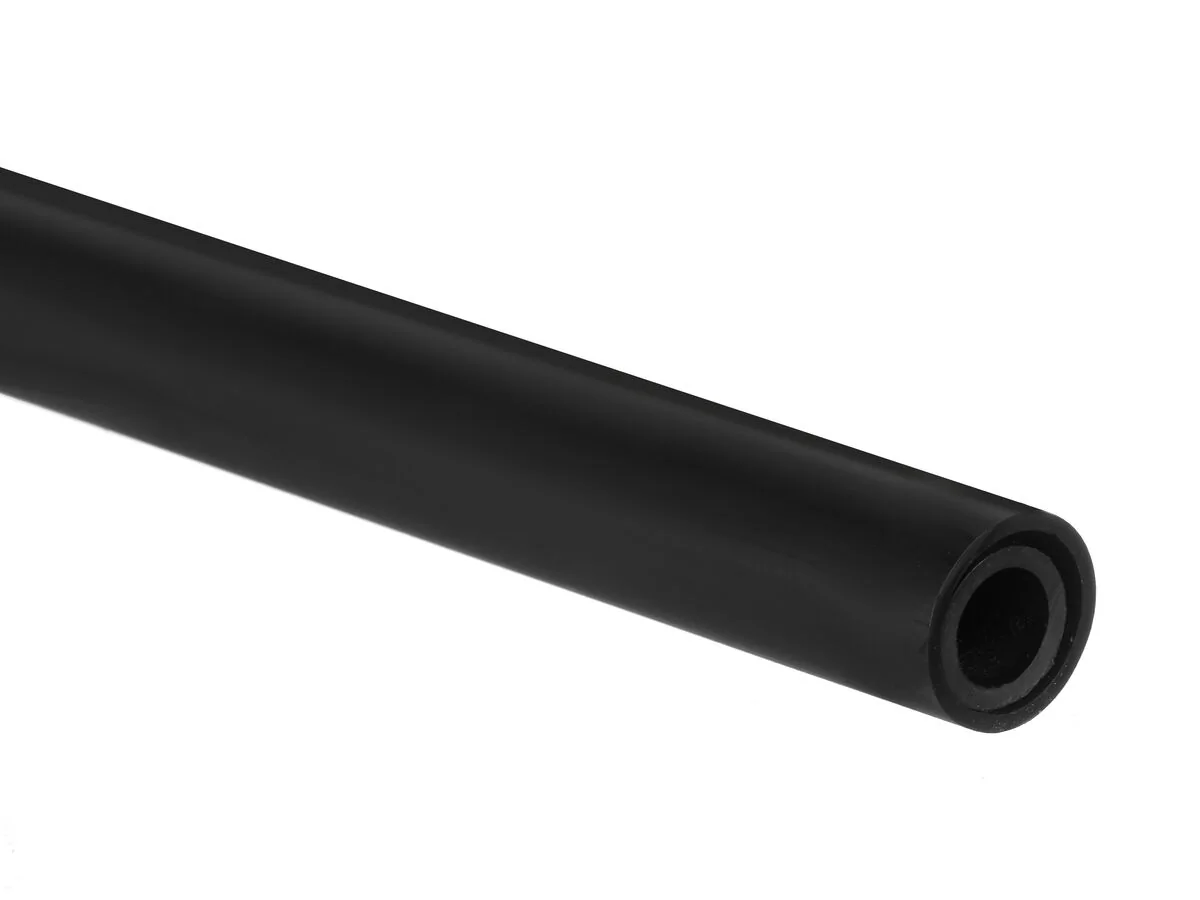
Insulvora supplies several closed-cell NBR/PVC pipe-sleeve configurations for PEX pipe insulation projects: slit rubber foam sleeves, high-density preformed sleeves and foil-faced preformed sleeves. These products offer different forms and specifications; the relevant option is confirmed against the actual pipe size, service conditions and available ID-and-thickness combinations.
Operating temperature is a product-specific check. Some current Insulvora NBR/PVC pipe-sleeve products list a service-temperature range of -40°C to +105°C. Do not apply that range to every configuration without checking the exact product being offered.
Slit Rubber Foam Pipe
The longitudinal slit allows this preformed sleeve to be fitted around compatible piping without wrapping the full pipe circumference with flat insulation sheet. Listed insulation thicknesses are 15, 20, 25, 30, 40 and 50 mm. For PEX pipe insulation, available inner diameters vary between thickness options, so the required ID and wall thickness must be checked as an offered combination.
High Density Rubber Foam Pipe
Where the specification calls for a higher-density sleeve, Insulvora's NBR/PVC high-density pipe product is listed at 80–110 kg/m³, with multiple discrete inner diameters and 15–50 mm insulation thicknesses.
Higher density is not a default requirement for all PEX lines. It is relevant when a project specification, construction requirement or chosen product calls for that configuration.
Foil Faced Rubber Foam Pipe
The foil-faced NBR/PVC preformed sleeve has an aluminum-foil outer surface and is available in multiple discrete inner diameters with 15–50 mm insulation thicknesses. It is a product route where a faced sleeve is specified or otherwise required by the project.
The foil facing alone does not establish every vapor-control, reflective, weathering or fire-performance property. Confirm any specified performance against the actual product construction and applicable project documentation, particularly on exposed runs.
Maintain Fit and Insulation Continuity Through the PEX Run
PEX pipe insulation must perform as a continuous installed system, not only as correctly selected straight sleeves. A preformed sleeve should fit the actual pipe OD without being forced excessively tight or left noticeably loose.
Longitudinal seams, butt joints, bends and fittings need to maintain insulation coverage through the run. In cold-water PEX pipe insulation, gaps may allow humid air to reach the cold pipe surface and undermine condensation control. If a faced sleeve is used, the facing also needs continuity across joints, bends and transitions; the outer layer should not be treated as protection only on straight sections.
For detailed methods of handling seams, bends and fittings, use Pipe Insulation Installation. The specific installation approach should follow the chosen product and project requirements.
Move from PEX Application Review to Product Confirmation
After defining the water service, actual pipe OD and initial sleeve route, use these resources to resolve remaining product and technical questions before sending a project specification.
Pipe Insulation Sizing Chart
Check actual PEX pipe OD against available sleeve bore sizes.
Pipe Insulation Thickness Chart
Review wall-thickness selection for the required thermal duty.
Rubber Foam Pipe Insulation
Compare the broader pipe insulation range and the available slit, high-density and foil-faced configurations.
Pipe Insulation Installation
Review continuity at seams, bends, joints and fittings.
Send PEX Project Specifications
For PEX pipe insulation product matching or a bulk-supply quotation, send the actual pipe OD for each size, hot- or cold-water service, operating temperatures, indoor or outdoor exposure, required insulation thickness if already specified, and project quantity. For cold lines, include the ambient conditions relevant to condensation control where available.
Insulvora can then discuss suitable sleeve types and confirm available ID-and-thickness combinations, product-specific limits and the quotation details for the proposed supply.