Pipe Insulation Alternative: How to Choose a Suitable Replacement
A pipe insulation alternative must do more than fit the same nominal pipe size. The replacement needs to meet the existing system's thermal duty, operating temperature, moisture-control requirements, and installation conditions.
For chilled-water and refrigerant lines, closed-cell elastomeric foam is often the first option because it helps limit water-vapor ingress when joints are properly sealed. Glass wool pipe sections suit many conventional hot-water and mechanical services. Rock wool pipe sections are often selected for higher-temperature industrial piping. Cellular glass or high-performance systems may need separate consideration where moisture, loading, or space imposes additional constraints.
Key replacement checks
- Thermal duty: Verify service temperature, pipe dimensions, conductivity basis, and the thickness needed to meet the thermal target.
- System protection: Check condensation, vapor control, fire specifications, outdoor exposure, and mechanical loads.
- Installed cost and fit: Consider clearance, joints, accessories, cladding, labor, and maintenance—not just the material price.
Which Pipe Insulation Alternative Fits Each Application?
| Existing condition or reason for replacement | Potential alternative | What matters most |
|---|---|---|
| Air-conditioning refrigerant or chilled-water lines need new insulation | NBR/PVC closed-cell elastomeric foam tubes | Flexibility, low water-vapor permeability, appropriate thickness, and continuously sealed joints to help control condensation |
| Conventional hot-water piping needs a replacement for foam or fibrous insulation | Glass wool or rock wool pipe sections; elastomeric foam where temperatures permit | Heat loss, outer surface temperature, fire requirements, and installation cost |
| Existing elastomeric insulation cannot withstand a higher operating temperature | Glass wool or rock wool pipe sections | Suitable temperature rating, fixing method, and protective system |
| Existing glass wool must meet a higher temperature or a specific fire requirement | Rock wool pipe sections | Material grade, service temperature, reaction-to-fire classification, and assembly requirements |
| Existing rock wool pipe sections are being reconsidered | Glass wool pipe sections or another suitable insulation system | Temperature, mechanical demands, and equivalent thermal performance |
| Piping faces persistent moisture, substantial mechanical loading, or restricted space | Cellular glass or specialized high-performance insulation | Water absorption, compressive strength, vapor control, and achievable thickness |
These options are not one-for-one substitutes. Even where two materials serve similar pipes, their temperature limits, thermal behavior, fastening details, and protective assemblies may differ. Assess each pipe insulation alternative against the performance of the complete installed system.
For a supply shortage or an extended lead time, start with a material of similar construction and function, then verify the critical requirements; matching nominal pipe size is not enough. Where cost or limited space drives the decision, compare total installed cost and check whether the required thickness can be accommodated around valves, bends, connections, and supports. If the original insulation has failed, establish the cause before choosing a replacement.
Properties and Available Sizes of Three Main Alternatives
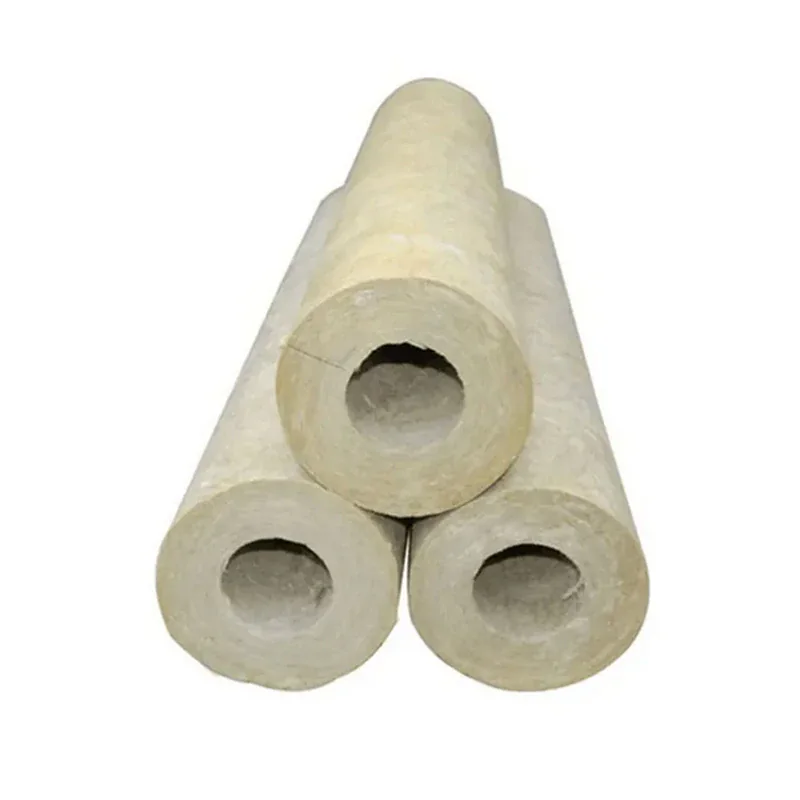
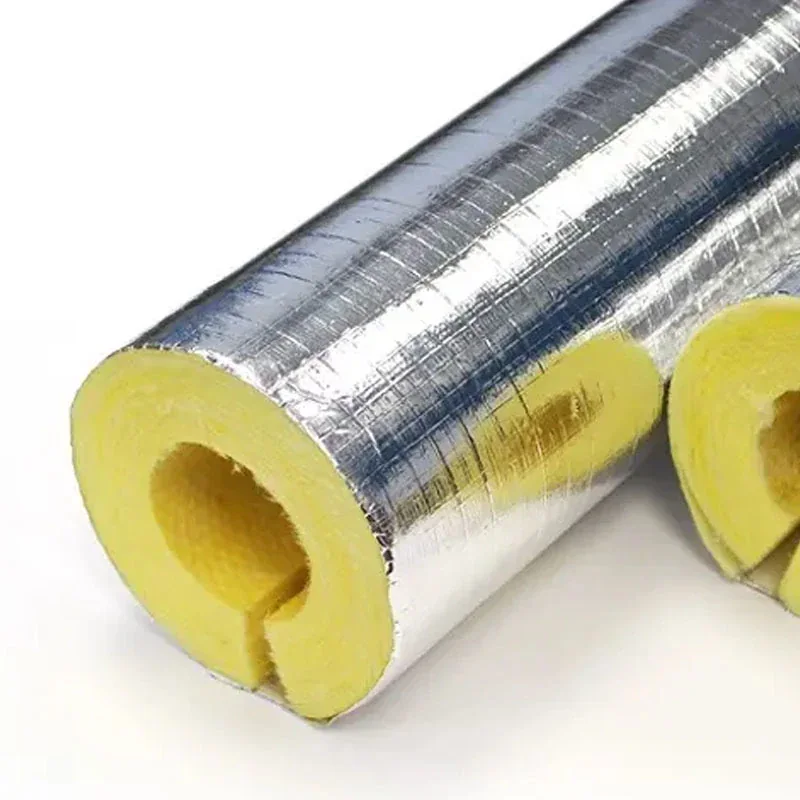
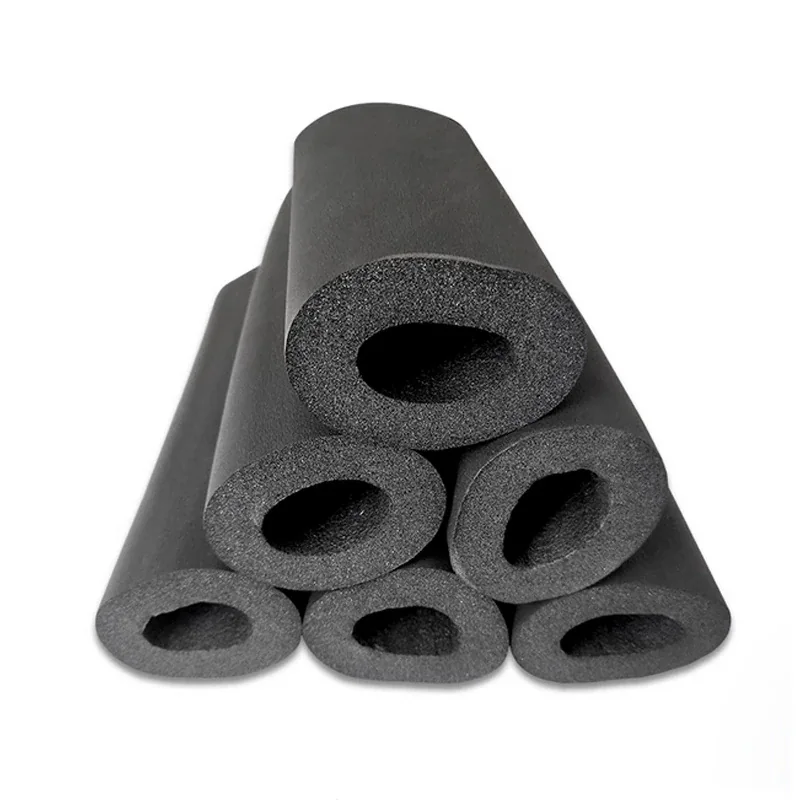
Insulvora supplies preformed elastomeric foam tubes, glass wool pipe sections, and rock wool pipe sections. The following data provide a starting point for comparing a pipe insulation alternative by product form, dimensions, and operating conditions.
| Property | NBR/PVC closed-cell elastomeric foam tubes | Glass wool pipe sections | Rock wool pipe sections |
|---|---|---|---|
| Product form | Flexible preformed tubes | Preformed fibrous sections | Preformed fibrous sections |
| Insulation thickness | 15, 20, 25, 30, 40, 50 mm | 25–100 mm | 20–150 mm |
| Internal diameter | Different diameter options by thickness | 22–720 mm | 22–910 mm |
| Thermal conductivity | ≤0.034 W/(m·K) at 0°C | 0.035–0.042 W/(m·K) | 0.035–0.042 W/(m·K) |
| Temperature data | −40°C to +105°C | Maximum service temperature 450°C | Maximum service temperature 600°C |
| Typical applications | Air-conditioning, refrigerant, hot- and chilled-water, and related mechanical lines | Hot-water, mechanical, and industrial piping within the applicable temperature range | Higher-temperature mechanical and industrial piping |
When comparing a pipe insulation alternative, the conductivity figures should not be ranked directly without a consistent mean-temperature basis. A stated temperature limit applies to the relevant material grade; adhesives, facings, fasteners, and other assembly components must also suit the operating conditions.
Closed-Cell Elastomeric Foam: Flexible Installation and Condensation Control
NBR/PVC elastomeric tubes can be useful for replacing insulation on installed copper refrigerant lines and chilled-water piping, particularly around bends or in restricted spaces. Pre-slit tubes may simplify fitting around existing pipework. The closed-cell structure helps restrict water-vapor movement, but longitudinal cuts, end joints, elbows, and supports must still be sealed continuously. Where the pipe surface is below the surrounding air's dew point, both insulation thickness and vapor control matter. Within its permitted temperature range, this material can also replace some fibrous systems on complex hot-water runs.
Glass Wool Pipe Sections: Conventional Hot-Water and Mechanical Services
Preformed glass wool sections are practical for long, straight hot-water and mechanical pipe runs where consistent coverage is required. On above-ambient-temperature pipes, assess heat loss, outer surface temperature, and the protection needed at the installation location. For chilled-water applications, glass wool requires a separate continuous vapor barrier; the fibrous layer does not provide vapor control on its own. Its suitability as a pipe insulation alternative to foam or rock wool depends on the specified temperature and complete assembly.
Rock Wool Pipe Sections: Higher-Temperature Industrial Piping
Rock wool pipe sections can replace insulation that cannot tolerate the service temperature or does not satisfy the project's specified mineral-fiber and fire-performance requirements. Where needed, combine the sections with suitable mechanical fasteners, metal jacketing, and protection against moisture. Select grade, density, and support details with reference to pipe temperature, vibration, and external loads rather than assuming all rock wool products are interchangeable.
What Changes When You Switch to a Pipe Insulation Alternative?
Thermal Performance: Equal Thickness Does Not Mean Equal Heat Loss
Replacing a 25 mm elastomeric foam tube with a 25 mm glass wool or rock wool section does not guarantee the same heat loss. Conductivity, pipe outside diameter, insulation thickness, mean operating temperature, and external surface heat transfer all affect the result. Evaluate any pipe insulation alternative under comparable service conditions for the intended goal: reducing heat loss, limiting heat gain, or controlling outer surface temperature.
Where space is severely restricted, thin high-performance products such as aerogel blankets may be considered, provided the installed system delivers the required thermal performance. Insulation alone also cannot guarantee freeze protection for stagnant pipes in cold conditions; heat tracing or other frost-protection measures may be needed.
Moisture Control: Cold-Pipe Replacements Need a Complete Vapor Strategy
Replacing closed-cell elastomeric foam with glass wool or rock wool on cold lines changes the vapor-control requirements. Fibrous insulation provides thermal resistance, but the installed assembly generally needs a continuous low-permeance vapor barrier. Seal longitudinal and circumferential seams, fittings, elbows, valves, and support penetrations so that water vapor cannot bypass the protective layer.
If an existing fibrous system repeatedly suffers from failed seams, trapped moisture, or damaged vapor barriers, suitable closed-cell elastomeric insulation may simplify some installation and maintenance details. Before approving a pipe insulation alternative after moisture damage, identify whether the failure was caused by inadequate thickness, vapor-barrier damage, external water ingress, or another operating condition. For particularly wet, low-temperature, or mechanically demanding service, cellular glass may be another conditional pipe insulation alternative, subject to the full system design.
Fire Performance and Mechanical Protection: Assess the Whole Assembly
Fire suitability cannot be established from the insulation material name alone. Confirm the relevant requirements for reaction to fire, smoke performance, and, where applicable, the fire resistance of the complete assembly. GB 8624, EN 13501-1, and ASTM E84 use different test or classification approaches; a result under one cannot automatically be treated as equivalent to another. Reaction-to-fire classification does not establish a fire-resistance duration for a pipe assembly.
Outside or in demanding plant and industrial environments, consider UV exposure, rain, impacts, vibration, and maintenance traffic. Mineral-fiber sections commonly require suitable protective jacketing, while elastomeric foam can also need weather-resistant protection outdoors. Select the complete pipe insulation alternative system—including coverings, joints, fixings, and supports—for the actual exposure and mechanical conditions.
Insulvora Products for Pipe Insulation Replacement
For projects evaluating a pipe insulation alternative, the following Insulvora product pages show the available pipe insulation forms:
Flexible tubes for suitable air-conditioning and mechanical lines where fitting and condensation control are important. Confirm bore size and thickness against the actual pipe and service conditions.
Preformed sections for suitable hot-water and mechanical pipework, with protective and vapor-control components selected as required.
Preformed mineral-fiber sections for higher-temperature mechanical and industrial piping, subject to the applicable grade and assembly requirements.
For related comparisons and applications, see Foam vs Rubber Pipe Insulation, Fiberglass vs Foam Pipe Insulation, HVAC Pipe Insulation, and Pipe Insulation Specification.
Looking for a Pipe Insulation Alternative for an Existing System?
Share the existing material, pipe outside diameter, operating temperature, available insulation space, moisture or fire requirements, and approximate quantity. Insulvora can discuss a suitable replacement product, available sizes, and a quotation based on those project details.