
Mini Split Line Insulation
For mini-split and ductless air-conditioning systems, mini split line insulation usually begins with closed-cell elastomeric rubber foam pipe insulation. Select it against the equipment's refrigerant-piping requirements, the actual outside diameter (OD) of each copper tube requiring insulation, and the specified insulation thickness—not equipment capacity alone.
A line set runs from the indoor unit through a wall penetration to the outdoor unit. The insulation must maintain coverage at bends, joints, and connections, while exposed outdoor sections may need a separate protective facing, cover, or jacket.
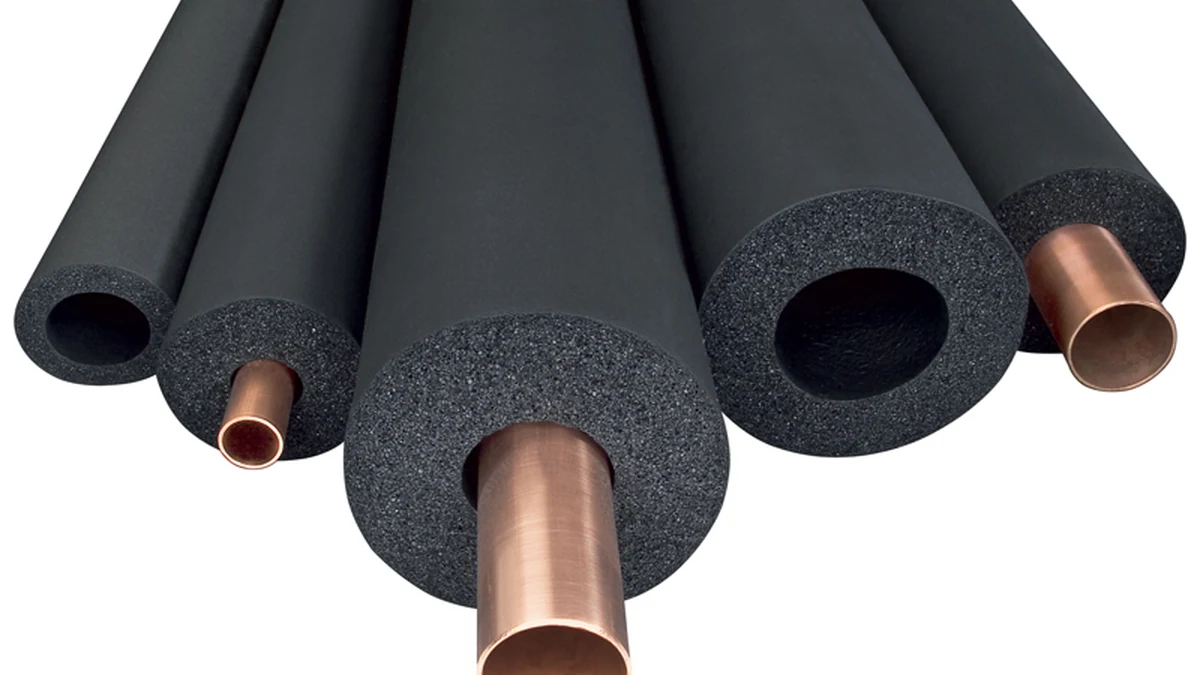
Match Line-Set Sizes and Choose a Product Route
A mini-split line set can contain copper tubes with different ODs, and equipment models may use different tube combinations. Start with the equipment piping schedule or verified field measurements. When specifying mini split line insulation for several units, record each copper tube OD with its corresponding insulated length and quantity instead of treating the system as one standard line-set size.
For each line that requires insulation, the pipe-insulation inside diameter (ID) must fit the actual tube OD. Then confirm insulation thickness. If the project already specifies thickness, the matching process can proceed directly to the available product sizes. If it does not, review the refrigerant-line operating conditions, surrounding temperature and humidity, and condensation-control requirements. Neither tube diameter nor a broad nominal pipe designation is sufficient on its own.
The following routes provide a starting point for mini split line insulation product selection; exact configurations still need to be confirmed.
| Project condition | Primary product route |
|---|---|
| New, small-diameter air-conditioning copper tubing | AC Copper Pipe Insulation Sleeve |
| Existing piping requiring side installation or insulation replacement | Slit Rubber Foam Pipe |
| Project specifies a foil-faced pipe-insulation form | Foil Faced Rubber Foam Pipe, subject to configuration confirmation |
| Wider diameter, thickness, or construction options are needed | Rubber Foam Pipe Insulation |
Protect the Insulation Along the Line-Set Route
The same closed-cell rubber-foam material route can often serve the indoor-to-outdoor run, but the installation details and exposure conditions change along it. Mini split line insulation must therefore be assessed by location, not just by tube size.
Indoor Runs
Maintain a close sleeve fit, sealed joints, and continuous coverage around ceilings, wall cavities, and equipment connections. Limited working space can cause compression, openings at joints, or exposed copper. These details matter particularly where condensation control is required.
Wall Penetrations and Bends
At wall openings and direction changes, keep the insulation coordinated with the penetration sleeve, sealing detail, and any specified exterior protection. Avoid cutting back or compressing the insulation merely to pass through an opening. At bends, do not depend on excessive stretching that leaves the insulation thinned or damaged.
Outdoor Runs
Exposed mini split line insulation may encounter sunlight, rain, and physical contact in addition to thermal and condensation demands. Rubber-foam insulation and an exterior weather-protection layer have different functions. Confirm any required facing, cover, or protective jacket separately for the actual exposed route; do not assume the base insulation alone provides the necessary protection.
Equipment Connections and Replacement Sections
Finish insulation around the actual indoor- and outdoor-unit connection arrangements, keeping avoidable bare copper and open joints to a minimum. Where existing insulation is cracked, missing, or visibly aged, inspect the affected section before rebuilding it. Installed piping may also require a product form that can be fitted from the side rather than slid over a tube end.
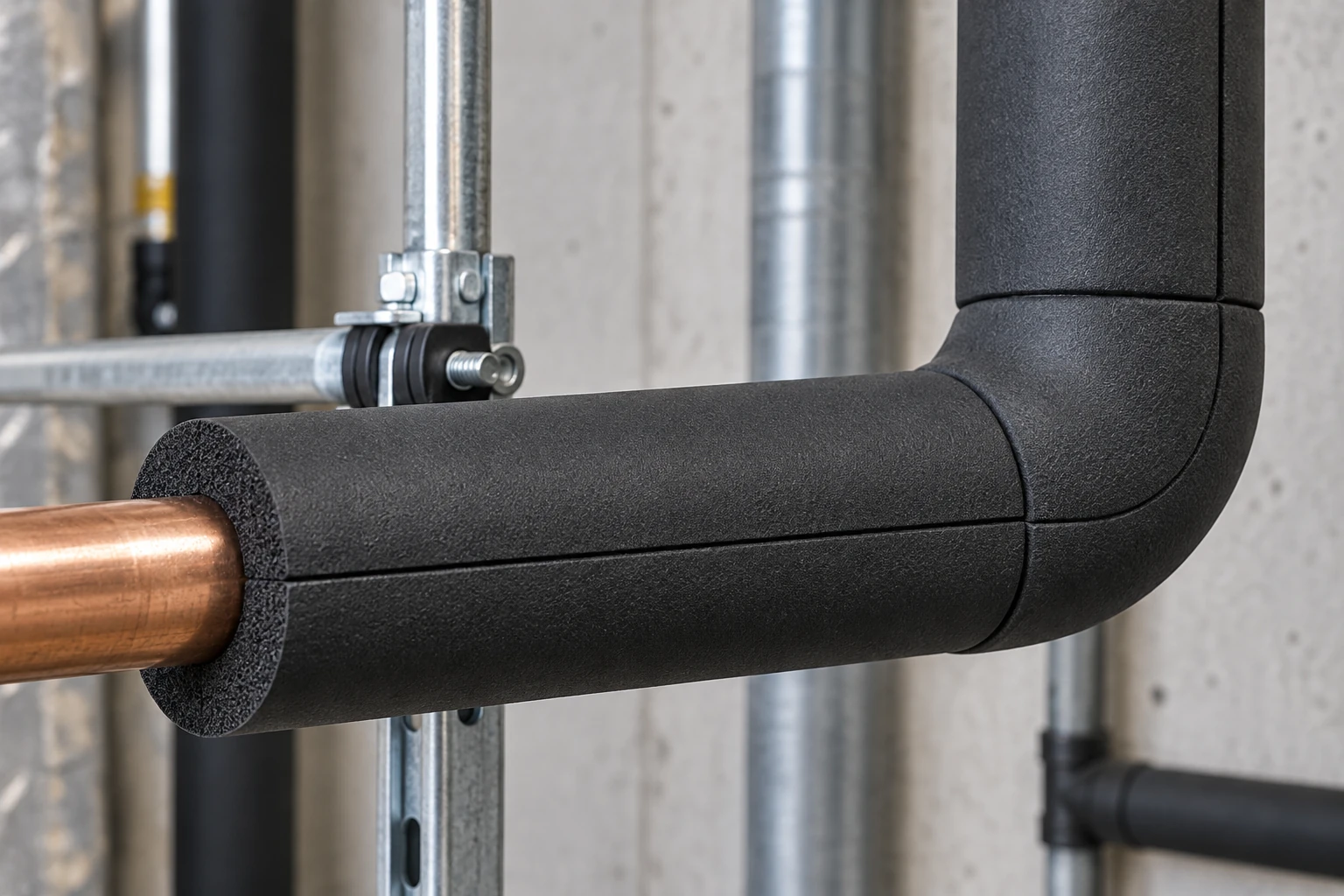
For joint treatment, bends, wall penetrations, and other installation details, refer to Pipe Insulation Installation.
Product Options for Mini-Split Refrigerant Lines
Insulvora offers several rubber-foam pipe-insulation forms for mini split line insulation projects. The distinctions below focus on product construction and available specification routes rather than repeating the selection table.
AC Copper Pipe Insulation Sleeve
The first series to review for new small-diameter AC copper tubing. The current range covers 6–32 mm inside diameters and 8 mm or 15 mm insulation thicknesses. These available dimensions support matching to the tube ODs and thicknesses specified for the project. Check the required diameter-and-thickness combination before scheduling quantities.
Slit Rubber Foam Pipe
A longitudinal slit allows side installation on existing lines where a closed preformed sleeve cannot be passed over the tube end. This can suit certain replacement and retrofit conditions. Multiple ID and thickness combinations are available, with final sizes to be matched to the specified line dimensions.
Foil Faced Rubber Foam Pipe
Consider this form when a foil-faced construction is specified. Confirm its configuration against refrigerant-service conditions and facing requirements, and assess any additional protection needed where the installation is exposed outdoors. The presence of a foil facing does not, by itself, settle the exterior-protection requirement.
Rubber Foam Pipe Insulation
For projects needing a broader range of diameters, thicknesses, or pipe-insulation constructions, this product family provides an additional route for detailed specification review.
The final mini split line insulation order should identify the selected product form, tube ODs, insulation thicknesses, required lengths, and any facing or protection requirements.
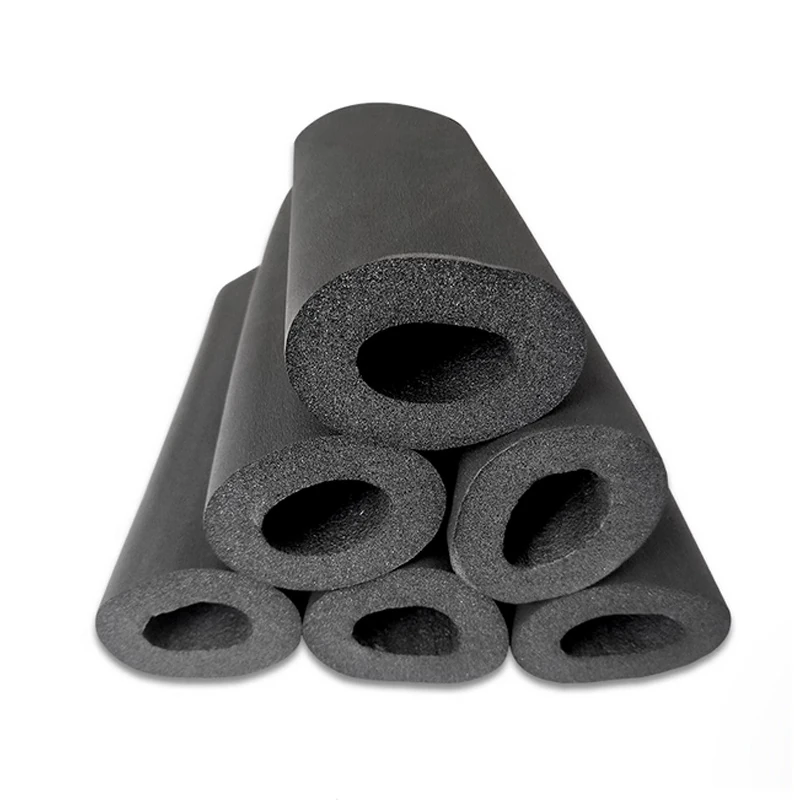
Confirm Your Mini-Split Line Set Configuration
When requesting mini split line insulation for a project or bulk order, provide the actual copper tube ODs, required insulation thicknesses, lengths or quantities, and the installation conditions—including indoor runs, wall transitions, exposed outdoor sections, or replacement work. Insulvora can review the suitable rubber-foam product form and size options, then confirm the applicable supply and quotation details for your project.