
Copper Pipe Insulation for AC, Refrigeration and Water Systems
Copper pipe insulation should be chosen for the service inside the tube, not simply for the fact that the tube is copper. Refrigerant lines, chilled-water circuits, cold-water supplies and hot-water systems have different temperature profiles, condensation risks and thermal requirements. The right material direction also depends on where the pipe is installed.
For AC, refrigeration and other below-ambient services, closed-cell elastomeric insulation is generally the first material family to assess. Hot-water service requires a check against the selected product's verified continuous service-temperature range; where that range is exceeded, glass wool or rock wool pipe insulation may be more suitable. For preformed copper tubing insulation, the actual copper tube outside diameter (OD) must match the insulation inner diameter (ID).
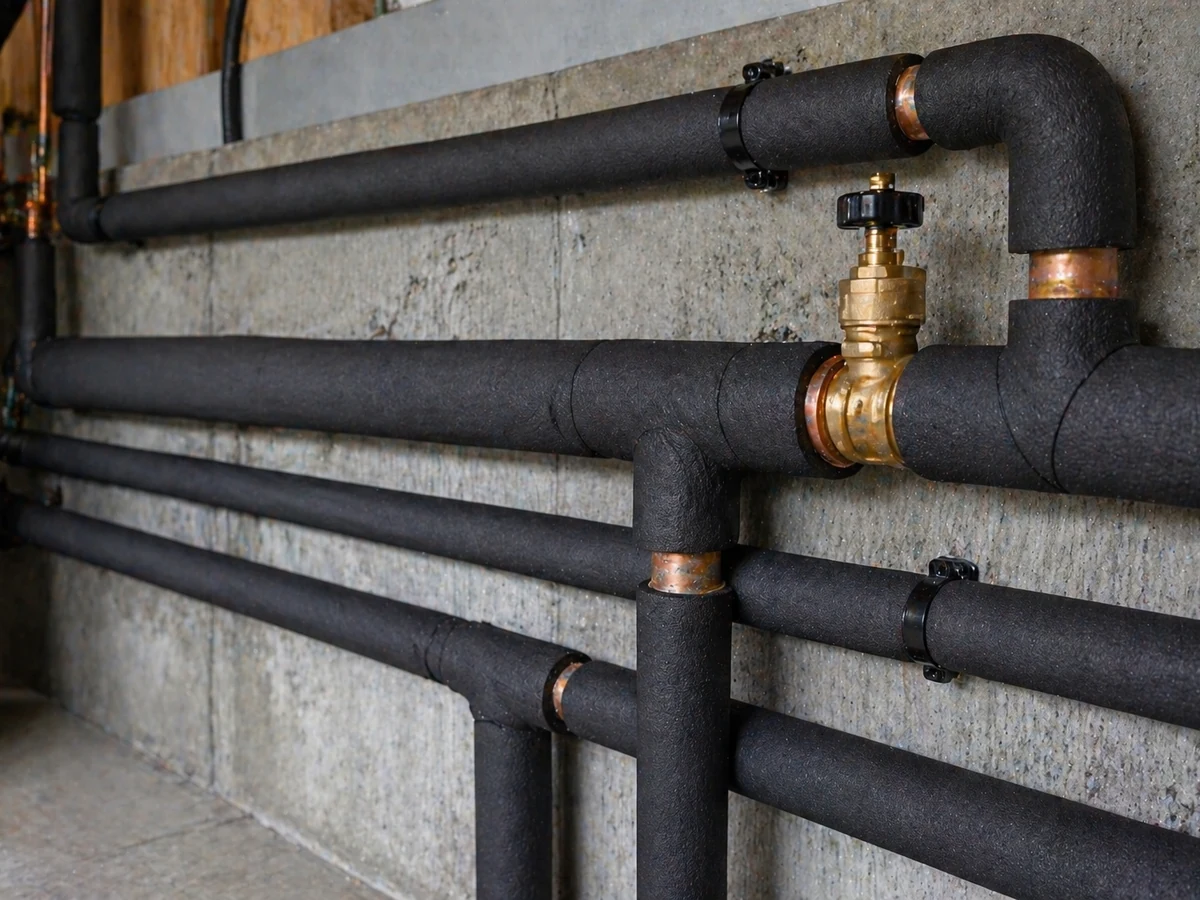
Copper Pipe Insulation by Service
| Copper service | First product direction | Conditions to confirm |
|---|---|---|
| AC / refrigerant | Closed-cell elastomeric sleeve or rubber foam pipe | Line temperature, ambient temperature and humidity, tube OD, condensation risk |
| Chilled water | Closed-cell elastomeric pipe insulation is commonly the first option | Water temperature, humidity, pipe size, valves and supports |
| Cold water | Closed-cell insulation where surface condensation is a concern | Water temperature, surrounding dew point and thermal requirements |
| Hot water | Elastomeric pipe insulation within its verified temperature range | Continuous operating temperature, design temperature and material requirements |
| Outdoor copper | Select the base insulation for the pipe service, then assess external protection | Sunlight, rain, mechanical exposure and project cladding requirements |
Outdoor installation is an exposure condition rather than a separate thermal service. The cold- or hot-service requirement still determines the base copper pipe insulation; the environment determines what additional protection may be necessary.
Match Copper Tubing Insulation to Available Products
For common small-diameter air-conditioning and refrigeration copper lines, Insulvora offers the AC Copper Pipe Insulation Sleeve, made from closed-cell NBR/PVC elastomeric rubber foam. Available insulation IDs cover 6–32 mm, with standard thicknesses of 8 mm and 15 mm. This preformed format provides a direct starting point for matching copper tubing insulation to familiar AC line sizes.
For larger diameters or higher thickness requirements, Slit Rubber Foam Pipe extends the insulation ID range up to 110 mm, with thickness options of 15–50 mm. The Rubber Foam Pipe Insulation page provides the broader product route. These dimensions describe available product options; they do not by themselves establish the correct thickness for every operating condition.
Specify copper tubing insulation against the measured copper tube OD rather than relying on nominal pipe size alone. An oversized bore can leave gaps, while an undersized sleeve may be difficult to close and can place tension on the joint. Fit and thickness are separate checks: the insulation ID must match the tube, while the project temperature, humidity and required thermal performance determine the final thickness and configuration. For copper tubing insulation sizing, consult the Pipe Insulation Sizing Chart as a further reference.
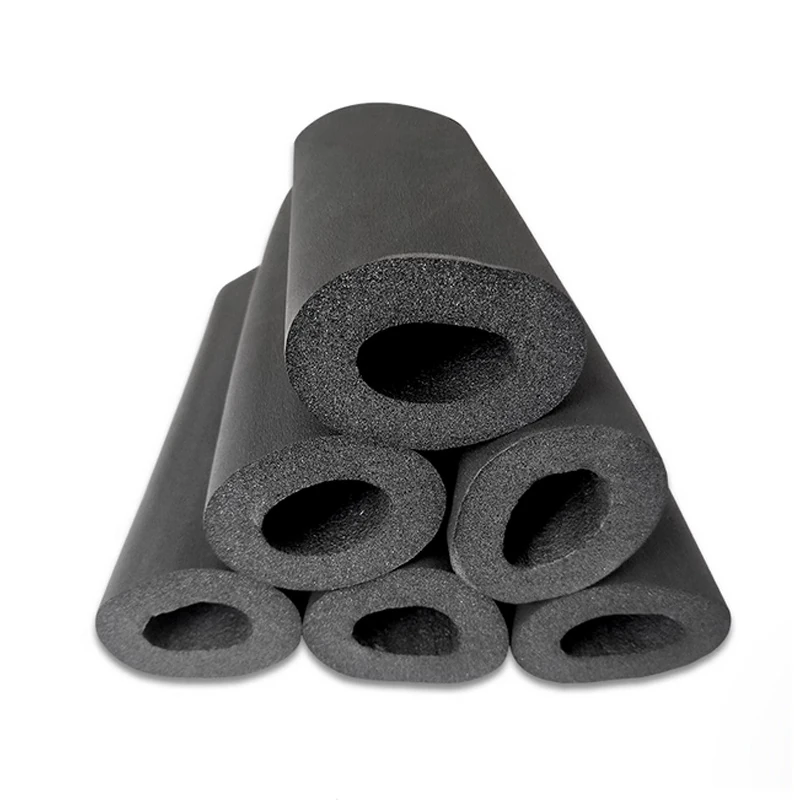
Conditions That Determine the Final Copper Pipe Insulation Specification
Operating temperature and service duty. AC and refrigerant lines commonly operate below ambient temperature, so insulation must address heat gain as well as condensation. Chilled-water copper often follows the same material direction, but valves, supports, larger sizes and extended operation can make the system details more demanding. For hot water, heat-loss control and continuous operating-temperature capability become the priorities. Elastomeric products are suitable only within their verified temperature range; higher-temperature duties may require glass wool or rock wool pipe sections.
Ambient humidity and dew point. Cold-water copper cannot be evaluated from the service label alone. Compare the actual water or line temperature with surrounding temperature and humidity. If an uninsulated pipe surface can fall below the dew point, condensation control is a central requirement. A similar line temperature can pose a greater moisture risk in a humid plant room than in a dry location. Where condensation is not a significant concern, the specified thermal performance becomes the main basis for copper pipe insulation selection.
Installation environment. Indoor and outdoor lines can share the same base thermal duty, but exposed pipework may need protection from sunlight, rain and mechanical damage. For outdoor copper tubing insulation, confirm the service and insulation material first, then assess the project's external-protection requirements. An outdoor covering does not replace correct material selection for the temperature and moisture conditions underneath.
Maintain Copper Pipe Insulation Continuity at Joints, Bends and Supports
Correct copper pipe insulation material and bore selection are only part of the installation. On below-ambient lines, joints, bends, valves, wall penetrations and supports can interrupt the insulation or create thermal bridges. These local areas may become condensation points even when straight pipe runs are insulated.
When closed-cell elastomeric insulation is used, the insulation and vapor-control approach should continue through fittings and transitions. Different locations may need different shapes or installation methods. The important requirement is not to leave exposed cold surfaces or unprotected gaps where moisture can collect. The same attention is needed where protected indoor lines pass into outdoor exposure.
For fitting and joint details, see Pipe Insulation Installation. To confirm the relationship between copper tube OD and insulation bore, refer to the Pipe Insulation Sizing Chart.
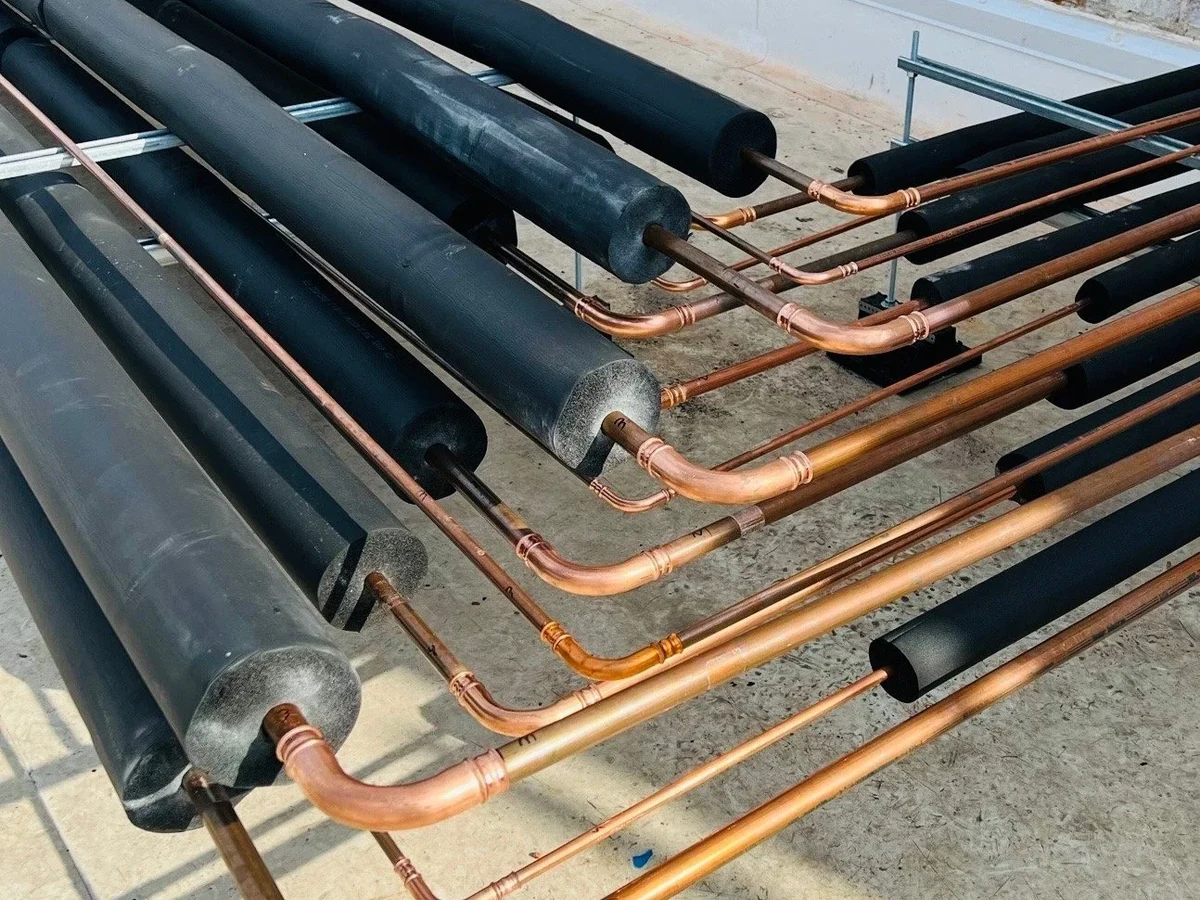
Continue by Copper-Pipe Application
Choose the next page according to the pipe service or the main project risk.
AC / Refrigerant Copper
For low-temperature operating conditions, ambient humidity and condensation control, see Air Conditioning Pipe Insulation and Refrigerant Line Insulation. For common small-diameter product options, go to the AC Copper Pipe Insulation Sleeve.
Chilled-Water Copper
For valve arrangements, pipe supports and vapor-control continuity on chilled-water circuits, continue to Chilled Water Pipe Insulation. It addresses system details beyond the initial material choice.
Cold-Water Copper
For water temperature, local dew point and the point at which condensation protection becomes necessary, see Cold Water Pipe Insulation.
Hot-Water Copper
For continuous operating-temperature limits and cases where glass wool or rock wool pipe insulation is the more suitable direction, continue to Hot Water Pipe Insulation.
Outdoor Copper
For weather exposure and protective finishes after the base insulation is selected, see Outdoor Water Pipe Insulation.
Copper Lines With Significant Condensation Risk
Where condensation is the dominant risk across refrigerant, chilled-water or cold-water systems, see Pipe Condensation Insulation for dew-point conditions, vapor-control continuity and local thermal bridges.
For a copper pipe insulation quotation, share your pipe service, operating temperature, copper tube OD, required insulation thickness (if specified), indoor or outdoor location and relevant ambient conditions. Include the project quantity or supply requirement if available. Insulvora can review suitable product forms and available sizes, then confirm the details needed for a project or bulk-supply quotation.